
The Allure and Illusion of Localhost Microservices
The initial phase of adopting microservices often feels liberating. Developers revel in the simplicity of spinning up individual services on their local machines, testing them in isolation, and iterating rapidly. This "localhost" environment offers an intoxicating blend of speed and control, a stark contrast to the monolithic architectures of the past. It’s a promise of agility, where each service can be developed, deployed, and scaled independently. This developer-centric approach, however, invariably hits a wall when the scope expands beyond a single developer's machine or a small, tightly-knit team.
Just as the early days of cloud computing offered seemingly infinite compute resources that quickly devolved into complex multi-account governance and cost management nightmares, the simplicity of local microservices is an illusion that shatters under enterprise pressure. The moment these services need to interact across a network, be accessed by external users, or be managed by a larger organization, the inherent limitations of the localhost paradigm become glaringly obvious. The critical missing pieces are not technical novelties but fundamental requirements for any distributed system operating at scale: a robust gateway, clear identity and access management, and comprehensive observability.
When Simplicity Demands a Gateway
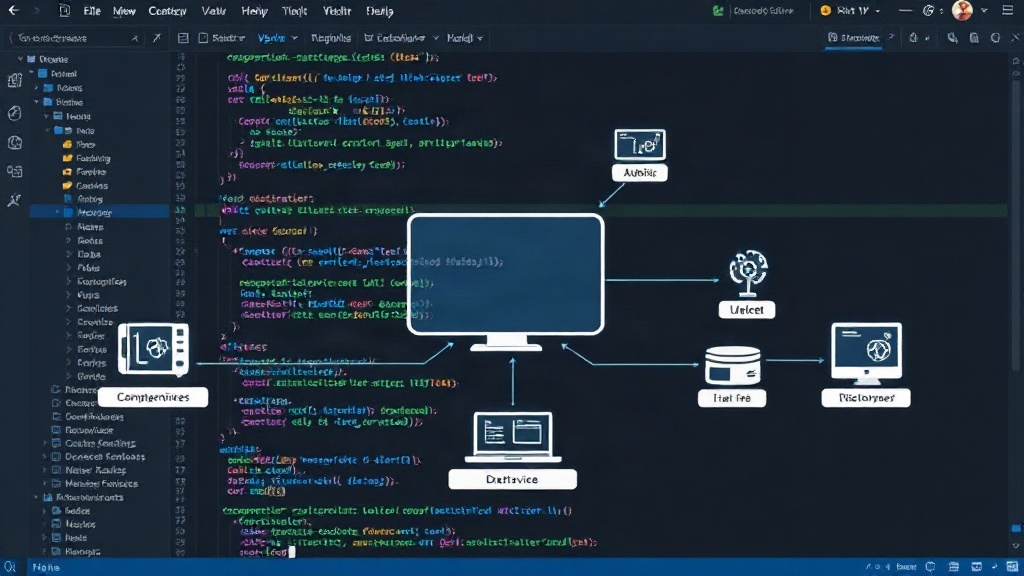
When microservices are confined to localhost, direct communication between them is straightforward. A service can simply make a network call to another service's local IP address. But this model breaks down immediately when services need to communicate over a network, especially in a production environment. This is where an API gateway becomes indispensable. A gateway acts as the single entry point for all client requests, abstracting away the complexity of the underlying microservice architecture.
Consider the challenges that arise without a gateway. Each microservice would need to expose its network endpoint directly, leading to a proliferation of public-facing IPs and ports. Managing security policies, rate limiting, and request routing for each individual service becomes an unmanageable burden. A gateway consolidates these concerns. It can handle SSL termination, perform authentication and authorization, enforce rate limits, aggregate responses from multiple services, and provide a unified interface for clients. This abstraction is not merely a convenience; it is a necessity for maintaining control and security in a distributed system.
For instance, imagine a scenario where you need to implement a new authentication mechanism. Without a gateway, you would have to update every single microservice to incorporate this new logic. With a gateway, the change is localized to a single component. The gateway intercepts incoming requests, validates credentials, and then forwards only authenticated and authorized requests to the appropriate backend services. This architectural pattern is akin to a security checkpoint at the entrance of a large office building, rather than having a guard at the door of every single office suite.
Identity and Governance: The Missing Layers
Beyond direct communication and routing, enterprise-scale microservices require robust identity and governance frameworks. On localhost, these concerns are often glossed over. A developer might implicitly trust any service running on their machine. In a distributed system, this trust cannot be assumed. Every service, and every client interacting with those services, must have a verifiable identity, and their access must be strictly controlled.
Identity management in a microservices architecture typically involves mechanisms like OAuth 2.0, OpenID Connect, and JSON Web Tokens (JWTs). A central identity provider issues tokens that services can validate to confirm the identity of the caller and the scope of their permissions. Without this, services cannot securely determine who is requesting what action, leading to potential security breaches and unauthorized data access.
Governance extends beyond identity. It encompasses policies related to data privacy, compliance, auditing, and resource allocation. When microservices operate in silos on individual machines, enforcing consistent policies is nearly impossible. A gateway, coupled with a centralized policy engine, can ensure that all interactions adhere to organizational standards. This ensures that sensitive data is handled appropriately, regulatory requirements are met, and the overall system remains secure and compliant.
Observability: Illuminating the Black Box
Perhaps the most significant challenge that emerges when moving microservices from localhost to production is the lack of visibility. Debugging a service on your local machine often involves attaching a debugger, inspecting logs directly on your console, or using simple print statements. This direct access and immediate feedback loop are lost in a distributed environment. Without proper observability, understanding the behavior of your microservices, diagnosing failures, and optimizing performance becomes a Herculean task.
Observability in microservices involves three key pillars: logging, metrics, and tracing. Centralized logging aggregates logs from all services into a single, searchable repository. Metrics provide numerical data about service performance, resource utilization, and error rates, enabling the monitoring of system health and the identification of trends. Distributed tracing allows developers to follow a single request as it traverses multiple services, pinpointing bottlenecks and identifying the root cause of errors. This is crucial for understanding the end-to-end flow of requests in a complex system.
Think of observability as installing a sophisticated sensor network throughout a factory. Without it, you might know a machine is down, but you wouldn't know why or which component failed. With observability tools, you can see the precise sequence of events leading to the failure, identify performance degradation before it causes an outage, and understand the impact of changes across the entire system. This visibility is paramount for maintaining reliability and ensuring the smooth operation of a microservices architecture at scale.
The Inevitable Evolution
The journey from localhost convenience to enterprise reality for microservices is not unique. It mirrors the evolution of other foundational technologies. The ease of local development is a critical first step, enabling rapid innovation and experimentation. However, to achieve the full benefits of microservices—scalability, resilience, and maintainability—organizations must acknowledge and address the complexities that arise when these services operate beyond the developer's desktop. The adoption of robust gateways, comprehensive identity and governance frameworks, and sophisticated observability tools is not an optional add-on; it is the essential next stage in maturing a microservices strategy.