
The Unsustainable Solo Path
The dream of the solo founder building a profitable Micro-SaaS business, living off passive income generated by a small, focused software product, is increasingly becoming a relic of the past. For years, the narrative was simple: identify a niche problem, build a lean software solution, and market it effectively to a small but dedicated customer base. This model promised independence, financial freedom, and the satisfaction of solving a real problem. However, several converging factors have made this path exceptionally difficult, if not impossible, for new entrants.
The primary challenge is the sheer saturation of the market. Almost every conceivable niche has been explored, and often, multiple solutions already exist. Newcomers face entrenched competitors with established brand recognition, existing customer bases, and significantly larger marketing budgets. Even if a new product offers a marginal improvement or a slightly different feature set, breaking through the noise and acquiring customers at a sustainable cost is a monumental task. The cost of customer acquisition (CAC) has skyrocketed across the board, and for a solo founder with limited resources, it often becomes an insurmountable barrier.
Furthermore, customer expectations have evolved. Users now expect not just functional software but also a high level of support, continuous updates, and a seamless user experience. This demand for 'more' strains the resources of a one-person operation. Juggling product development, marketing, sales, and customer support leaves little time for strategic growth or innovation. The "passive income" aspect of Micro-SaaS often dissolves into a relentless cycle of reactive problem-solving and feature requests, turning the dream of freedom into a demanding, all-consuming job.
Enter: Service with Software
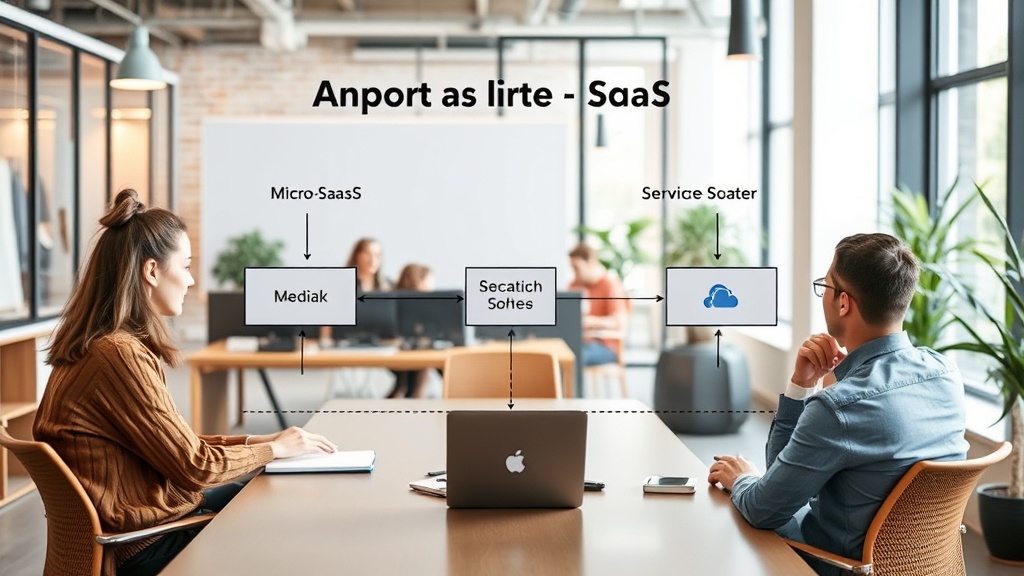
The emerging, more viable alternative is what can be termed "Service with Software." This model doesn't abandon software as the core value proposition but integrates it deeply with a human-led service component. Instead of aiming to automate every aspect of a customer's need, this approach uses software as a powerful enabler for a specialized service. The software handles the repetitive, scalable tasks, while human expertise provides the customization, strategic insight, and high-touch support that customers increasingly value and are willing to pay for.
Think of it less like building a fully automated vending machine for a specific need and more like offering a curated artisanal shop. The software might manage inventory, process orders, and provide analytics, but the shop owner (the service provider) uses their expertise to select the best products, offer personalized recommendations, and build relationships with customers. This hybrid model allows founders to leverage the scalability of software while retaining the flexibility and high-value differentiation of human service.
This shift is not about a lack of innovation in software. Instead, it's a recognition that for many complex or nuanced business problems, pure software automation is insufficient. Customers are not just buying a tool; they are buying a solution to a problem, and often, that solution requires human intelligence, empathy, and adaptability. By embedding software within a service framework, founders can command higher prices, build stronger customer loyalty, and create a more defensible business moat.
The Mechanics of Service with Software
Implementing a "Service with Software" model involves a strategic reorientation. Instead of focusing solely on reducing headcount and maximizing automation, the goal becomes augmenting human capabilities with technology. This can manifest in several ways:
- Niche Expertise + Automation: A consultant or agency identifies a highly specific problem within an industry. They build software tools to streamline the data analysis, reporting, or execution of their service, making their offering more efficient and scalable than traditional consulting.
- Managed Services with Proprietary Tools: A company offers a managed service (e.g., SEO, content marketing, cybersecurity) but develops proprietary software that provides unique insights, advanced automation, or superior performance monitoring for their clients. The software acts as a competitive advantage for the service.
- Platform-Enabled Services: A business builds a platform that facilitates a specific type of service, but the core value comes from the expertise of the people using the platform to deliver results for clients. The platform might handle client onboarding, project management, and communication, but the strategic direction and problem-solving are human-driven.
The key differentiator is that the software is not a standalone product sold off-the-shelf. It is intrinsically linked to the service offering, enhancing its delivery, improving its outcomes, and creating a more integrated customer experience. This approach allows businesses to target higher-value clients who are less price-sensitive and more focused on outcomes.
Why Now?
Several trends converge to make "Service with Software" the dominant model for new ventures in this space:
- AI Augmentation: The proliferation of AI tools means that many once-complex analytical or creative tasks can now be partially automated. This frees up human experts to focus on higher-level strategy, interpretation, and client interaction. Software can now do the heavy lifting, allowing service providers to focus on the nuanced, strategic elements.
- Customer Demand for Personalization: In an increasingly commoditized digital world, customers crave personalized experiences and tailored solutions. Generic software, while convenient, often fails to address the unique complexities of individual businesses. A service-oriented approach, powered by software, can deliver this customization.
- Economic Realities: The cost of acquiring customers for pure software products has become unsustainable for many. The higher margins available in service-based businesses, especially those augmented by efficient software, offer a more stable and profitable path to growth. Founders can achieve profitability with fewer customers, reducing market risk.
The solo Micro-SaaS founder is not obsolete, but their business model has evolved. The path to sustainable, profitable entrepreneurship now lies in recognizing that software is a powerful tool to enhance, not entirely replace, human expertise and personalized service. The future belongs to those who can skillfully blend the scalability of technology with the indispensable value of human insight.