
The Dawn of Autonomous Insecticidal Drones
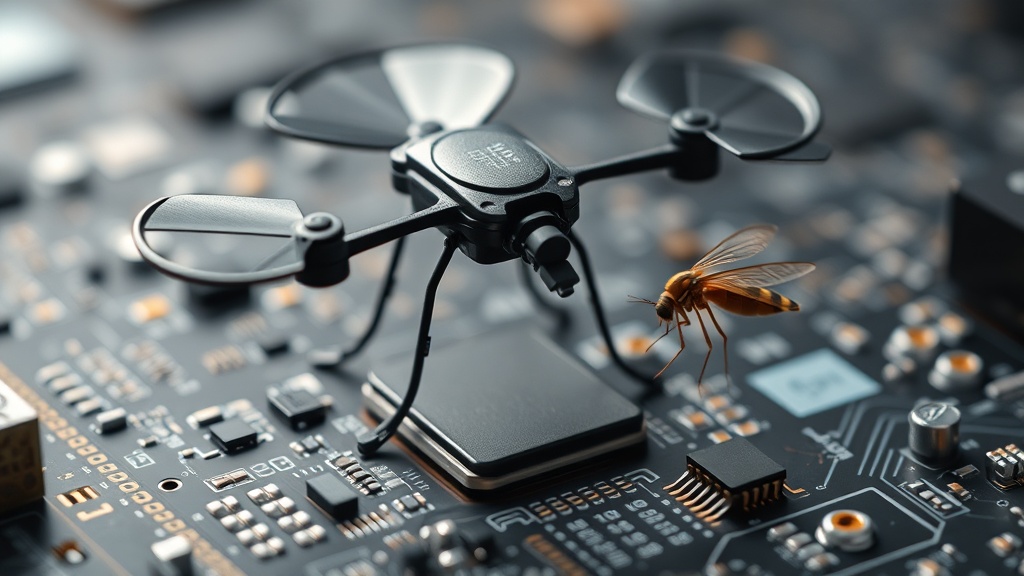
A significant milestone has been reached in the battle against insect-borne diseases. A specialized micro-drone, weighing a mere 40 grams, has successfully executed its first autonomous air-to-air kill against an insect. This achievement represents a critical advancement for the technology, which aims to eventually eradicate mosquitoes by targeting them in flight. Developed with the goal of providing a precise and efficient method of pest control, this drone moves beyond traditional spraying or trapping mechanisms, offering a more targeted and potentially less environmentally impactful approach.
The drone's ability to identify, track, and neutralize an insect mid-air without human intervention is a testament to sophisticated onboard processing and sensor fusion. This capability is essential for tackling flying pests like mosquitoes, which are vectors for numerous diseases including malaria, dengue fever, Zika virus, and West Nile virus. The World Health Organization estimates that mosquitoes cause over 700,000 deaths annually, highlighting the urgent need for innovative control methods. This micro-drone's success positions it as a promising tool in public health initiatives worldwide.
Technological Underpinnings of the Micro-Drone
The design of this autonomous insect-killing drone is a marvel of miniaturization and intelligent engineering. Its 40-gram frame houses advanced components that enable its aerial prowess. Central to its navigation and targeting system are sensors typically found in automotive applications, such as ultrasonic parking sensors. These sensors, repurposed for aerial insect detection, allow the drone to accurately gauge distances and map its immediate surroundings, crucial for maneuvering in cluttered environments and for precise targeting of small, fast-moving prey. The drone leverages machine learning algorithms to distinguish between target insects and other airborne objects, a complex task given the variability in insect size, speed, and flight patterns.
Once a target is identified and locked, the drone employs a method to eliminate the insect. While the specifics of the killing mechanism are not detailed, the operational range is reported to be up to 26 feet. This range suggests a system capable of projecting a targeted effect, such as a small dart, an electrical charge, or a concentrated burst of insecticide, without requiring the drone to physically collide with the insect. The autonomous nature of the system means it can operate in swarms or independently, covering large areas and performing continuous surveillance and elimination tasks. This level of automation is key to its potential for widespread deployment and effectiveness in eradicating mosquito populations.
The Road to Mosquito Eradication
The successful air-to-air kill is more than just a demonstration; it's a crucial validation of the core concept. Previous methods of mosquito control have relied heavily on broad-spectrum insecticides, which can harm beneficial insects and pose risks to human health and the environment. Other methods, like trapping, are often localized and can be labor-intensive. This autonomous drone technology offers a paradigm shift, enabling targeted elimination of mosquitoes at the source of their flight. The potential for swarm deployment means that large areas, including breeding grounds and high-risk zones, could be continuously patrolled and cleared of mosquitoes.
The ultimate goal of completely eradicating mosquitoes is ambitious, and this technology represents a significant step towards that objective. However, challenges remain. Scaling this technology for widespread use will require robust manufacturing processes, efficient battery life, and sophisticated fleet management systems. Furthermore, regulatory hurdles and public acceptance of autonomous aerial pest control systems will need to be addressed. The environmental impact of deploying large numbers of these drones, even if targeted, also warrants thorough investigation. The current success, however, provides a compelling proof-of-concept that could redefine pest control and disease prevention strategies globally.
Broader Implications and Future Prospects
Beyond mosquito eradication, the underlying technology of these autonomous micro-drones holds potential for other applications. The ability to identify, track, and neutralize small, fast-moving targets in real-time could be adapted for agricultural pest control, protecting crops from insects that damage yields. In security and defense, similar drones could be developed for surveillance or for neutralizing small, unmanned aerial threats. The repurposing of automotive sensors for such a specialized task also highlights the growing trend of cross-industry innovation and the potential for advanced computing and AI to unlock new functionalities from existing technologies.
The development team's focus on eradication underscores a long-term vision. This is not merely about population reduction but about driving populations to zero. Achieving this will require sustained effort, technological refinement, and integration with existing public health infrastructure. The success of this first air-to-air kill is a powerful indicator that such a future, where technology plays a direct role in eliminating disease vectors, is increasingly within reach. If this technology can be scaled effectively and responsibly, it could fundamentally alter the landscape of infectious disease control.