The Dawn of Autonomous Orbital Servicing
Northrop Grumman's Mission Extension Vehicle 1 (MEV-1) has entered orbit, marking a significant leap forward in space infrastructure. This sophisticated robotic satellite is designed to dock with and provide propulsion and life extension services to other orbiting spacecraft. Unlike previous attempts at orbital servicing, MEV-1 represents a mature, deployable solution capable of performing complex maneuvers autonomously. Its arrival signals a shift from experimental endeavors to practical, on-demand support for vital satellites, particularly those in geostationary orbit (GEO) where servicing is most economically and strategically important.
The challenges of operating in space are immense. Extreme temperatures, vacuum, radiation, and the sheer distance involved make any repair or refueling mission exponentially more difficult than terrestrial equivalents. MEV-1's design addresses these hurdles head-on. It's not just a robotic arm; it's a fully functional spacecraft equipped with advanced sensors, navigation systems, and a robust docking mechanism. This allows it to rendezvous with a target satellite, capture it securely, and then control its orbit and orientation. Think of it less like a tow truck and more like a highly skilled mechanic who can fly to your car, perform complex surgery while it's still running, and then drive it home for you.
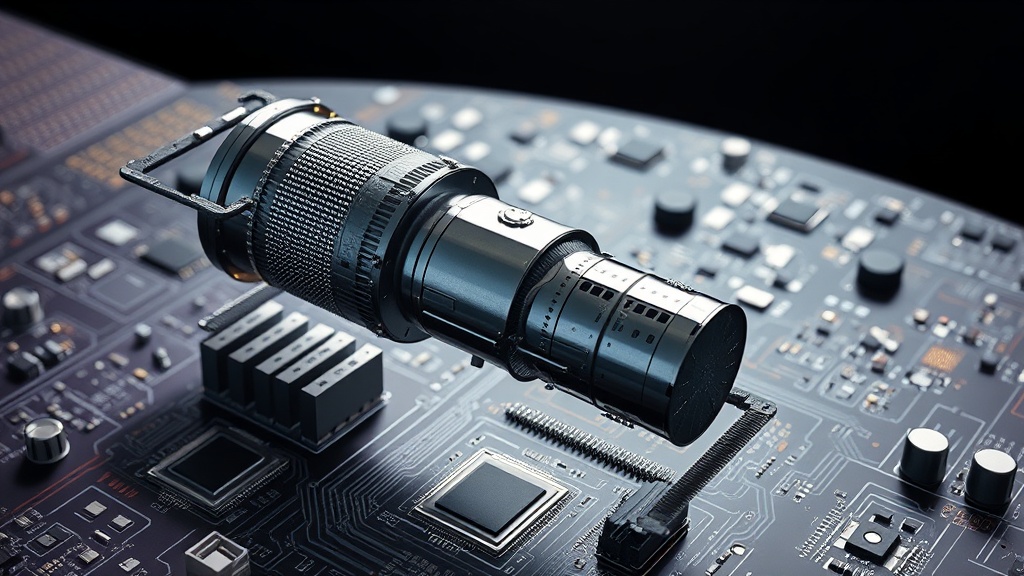
MEV-1's Capabilities and Operational Paradigm
MEV-1's primary function is to extend the operational lifespan of satellites that have run out of fuel. Many satellites are decommissioned not because their components have failed, but simply because their propellant has been exhausted. This is a massive waste of resources, as the satellite's functional hardware remains intact. MEV-1 solves this by attaching to the satellite's launch vehicle adapter, a standardized interface that typically remains after launch. Once docked, MEV-1 takes over the satellite's attitude control and propulsion, allowing it to maintain its orbital position for years, potentially decades, longer than its original design life.
The process involves a highly precise autonomous rendezvous and docking procedure. MEV-1 uses a combination of optical sensors, radar, and sophisticated guidance algorithms to approach the target satellite. Once within proximity, its capture mechanism engages, securing a firm grip. This is the critical phase where the inherent difficulties of space operations become most apparent. A slight miscalculation, a sudden jolt, or an unexpected debris impact could have catastrophic consequences for both spacecraft. MEV-1's systems are designed with multiple redundancies to mitigate these risks. The surprising detail here is not the complexity of the docking itself, but the sheer level of autonomy and precision required to execute it reliably, time after time, without human intervention in real-time.
Implications for the Space Economy and Geopolitics
The deployment of MEV-1 has profound implications for the global space economy. For satellite operators, it offers a cost-effective alternative to launching replacement satellites. Extending the life of existing assets means significant savings on manufacturing, launch costs, and the associated risks of new deployments. This is particularly relevant for expensive telecommunications, weather, and intelligence satellites operating in GEO, where replacement missions are exceptionally costly and complex.
Beyond simple life extension, MEV-1 paves the way for future, more advanced servicing capabilities. While MEV-1 itself is designed for refueling and life extension, the underlying technology and operational experience gained will be invaluable for developing satellites capable of performing repairs, upgrades, and even assembly in orbit. This opens up possibilities for constructing larger, more capable orbital platforms and maintaining complex constellations. The ability to service assets in space also has significant geopolitical ramifications. Nations and private entities that possess these capabilities gain a strategic advantage, ensuring the continued operation of their critical space infrastructure and potentially creating new avenues for space-based services and even resource utilization.
The Future of Orbital Maintenance
MEV-1 is not an endpoint, but a foundational step. Northrop Grumman envisions a future where multiple MEV-like vehicles can form a fleet, providing comprehensive servicing for a wide range of satellites. This includes not only life extension but potentially debris removal, in-orbit inspection, and even relocation of satellites to different orbits. The company is already developing MEV-2, which will build upon the lessons learned from MEV-1, likely incorporating enhanced capabilities or servicing different classes of satellites.
The