Meta Bets on Modular AI Chip Design for Future-Proofing
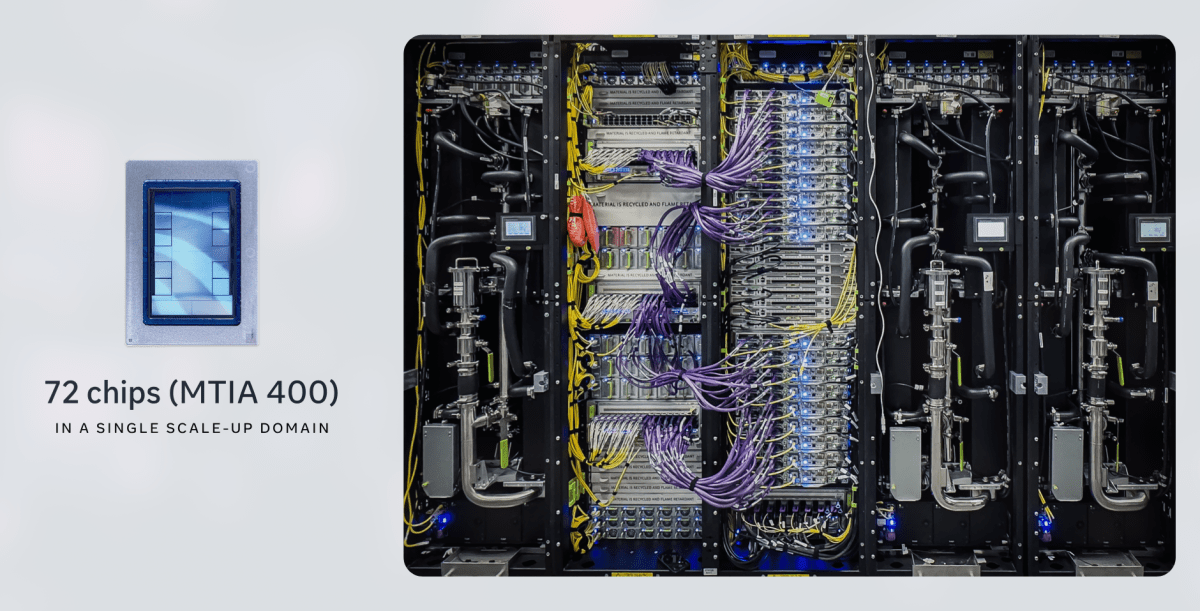
Meta is gearing up to begin production of its custom-designed artificial intelligence chips in September. This move signals a significant step in the company's ongoing effort to reduce its reliance on external chip suppliers like Nvidia and to tailor hardware specifically for its AI workloads, ranging from content recommendation algorithms to cutting-edge research in generative AI. The company's strategy centers on a modular approach to chip design, a forward-thinking decision aimed at ensuring the hardware remains relevant in the face of AI's notoriously fast-paced development cycles.
The AI hardware landscape is dominated by Nvidia's GPUs, which have become the de facto standard for training and running large AI models. However, these general-purpose processors are expensive and not always optimized for the specific tasks Meta needs to perform at its massive scale. By developing its own silicon, Meta aims to achieve greater efficiency, lower costs, and potentially unlock new capabilities that off-the-shelf solutions cannot provide. This initiative is part of a broader trend among major tech companies, including Google, Amazon, and Microsoft, to bring AI chip design in-house.
The Modular Advantage: Adapting to an Evolving AI
The core of Meta's new chip strategy lies in its modular design. Instead of creating a monolithic chip designed for a specific set of tasks that might become obsolete quickly, Meta is building chips composed of smaller, interchangeable functional units. This approach is akin to building with advanced LEGO bricks. If a new type of AI model emerges that requires a different combination of processing power, memory, or specialized AI acceleration, Meta can theoretically swap out or add modules without redesigning the entire chip from scratch. This flexibility is crucial in a field where architectural innovations and model sizes can shift dramatically within a year.
This modularity is expected to provide a significant advantage. By the time these chips roll off the production line in September, the AI landscape might have already evolved. A modular design allows Meta to adapt its hardware more nimbly than a traditional fixed-architecture chip would permit. For instance, if a new generation of transformer models requires more efficient attention mechanisms, or if generative models demand vastly increased VRAM, Meta could potentially reconfigure its modular designs for future production runs or even for updates to existing deployed chips, assuming a suitable interconnect fabric is established.
Beyond Nvidia: A Strategic Imperative
Meta's investment in custom AI silicon is not merely about cost savings; it's a strategic imperative for competitive differentiation and long-term control over its AI infrastructure. The company's AI efforts are foundational to its core products, including Facebook, Instagram, and its nascent metaverse ambitions. Efficiently training and deploying complex AI models at the scale Meta operates requires immense computational power. Relying solely on Nvidia, while practical in the short term, creates dependencies and exposes Meta to supply chain risks and price fluctuations. The company has publicly acknowledged the substantial capital expenditure required for its AI infrastructure, and custom silicon is a key lever for managing these costs.
The development of these chips has been a multi-year effort, involving significant investment in engineering talent and research. While Meta has not disclosed the specific name or architecture of these chips, reports suggest they are designed to handle both training and inference tasks, offering a versatile solution for its diverse AI needs. The initial production run in September will likely be a crucial testbed, providing valuable data on performance, power efficiency, and manufacturability. Success in this phase could pave the way for more advanced, specialized AI accelerators in the future, further solidifying Meta's in-house hardware capabilities.
The Broader Implications for the AI Hardware Market
Meta's push into custom AI chip production is part of a larger industry-wide shift. Companies that were once purely consumers of specialized hardware are now becoming designers and, in some cases, even manufacturers or partners with foundries. This trend challenges the dominance of established players like Nvidia and Intel and fosters innovation in chip architecture and manufacturing. It also raises questions about the future of the semiconductor supply chain and the increasing complexity of AI development, which now spans software, algorithms, and specialized hardware.
The success of Meta's modular approach could influence how other companies design their future AI hardware. If a modular system proves effective in keeping pace with AI advancements, it might become a more common design paradigm. For developers and researchers, this means potentially more accessible and specialized hardware tailored to their evolving needs, though the initial rollout and integration could present new challenges. What remains to be seen is how Meta's modular chips will perform in real-world, large-scale deployments compared to the highly optimized, albeit less flexible, offerings from industry leaders. The September production start is just the beginning of this ambitious hardware journey for Meta.