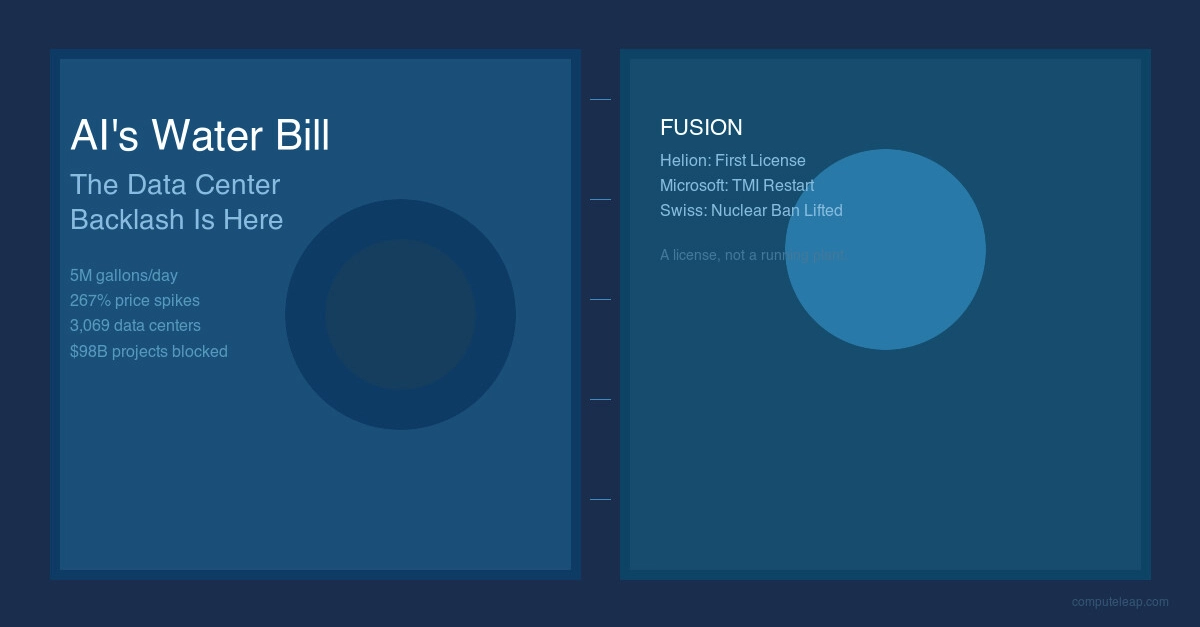
Data Center Wastewater Contamination Shuts Down Cheyenne Water Reuse System
City officials in Cheyenne, Wyoming, faced an unprecedented challenge in February when their reclaimed water system became contaminated with Cupriavidus gilardii, a rare metal-resistant bacterium. This discovery, which temporarily shut down the city's reuse water system for months, was eventually traced to wastewater discharges from Meta's $800 million data center campus. On July 2, the city publicly identified Goat Systems LLC, a shell company used by Meta for construction, as the source of the contamination.
City Councilman Pete Laybourn described the situation as "a very, very unpleasant surprise." However, experts suggest such surprises might become more common as the demand for data center infrastructure, particularly for AI workloads, escalates. The incident highlights a growing tension between the burgeoning digital economy and the environmental realities of resource-intensive operations like data centers, which require vast amounts of water for cooling.
The Thirst of AI and Data Centers
The exponential growth of artificial intelligence has placed an immense demand on computing power, leading to a rapid expansion of data centers globally. These facilities, the physical backbone of cloud computing and AI model training, are colossal consumers of energy and, critically, water. While energy consumption has long been a focus of environmental concerns surrounding data centers, their water footprint is increasingly coming under scrutiny.
Data centers use water primarily for cooling. Large-scale facilities often employ evaporative cooling towers, which can consume millions of gallons of water per day. This water is either drawn from municipal supplies or, in some cases, from local aquifers. The process of evaporation concentrates impurities in the remaining water, which is then discharged. In Cheyenne's case, the wastewater contained a specific bacterium, Cupriavidus gilardii, that is resistant to metals. The presence of such microorganisms in reclaimed water systems, intended for reuse in irrigation or industrial processes, poses significant public health and environmental risks.

Regulatory and Public Backlash
The Cheyenne incident is not an isolated event, but it serves as a stark warning. As communities become more aware of the significant water demands of data centers, particularly in water-scarce regions, regulatory bodies and the public are pushing back. The contamination incident in Cheyenne led to the city publicly naming Meta's construction entity and effectively barring the company from using the city's reuse water system moving forward. This suggests a potential shift in how municipalities will manage and permit data center development, prioritizing local resource availability and environmental protection.
The backlash is also manifesting in increased scrutiny of environmental impact assessments for new data center projects. Developers are facing greater pressure to demonstrate sustainable water management practices, including water recycling, closed-loop cooling systems, and the use of non-potable water sources where feasible. However, the scale of water required for advanced AI computations presents a formidable challenge. Some estimates suggest that training a single large AI model can consume hundreds of thousands of gallons of water, a figure that is difficult to reconcile with growing water scarcity in many parts of the world.
Broader Implications for the Tech Industry
The Cheyenne incident underscores a critical, often overlooked, aspect of the AI boom: its environmental cost. While the capabilities of AI continue to expand, the infrastructure supporting it faces growing environmental constraints. This situation forces a confrontation between the perceived limitless potential of AI and the finite resources of the planet. For tech companies, especially those investing heavily in AI infrastructure, this means a more complex operational landscape. They must not only secure energy but also navigate water rights, environmental regulations, and public perception.
The long-term implications could include a slowdown in data center construction in water-stressed regions, increased investment in water-efficient cooling technologies, and a greater emphasis on sustainable design and operational practices. It also raises questions about the responsibility of tech giants for the environmental impact of their construction entities and supply chains. As AI continues its rapid integration into society, the 'water bill' for its digital infrastructure is coming due, and the industry must find sustainable solutions before more communities face unpleasant surprises.
What remains to be seen is how quickly and effectively the industry can innovate in water management. The current cooling methods, while effective, are often water-intensive. Developing and deploying truly water-neutral or water-positive cooling solutions at scale will be a significant engineering and logistical challenge. The incident in Cheyenne may serve as a catalyst for this much-needed innovation, pushing the tech industry to address the environmental externalities of its growth more proactively.