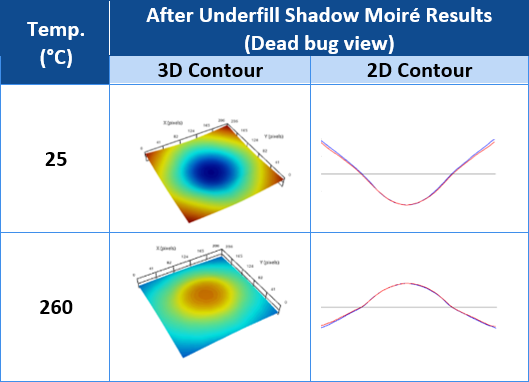
The Challenge of Simulating Metal TIM Warpage
Accurately predicting the warpage of thermal interface materials (TIMs) under operational conditions is crucial for the reliability and performance of electronic devices. This is particularly true for metal TIMs, which are increasingly used in high-power applications where efficient heat dissipation is paramount. However, current simulation methodologies often fall short, leading to discrepancies between predicted and actual device behavior. The core of the problem lies not in the simulation physics themselves, but in the inadequate characterization of the materials involved.
Metal TIMs, often in the form of foils, pads, or pastes, are subjected to complex thermomechanical stresses during their lifecycle. These stresses arise from temperature gradients, pressure applied during assembly, and the inherent properties of the materials themselves. Warpage, or the bending and deformation of the TIM, can lead to uneven contact pressure, compromised thermal conductivity, and ultimately, device failure. Traditional simulation approaches, while robust for many engineering problems, struggle with the nuances of TIM behavior.
Why Current Simulations Fail: The Data Deficit
The primary reason metal TIM warpage simulations fail to accurately predict real-world outcomes is the lack of precise, application-relevant material property data. Simulation models rely on inputs such as thermal expansion coefficients (CTE), Young's modulus, Poisson's ratio, and yield strength. For TIMs, these properties are not static; they can vary significantly with temperature, pressure, and even the specific formulation of the material.
Consider the CTE. While a bulk CTE value might be available from a material datasheet, it often doesn't account for the complex microstructure of a metal TIM, which might include fillers, binders, or a porous structure. The way these components interact under thermal load can lead to anisotropic expansion, meaning the material expands differently in different directions. Standard simulation tools typically assume isotropic behavior, failing to capture this directional dependency.
Furthermore, the pressure applied during the assembly of electronic components significantly influences the effective properties of a TIM. A TIM that appears relatively stiff and stable in a free state might deform substantially under the hundreds of pounds per square inch (PSI) of pressure exerted by a heat sink clamp. This pressure can alter the material's modulus, reduce its effective thickness, and even induce plastic deformation. Current characterization methods often test materials under uniaxially applied loads or no load at all, failing to replicate the multi-axial stress states experienced in situ.
The mechanical properties, such as Young's modulus and yield strength, are also highly sensitive to temperature and strain rate. As devices heat up and cool down cyclically, the TIM undergoes repeated mechanical cycling. If the material exhibits viscoelastic or plastic behavior, its response will change over time, deviating from the initial idealized elastic model. Capturing these time-dependent and non-linear behaviors requires advanced material models and extensive experimental data that is rarely collected.
The Path to Accurate Simulation: Enhanced Characterization
Fixing these simulation failures requires a fundamental shift towards more comprehensive and application-specific material characterization. This involves moving beyond standard material property tests and embracing techniques that replicate the operational environment.
Firstly, anisotropic material property measurement is essential. Techniques like Digital Image Correlation (DIC) can be employed to map strain fields across the TIM surface during thermal cycling or mechanical loading. By observing how different regions of the TIM deform, engineers can infer directional CTE and modulus values. This detailed strain mapping provides a much richer dataset than simple extensometer measurements.
Secondly, pressure-dependent property testing must become standard. This involves designing test fixtures that can apply controlled, multi-axial pressures to TIM samples while simultaneously measuring their thermal and mechanical response. Understanding how the TIM's stiffness, thermal conductivity, and CTE change as pressure increases from zero to typical assembly levels is critical. This is akin to understanding how a sponge behaves when squeezed – its volume and stiffness change dramatically.
Thirdly, long-term and cyclic testing are necessary to capture time-dependent material degradation and fatigue. Accelerated life testing under realistic temperature cycles, combined with periodic property measurements, can reveal if the TIM's performance degrades over time due to creep, plastic deformation, or micro-cracking. This data is vital for predicting the long-term reliability of the device.
Finally, advanced material modeling is needed to incorporate the experimental findings. Instead of relying on simple linear elastic models, engineers should explore non-linear material models, viscoelastic models, and plasticity models that can capture the complex behavior observed in experiments. This might involve custom material subroutines within finite element analysis (FEA) software.
Bridging the Gap: Collaboration and New Tools
The responsibility for this enhanced characterization doesn't fall solely on simulation engineers. It requires close collaboration between material scientists, experimentalists, and simulation engineers. Material suppliers need to invest in providing more detailed characterization data, and simulation tool developers need to provide the frameworks to incorporate this complex data.
The development of specialized test equipment and software tools that can facilitate this advanced characterization is also critical. For instance, automated systems that can perform high-throughput material property testing under various pressure and temperature conditions would significantly accelerate the process. Similarly, simulation platforms that offer flexible user-defined material models can accommodate the bespoke data generated from these advanced tests.
What nobody has addressed yet is the economic feasibility of performing such extensive material characterization for every new TIM formulation or every new device design. While the accuracy gained is invaluable for high-reliability applications, the cost and time investment for comprehensive testing could be prohibitive for lower-margin products. Finding a balance between simulation fidelity and practical testing constraints will be key to widespread adoption.
Conclusion: From Data Gaps to Design Confidence
Metal TIM warpage simulations are not inherently flawed; their accuracy is directly limited by the quality and relevance of the input material data. By moving towards application-specific characterization that accounts for pressure dependency, anisotropy, and time-dependent behavior, engineers can build more reliable models. This enhanced fidelity will not only improve design confidence but also lead to more robust and longer-lasting electronic devices, especially as power densities continue to climb.