The Challenge of AI Agent Observability
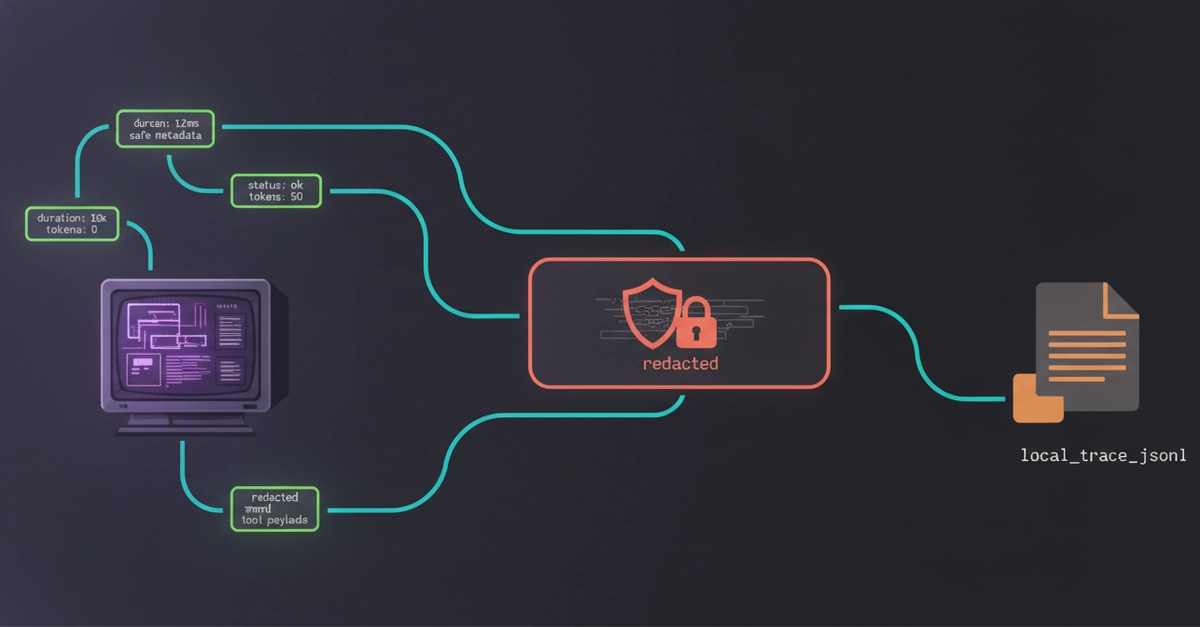
AI agents, capable of complex decision-making and tool usage, present a significant challenge for observability. Understanding their execution flow—which steps ran, in what order, which tools succeeded or failed, where latency occurred, and how token budgets were managed—is crucial for debugging, performance tuning, and operational management. Traditional tracing methods, often implemented by capturing every prompt, argument, result, and response, offer deep visibility but inadvertently create a second copy of potentially sensitive application data. This poses a significant privacy risk, turning observability systems into repositories of confidential information.
The ease of implementation for full payload tracing is its primary allure. However, this approach quickly escalates the data surface area, making it difficult to govern and potentially exposing proprietary algorithms, user data, or confidential business logic embedded within agent interactions. For organizations handling sensitive information, this direct capture of raw data is often a non-starter, leading to a trade-off between necessary operational insight and stringent privacy requirements.
Introducing Metadata-Only Tracing
Metadata-only tracing offers a pragmatic solution by fundamentally altering what data is captured. Instead of logging the raw inputs and outputs of model calls and tool executions, this approach focuses on recording the behavior of the agent. This includes critical operational details such as the sequence of executed steps, the success or failure status of model and tool operations, the distribution of latency across operations, the number of retries and fallbacks, and metrics like input token counts and cached input usage.
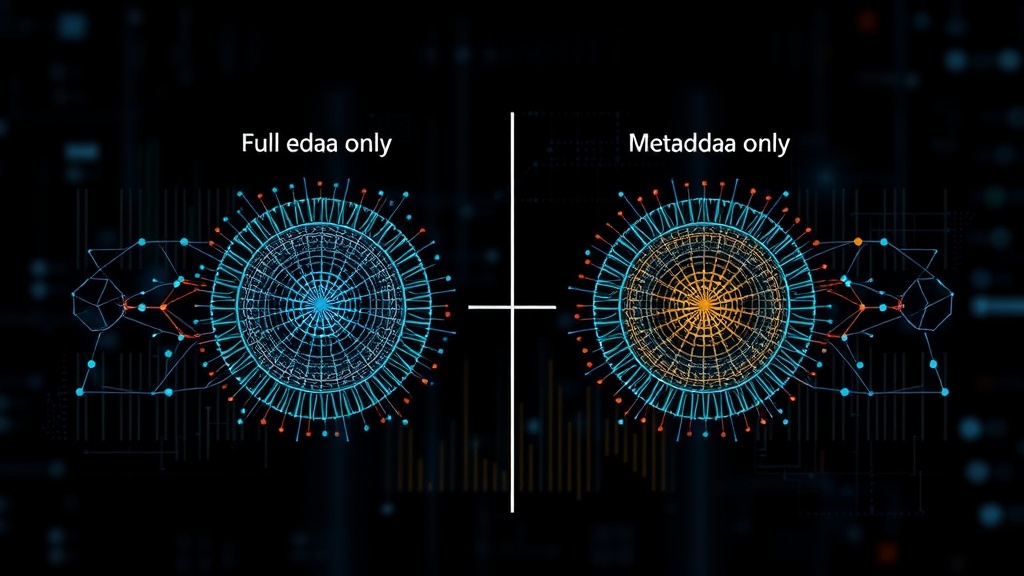
The core design goal is to provide sufficient information to answer essential operational questions without retaining the sensitive payloads. This significantly reduces the risk profile of telemetry data. While not entirely eliminating risk—as metadata itself can sometimes infer sensitive information depending on its granularity—it creates a much smaller, more governable data surface. This makes it a more viable option for privacy-conscious environments, including those dealing with regulated data or proprietary information.
Key Operational Questions Answered by Metadata Tracing
A well-designed metadata-only tracing system can effectively answer a range of operational questions that are vital for managing AI agents:
- Execution Flow and Order: Which specific steps or functions within the agent's workflow were invoked, and in what sequence? This is fundamental to understanding the agent's logic and identifying deviations.
- Success/Failure Status: Did model calls and tool executions complete successfully, or did they encounter errors? This helps pinpoint points of failure in the agent's logic or external dependencies.
- Latency Distribution: Where is the execution time being spent? Identifying latency bottlenecks is key to performance optimization, whether it's in model inference, tool execution, or network communication.
- Retries and Fallbacks: How often did the agent need to retry an operation or resort to a fallback mechanism? This indicates the robustness and stability of the agent's design and its underlying tools.
- Token Budget Management: How many input and output tokens were consumed by model calls? This is critical for cost management and for understanding the efficiency of the agent's interactions with large language models.
- Cache Utilization: Was a cached response used for a model call? This provides insight into the effectiveness of caching strategies and their impact on performance and cost.
Balancing Insight and Privacy
The dichotomy between comprehensive observability and data privacy is a familiar one in software development. For AI agents, this tension is amplified due to the nature of their interactions with large language models and external tools, which can involve sensitive data. Metadata-only tracing represents a significant step towards resolving this conflict.
By focusing on the 'what,' 'when,' 'how,' and 'how long' of agent operations, rather than the 'what was said,' it provides developers and operators with the necessary insights to monitor, debug, and optimize their AI systems. This approach is akin to a flight recorder for an AI agent: it logs critical operational parameters and events without storing the full context of every conversation or data transaction. This makes the system more governable, reduces the likelihood of accidental data leakage, and aligns better with data protection regulations and corporate privacy policies.
However, it is crucial to acknowledge that metadata is not entirely devoid of privacy implications. Depending on the granularity of the metadata collected (e.g., if tool names or specific parameters are logged), it might still be possible to infer aspects of the sensitive data being processed. Organizations must carefully define their metadata schema to ensure it strikes the right balance for their specific use cases and risk tolerance. The goal is not zero risk, but a substantially reduced and more manageable risk surface compared to full-payload logging.
The Future of AI Agent Observability
As AI agents become more integrated into critical business processes, robust and privacy-preserving observability solutions will be paramount. Metadata-only tracing provides a compelling framework that allows organizations to gain the visibility they need without compromising on data privacy. This approach enables teams to build, deploy, and manage AI agents with greater confidence, knowing that their operational health can be monitored effectively while sensitive data remains protected by default.
The design of these systems will likely evolve, potentially incorporating configurable levels of detail, selective payload capture for specific debugging scenarios, and enhanced anonymization techniques. The fundamental principle, however, remains: prioritize behavioral telemetry over raw data capture to achieve privacy-first observability for the complex world of AI agents.