
Meta's Innovative Server Hardware Strategy
Meta Platforms is implementing a novel strategy in its data centers, breathing new life into older server components by reusing RAM modules. This initiative, detailed in internal documentation and confirmed by industry observers, involves a custom-designed bridge chip that allows DDR4 RAM, often considered legacy, to function in newer server motherboards designed for more advanced memory types like DDR5. This approach is a significant departure from the industry standard of retiring older hardware, offering a compelling solution to reduce e-waste and substantially lower operational costs.
The core of this innovation lies in Meta's ability to circumvent the typical limitations imposed by motherboard compatibility. Newer server designs often integrate memory controllers directly into the CPU, which are optimized for specific memory generations. By developing a specialized bridge chip, Meta engineers have effectively created an adapter that translates signals and protocols between the older DDR4 RAM and the newer server architecture. This isn't merely a software tweak; it requires sophisticated hardware design to ensure signal integrity, timing, and power management are all correctly handled.
This move is particularly noteworthy given the industry's relentless pursuit of the latest hardware. Server manufacturers and cloud providers typically upgrade their entire fleet to the newest generation of CPUs and RAM to achieve marginal performance gains and maintain a competitive edge. However, this cycle generates massive amounts of electronic waste and incurs significant capital expenditure. Meta's strategy challenges this paradigm, suggesting that older, still functional components can be leveraged effectively with intelligent engineering.
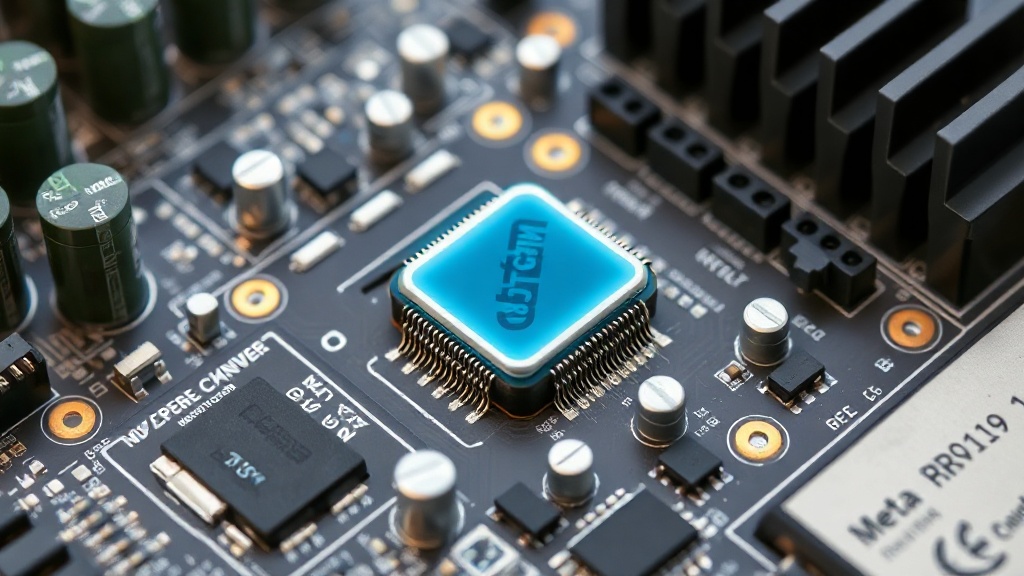
The Technical Challenge and Solution
The technical hurdles in such an endeavor are substantial. DDR4 and DDR5 memory operate at different speeds, voltages, and use distinct signaling protocols. A bridge chip must not only translate these differences but also manage latency and ensure that the overall system performance does not degrade unacceptably. For Meta, the goal is not to achieve peak performance but to maintain sufficient performance for its specific workloads, which often involve large-scale data processing, AI training, and content delivery, where raw memory speed is not always the primary bottleneck.
The bridge chip acts as an intermediary, effectively making the older DDR4 modules appear as compatible DDR5 modules to the server's memory controller. This involves complex signal conditioning, protocol conversion, and potentially some form of buffering to accommodate speed differences. The design likely required close collaboration between Meta's hardware engineers and its silicon partners. The success of this project hinges on the reliability and efficiency of this custom silicon.
The implications for Meta's data center operations are profound. By extending the useful life of DDR4 RAM, the company can defer significant capital expenditures associated with purchasing new memory modules. Furthermore, the environmental benefit of reusing components cannot be overstated. The electronics industry is a major contributor to global e-waste, and initiatives like Meta's could set a precedent for more sustainable data center practices. This is akin to a mechanic finding a way to make perfectly good older car parts fit into a new model, saving the owner money and reducing waste, rather than insisting on a full, expensive replacement.
Economic and Environmental Imperatives
The decision to pursue this path is driven by both economic and environmental imperatives. Data centers are massive consumers of energy and hardware. Even small improvements in component longevity or reuse can translate into millions of dollars in savings and a significant reduction in environmental footprint. Meta operates at a scale where such optimizations have a magnified impact.
The cost of DDR5 RAM is also a factor. While prices have been falling, newer technologies are often more expensive initially. By continuing to utilize existing stocks of DDR4 RAM, Meta can mitigate the immediate cost pressures associated with a full transition to DDR5. This pragmatic approach allows the company to benefit from the advancements in CPU technology without being forced into a complete, costly memory upgrade cycle.
From an environmental perspective, the reuse of RAM modules directly addresses the growing problem of e-waste. Manufacturing RAM is an energy-intensive process, and extending the lifespan of these components means fewer new modules need to be produced, conserving resources and reducing the carbon emissions associated with manufacturing and transportation. This aligns with broader corporate sustainability goals that many large tech companies are increasingly prioritizing.
Broader Industry Impact and Future Considerations
Meta's initiative could spur similar innovations across the industry. As other hyperscalers and enterprise data centers face similar cost and sustainability pressures, the development of custom bridge chips or other hardware adaptation technologies may become more common. This could lead to a more modular and flexible approach to server hardware design, where components are not necessarily tied to the absolute latest generation of CPUs or chipsets.
However, this strategy is not without its trade-offs. While performance might be sufficient for many workloads, there will inevitably be applications where the absolute highest memory bandwidth and lowest latency offered by native DDR5 are critical. Meta's success will depend on its ability to carefully segment its workloads and deploy this DDR4-based solution only where it makes economic and technical sense.
What remains to be seen is whether this custom hardware approach will be shared with the broader community or remain an internal optimization. If Meta were to open-source the designs or license the bridge chip technology, it could significantly accelerate the adoption of more sustainable hardware practices across the entire industry. The company has a history of open-sourcing significant technologies, and this initiative, if shared, could be another major contribution to the open compute movement.
Ultimately, Meta's decision to reuse older RAM with a custom bridge chip is a testament to its engineering prowess and its commitment to operational efficiency and sustainability. It's a clear signal that in the world of hyperscale computing, innovation isn't just about the next generation of silicon, but also about intelligently extending the life and utility of existing hardware.