Mefi's Studio AI+ 0.4: A Glimpse into Enhanced AI Coding Workspaces
Mefi's Studio AI+, a desktop environment designed for collaborative coding with AI agents, is gearing up for its 0.4 release. This upcoming version prioritizes improving developer insight into agent operations, their interdependencies, and areas requiring human intervention. While currently in a development preview stage with the stable package at 0.3.3, the unreleased 0.4 work signals a significant shift towards more transparent and manageable AI-assisted development.
Agent Brain: Visualizing the AI's Workflow
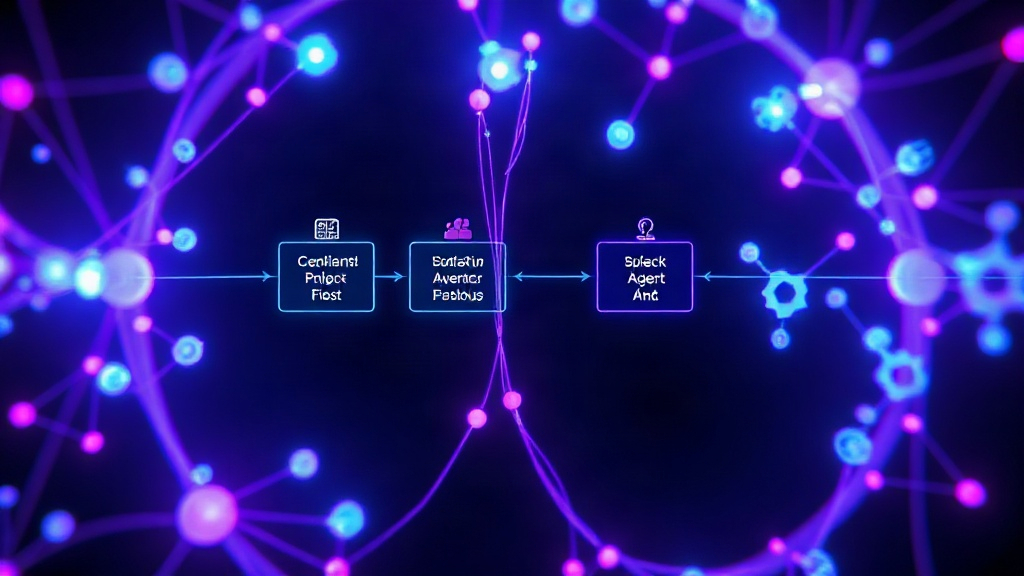
The centerpiece of the 0.4 candidate is Agent Brain. This feature offers a 'Live' view that meticulously details a task's pipeline, identifies the lead agent orchestrating the work, and lists any sub-agents involved. A key innovation is the ability to replay work events. This replay functionality allows developers to trace the progression of a day's activities, understanding how decisions were made and what steps were taken. Pipelines themselves are dynamic, capable of expanding from worker to-do lists and explicit MEFI_STEP updates. As steps are completed, they are intelligently folded away, keeping the active view uncluttered and focused on current progress.
Project Map: Contextualizing Agent Actions
To provide agents with a deeper understanding of the development landscape, Project Map constructs a comprehensive view of project systems. It achieves this by analyzing Git history and tracking files that agents read or modify. This map visually connects related systems within a project, a crucial step in ensuring agents work cohesively. Furthermore, it curates and presents the most relevant files directly within task briefs, ensuring agents have the necessary context before commencing work. The Project Map interface is designed to coexist with the ongoing conversation, allowing developers to reference the project's structure while interacting with their AI collaborators. This feature aims to reduce the cognitive load on developers by making the AI's operational context immediately apparent and actionable.
Coordinated Agents: Streamlining Complex Tasks
Beyond individual agent visibility, Mefi's Studio AI+ 0.4 introduces enhanced coordination mechanisms. The update focuses on enabling agents to work together more effectively on complex tasks. This involves clearer communication protocols between agents and improved methods for distributing sub-tasks. The goal is to move away from siloed AI operations towards a more integrated team of agents that can tackle larger, more intricate development challenges. For instance, an agent tasked with refactoring a module might delegate the generation of new unit tests to a specialized testing agent, with both agents' progress visible within the Agent Brain pipeline. This coordination is fundamental to scaling AI's utility in software development, moving beyond simple code generation to more sophisticated problem-solving.
Developer Experience and Future Scope
The overarching theme of Mefi's Studio AI+ 0.4 is the enhancement of the developer experience when working with AI. By providing greater transparency through Agent Brain and richer context via Project Map, the update seeks to build trust and efficiency. Developers can now more easily debug AI-driven processes, understand the 'why' behind agent actions, and provide targeted feedback. The ability to replay events is akin to having a flight recorder for AI development tasks, invaluable for post-mortems and learning. The coordinated agent functionality promises to unlock more ambitious use cases, where AI can manage significant portions of a project lifecycle. The unreleased nature of these features means the final implementation may vary, but the direction is clear: Mefi's Studio AI+ is evolving into a powerful command center for human-AI software development teams.
The implications for developers are significant. Instead of treating AI agents as black boxes, users will have the tools to observe, understand, and guide their work. This shift is critical for adopting AI in production environments where accountability and predictability are paramount. The focus on context, like Project Map providing relevant files, directly addresses a common pain point: AI agents lacking the necessary project-wide understanding to perform tasks effectively. This preview suggests Mefi's Studio AI+ is building a robust platform for managing complex AI workflows, moving beyond simple prompt-response interactions to a more integrated and visible development partnership.
What remains to be seen is how seamlessly these features will integrate into existing developer workflows and version control systems. While Git history is leveraged, the depth of integration with other CI/CD pipelines or project management tools will be a key factor in its adoption. The success of Agent Brain's replay feature will also depend on its ability to handle high-volume, rapid agent activity without becoming overwhelming. As Mefi's Studio AI+ matures, its ability to orchestrate increasingly complex AI-driven development tasks will define its place in the evolving landscape of AI-assisted software engineering.