The Limits of Traditional APIs
Traditional APIs operate on a simple, direct request-response model. Think of ordering from a restaurant menu. You see a list of dishes (available API calls), you choose one, and you get exactly what you ordered. If you want to change your order, you have to make a new, explicit request. There's little inherent memory of past interactions or understanding of the broader context of your dining experience. For simple, atomic tasks, this is perfectly efficient. You ask for the weather in London, you get the weather in London. You request a user's profile, you get that profile. This model has been the backbone of web services for decades, enabling everything from simple data retrieval to complex system integrations.
However, this rigidity becomes a bottleneck when interactions become more complex or require an understanding of state and context. Imagine planning a surprise birthday party. You need invitations, food, decorations, and a cake. With traditional APIs, you'd make separate, explicit calls for each: "Send invitations to 20 guests," "Order 20 red balloons," "Arrange for a chocolate cake for 10 people." If your plans change mid-way – say, you decide to change the theme from "superheroes" to "space" – you can't just tell the system "change the theme." You have to go back and cancel specific requests and make new ones, potentially for every single item affected by the theme change. This is cumbersome and inefficient, especially as the complexity of the interaction grows.
Traditional APIs often lack a built-in mechanism for understanding conversational history or inferring user intent beyond the immediate request. They are stateless by default, meaning each API call is treated as an independent event. While developers can build state management into their applications by passing context back and forth, this adds significant complexity to both the client and server sides. The system doesn't "remember" that you previously asked for balloons and are now asking about cake, nor does it necessarily understand that both are part of the same event planning process. This makes it difficult to build truly adaptive and intelligent systems that can respond dynamically to evolving requirements.
Introducing Message-Centric Programming (MCP)
Message-Centric Programming (MCP) offers a different approach. Instead of focusing on discrete, isolated requests, MCP centers communication around messages that carry context and intent. Continuing the party planning analogy, with MCP, you'd interact with a sophisticated party planner. You might start by saying, "I'm planning a party." The planner, understanding the context, would then ask clarifying questions: "For how many people?" "What's the occasion?" You reply, "About 20 people, it's a birthday." The planner can then proactively suggest relevant services, like a cake size appropriate for 20 people or decorations that fit a birthday theme. If you later decide to change the theme, you can simply state, "Let's make it a space-themed party." The planner, understanding the ongoing conversation and the impact of this change, can automatically adjust related suggestions or orders, such as recommending rocket-shaped balloons or a galaxy-themed cake.
MCP treats interactions as a series of connected messages, allowing the system to maintain a richer understanding of the conversation's state and the user's overall goal. This is akin to having a conversation with a human assistant who remembers what you've discussed previously and can anticipate your needs. The messages themselves are designed to be more expressive, capable of carrying not just data but also intent, state transitions, and contextual information. This allows for more fluid and dynamic interactions, where the system can adapt to changes and guide the user more effectively.
The core difference lies in how context is handled. Traditional APIs require developers to manually manage context. With MCP, context is often an intrinsic part of the messaging framework. This means the system can inherently understand that a request for "cake" is related to a prior discussion about "party planning" and a subsequent decision to change the "theme." This leads to more intelligent agents and services that can handle ambiguity, infer intent, and recover from errors more gracefully. It moves away from a purely transactional model to one that supports more collaborative and goal-oriented interactions.
Key Differences Summarized
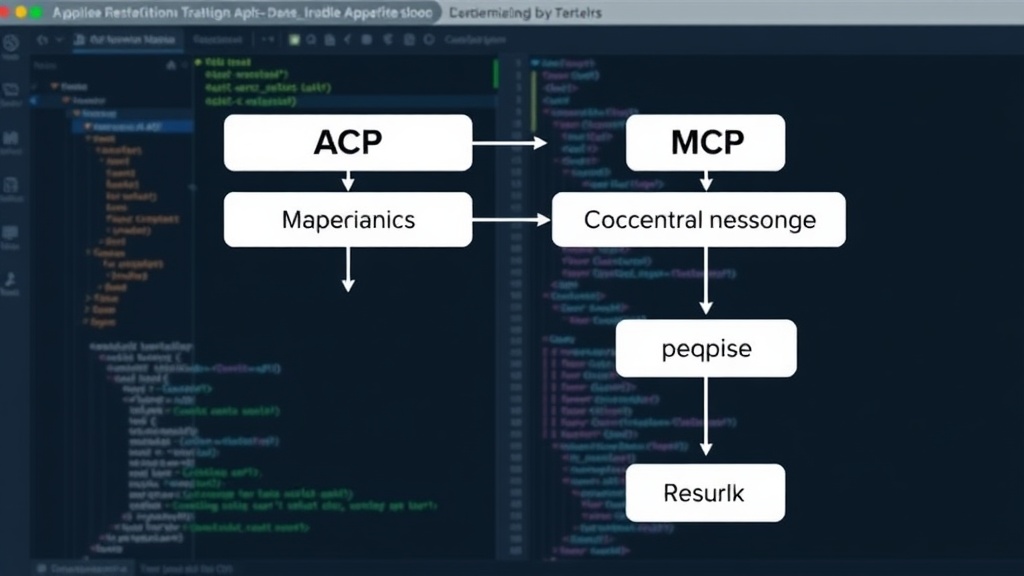
The divergence between MCP and traditional APIs can be distilled into several key areas:
- State Management: Traditional APIs are typically stateless, requiring clients to manage state. MCP frameworks often incorporate state management, allowing services to maintain context across multiple interactions.
- Context Awareness: MCP messages are designed to carry contextual information, enabling systems to understand the 'bigger picture' of an interaction. Traditional APIs treat each request in isolation.
- Intent Recognition: MCP aims to better recognize and act upon user intent, even when it's not explicitly stated in every message. Traditional APIs respond directly to explicit commands.
- Adaptability: The contextual and stateful nature of MCP allows for more adaptive systems that can handle changes and evolving requirements more smoothly. Traditional APIs are more rigid and less forgiving of mid-stream changes.
- Communication Style: MCP is more akin to a natural conversation, where information is exchanged incrementally and context is built over time. Traditional APIs are like a command-line interface, where each command must be precise and complete.
This shift in paradigm is not just an academic distinction; it has practical implications for how we design and build distributed systems. For developers, it means a potential for less boilerplate code related to state management and a greater ability to create more sophisticated, user-friendly applications. For end-users, it translates to more intuitive and responsive digital experiences, where applications feel less like rigid tools and more like intelligent assistants.
What's Next for MCP?
While the concept of message-centric programming is not entirely new, its practical implementation and widespread adoption are still evolving. The benefits of context-aware, stateful communication are clear, particularly for complex applications like chatbots, virtual assistants, and sophisticated workflow automation tools. However, the transition from established API practices to MCP-centric development requires a shift in mindset and tooling. Developers will need to embrace new patterns for designing message flows, managing distributed state, and handling the richer semantics that MCP enables.
The surprising detail here is not that a new communication paradigm is emerging, but how it directly addresses the inherent limitations of the current, widely adopted API models for increasingly complex AI-driven applications. As systems become more intelligent and interactions more nuanced, the rigid, stateless nature of traditional APIs will become an increasingly significant impediment. MCP offers a path forward, promising more natural, adaptive, and intelligent system interactions. The challenge now lies in building robust, scalable, and developer-friendly frameworks that can bring this vision to fruition across the industry.