What is MCP? The Model Context Protocol
If you've encountered the term "MCP server" recently, you're not alone. Even some advanced AI models in mid-2026 might not fully grasp it. Let's clarify. MCP stands for Model Context Protocol. It's an open standard, introduced by Anthropic in late 2024, designed to enable AI models to interface with external tools and data sources in a standardized manner.
Think of MCP as a universal adapter for AI. Before MCP, integrating an AI model with an external service—like a database, a weather API, or a stock ticker—often required custom-written code for each specific interaction. This was time-consuming and brittle. MCP aims to eliminate this friction by providing a common language and structure for these connections.
The Role of an MCP Server
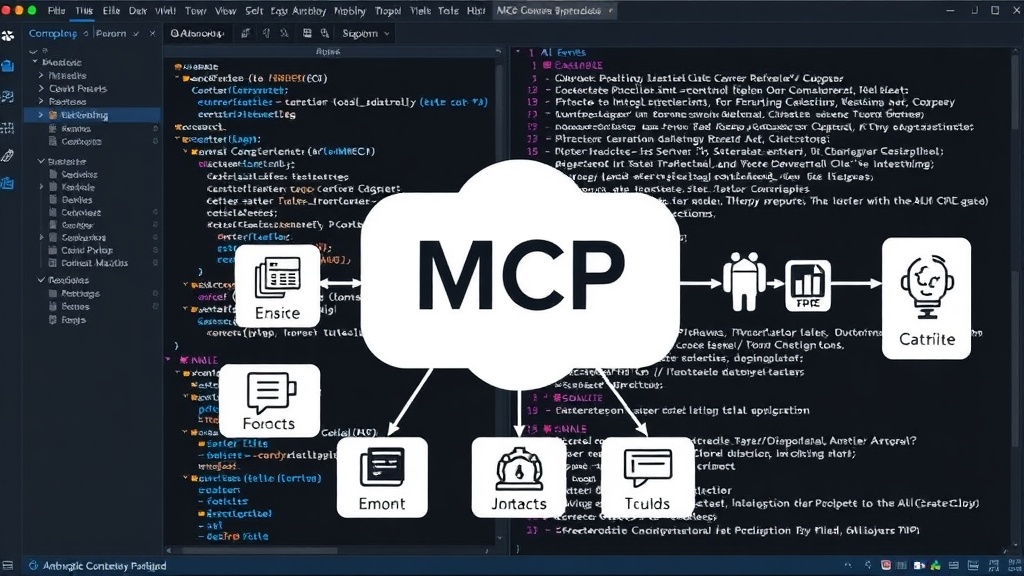
An MCP server is essentially a software program that exposes specific capabilities to AI clients that speak the MCP protocol. These capabilities can range from simple data retrieval, such as searching a database or querying live prices, to more complex actions like executing code or interacting with other APIs. Essentially, it acts as a bridge, translating the AI model's requests into actions that external systems can understand and execute, and then relaying the results back to the model.
Imagine an AI agent tasked with planning a trip. Without MCP, it might struggle to access real-time flight prices, hotel availability, or weather forecasts. With an MCP server, the agent can query these external data sources directly. The MCP server acts as the intermediary, fetching the data and presenting it to the AI in a format it can process. This is akin to giving the AI agent a set of specialized tools it can call upon, much like a human might use a calculator for math or a search engine for information.
Why MCP Matters for Builders
For developers and founders building AI agents and applications, MCP is becoming a critical piece of infrastructure. The standardization offered by MCP significantly accelerates development cycles. Instead of building bespoke integrations for every new tool or data source an agent needs, developers can leverage existing MCP-compatible servers or build their own tools to MCP standards. This allows for greater interoperability and composability within AI systems.
The benefits are manifold:
- Faster Development: Reduces the time and effort required to connect AI models to external functionalities.
- Increased Interoperability: Allows different AI models and tools to communicate seamlessly, fostering a more connected AI ecosystem.
- Enhanced Agent Capabilities: Empowers AI agents with access to real-time data and the ability to perform actions in the real world, moving beyond static knowledge bases.
- Reduced Technical Debt: Standardized integrations are easier to maintain and update compared to custom-built solutions.
MCP essentially democratizes access to external functionalities for AI models. It lowers the barrier to entry for creating sophisticated AI agents that can interact with the digital and physical world. As more tools and platforms adopt the MCP standard, the complexity of building powerful AI applications will decrease, while their potential capabilities will expand dramatically.
The Technical Underpinnings (Simplified)
While the full technical specification of MCP is detailed, the core concept revolves around request-response patterns and structured data formats, often JSON. An AI client (the model or agent) sends a request to an MCP server, specifying the desired action and any necessary parameters. The MCP server interprets this request, performs the action (e.g., queries a database, calls an API), and returns the result in a standardized MCP response format back to the AI client.
This structured communication ensures that the AI model receives information in a predictable way, regardless of the underlying complexity of the external tool. It abstracts away the intricacies of different APIs, database schemas, or service protocols. For instance, an MCP server for a weather API would handle the specific HTTP requests and data parsing, returning only the relevant weather information (temperature, conditions, etc.) to the AI in a clean, usable format.
The open nature of the standard means that anyone can inspect how it works, contribute to its development, and build compatible tools. This transparency is key to fostering trust and adoption within the developer community. Unlike proprietary protocols, MCP is designed for broad accessibility, encouraging a collaborative ecosystem around AI tool integration.
MCP vs. Other Integration Methods
Before MCP, common methods for AI integration included:
- Direct API Calls: Developers would write specific code to call each external API. This is highly customized and requires significant effort for each new integration.
- Function Calling (Proprietary): Some model providers offered proprietary function-calling mechanisms. While powerful, these were often tied to specific models and lacked broad interoperability.
- Custom Middleware: Building bespoke middleware services to translate between AI models and external systems. This is effective but expensive and time-consuming to maintain.
MCP offers a significant advantage by providing a unified, open standard. It's like moving from a world where every appliance needs its own unique plug and socket to a world where everything uses a standard USB-C port. The specific tool (the appliance) remains the same, but the way it connects becomes universal. This standardization is what makes MCP servers so powerful for builders looking to create versatile and scalable AI agents.
The Future with MCP
As AI agents become more sophisticated and integrated into daily workflows, the demand for seamless access to external data and functionalities will only grow. MCP is poised to become a foundational technology in this evolution. We can expect to see a proliferation of MCP servers for a vast array of services, from enterprise databases and internal company tools to public APIs for finance, logistics, and entertainment.
The most significant implication for builders is the ability to rapidly assemble complex AI systems by composing existing MCP-compatible tools. This shifts the focus from low-level integration work to higher-level AI design and orchestration. Founders can leverage this to build more powerful and feature-rich AI products faster, potentially creating new categories of AI-powered services that were previously impractical to develop.
The surprising detail here is not the introduction of another protocol, but its open-source nature and backing by a major AI lab like Anthropic. This signals a potential industry-wide shift towards standardized, interoperable AI infrastructure, moving away from siloed, proprietary solutions. If this trend continues, the AI landscape could become far more modular and accessible.
What nobody has addressed yet is the long-term governance of the MCP standard. As adoption grows, who will manage its evolution, ensure its security, and resolve potential conflicts or ambiguities in the protocol? This will be crucial for its sustained success and trustworthiness.