
The Core Promise of MCP
Model Context Protocol (MCP) has moved beyond a niche specification to become a focal point for AI-forward development teams. The core idea is compelling: instead of writing bespoke tool integrations for every AI agent, you expose your application's capabilities as an MCP server. This allows any MCP-compatible client, such as Anthropic's Claude or Cursor, to seamlessly leverage these capabilities. This article distills the practical lessons learned over several months of building MCP servers for client Django applications, focusing on the real-world decisions and tradeoffs that matter in production, rather than a basic introductory walkthrough.
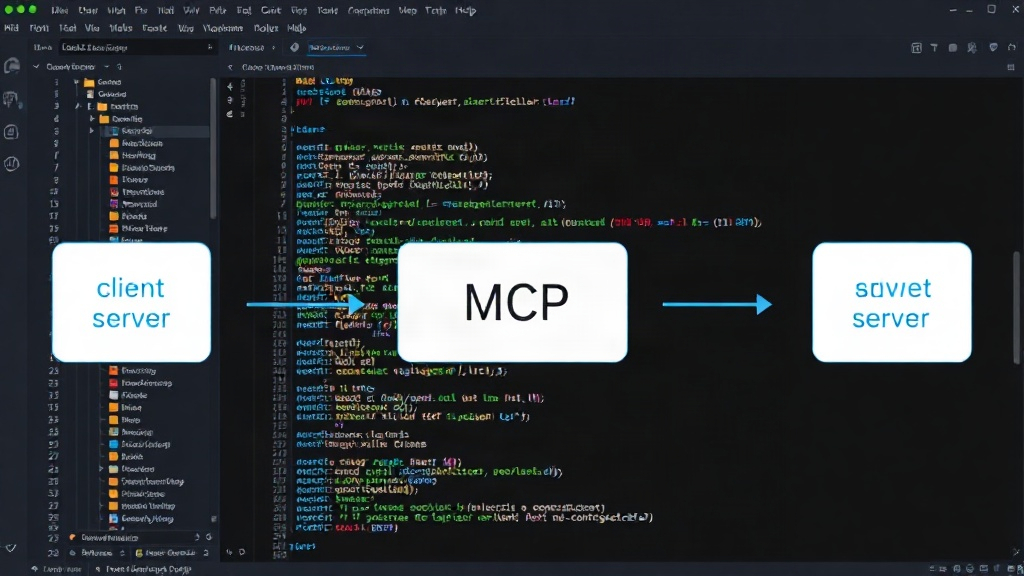
MCP provides a standardized method for exposing tools, resources, and prompts to AI clients. It achieves this through a defined protocol, typically JSON-RPC over stdio or HTTP/SSE. The goal is to abstract away the complexities of custom function-calling schemas and direct API integrations, offering a unified interface for AI agents to interact with your application's functionalities.
Key Implementation Decisions and Tradeoffs
When implementing an MCP server for a Django application, several critical decisions arise. The choice of communication protocol, schema definition, and handling of asynchronous operations significantly impact performance, maintainability, and scalability.
RPC Mechanism: Stdio vs. HTTP/SSE
MCP supports communication via JSON-RPC over either standard input/output (stdio) or HTTP with Server-Sent Events (SSE). The stdio approach is often simpler for local development and basic agent integrations where the client and server might run as separate processes on the same machine. It leverages the existing process communication channels. However, for distributed systems or scenarios requiring more robust network communication, HTTP/SSE becomes the preferred choice. SSE, in particular, is well-suited for streaming responses from the AI agent back to the application or for pushing updates from the server to the client, enabling more dynamic interactions.
The decision between these two hinges on the deployment architecture and the nature of the interaction. For internal tools or single-node deployments, stdio might suffice. For microservices, cloud deployments, or scenarios demanding real-time bidirectional communication, HTTP/SSE offers greater flexibility and scalability, albeit with increased complexity in setup and management.
Schema Management: Defining Capabilities
A fundamental aspect of MCP is the definition of your application's capabilities through a schema. This schema acts as a contract between the server and the client, detailing the available functions, their parameters, and expected return types. For Django applications, this schema often needs to be dynamically generated or meticulously maintained to reflect the available endpoints, business logic, or data access methods you wish to expose.
One approach is to define a static schema file (e.g., JSON or YAML) that is parsed by the MCP server. This provides clarity and predictability but requires manual updates whenever capabilities change. A more dynamic approach involves introspecting the Django application's models, views, or custom command structures to auto-generate the schema. This reduces maintenance overhead but introduces complexity and potential for unexpected behavior if introspection logic is flawed. The tradeoff is between development speed and runtime robustness. For production systems, a well-defined, versioned schema, possibly with automated validation against the codebase, is crucial to prevent errors and ensure reliable client interactions.
Asynchronous Operations and Django
Many AI-driven tasks, especially those involving complex computations or external API calls, are inherently asynchronous. Django's traditional synchronous request-response model can become a bottleneck when serving an MCP server that needs to perform long-running operations. Integrating asynchronous capabilities within Django is therefore paramount.
This typically involves leveraging Django's async views and potentially using background task queues like Celery or Dramatiq. When an MCP client calls a function that requires significant processing time, the MCP server should ideally delegate this work to an asynchronous worker. The server can then respond immediately with a confirmation or a task ID, and the client can poll for the result or receive it via a webhook or SSE stream. This pattern prevents the MCP server from blocking, ensuring it remains responsive to other client requests and maintains high availability. The complexity lies in managing task states, error handling across asynchronous boundaries, and ensuring data consistency.
Beyond the Basics: Production Considerations
Moving from a proof-of-concept to a production-ready MCP server for a Django app involves several considerations that go beyond the core protocol specification.
Authentication and Authorization
While MCP itself doesn't dictate authentication mechanisms, any production system must secure its exposed capabilities. This can involve API keys, OAuth tokens, or custom authentication schemes integrated into the Django application. The MCP server needs to validate incoming requests not only for protocol compliance but also for authorization, ensuring that the client has the necessary permissions to invoke specific tools or access certain data.
Error Handling and Observability
Robust error handling is critical. When an operation fails, the MCP server must return clear, informative error messages that conform to the MCP specification. This aids the client in diagnosing issues and potentially retrying operations. Furthermore, comprehensive logging and monitoring are essential for understanding server performance, identifying bottlenecks, and debugging issues in a production environment. Tracing requests across the MCP server and any background workers is key to effective observability.
Tool Versioning and Deprecation
As your Django application evolves, so too will the tools and capabilities exposed via MCP. A strategy for versioning these tools is necessary to avoid breaking existing AI agent integrations. This might involve a versioned API endpoint for the MCP server or including version information within the schema. Clear deprecation policies for older tools or versions are also important, giving clients ample notice before capabilities are removed.
Conclusion: A Pragmatic Approach
Building an MCP server for a Django application is more than just implementing a specification. It requires careful consideration of RPC mechanisms, schema definition, asynchronous processing, security, and maintainability. By addressing these practical challenges proactively, development teams can effectively leverage MCP to create powerful, integrated AI agents that seamlessly interact with their core business logic.