The Rise of the Model Context Protocol (MCP)
The Model Context Protocol (MCP) has rapidly become a ubiquitous standard for connecting AI applications to external data and capabilities. Its adoption is accelerating, with developers building MCP servers and integrating diverse tools into AI agents. However, the focus often remains on the protocol's functionality rather than the underlying architectural choices that power MCP servers. This oversight is critical because a one-size-fits-all approach to MCP server design is insufficient. The optimal architecture for a simple API wrapper differs significantly from that of a complex orchestration layer for long-running jobs.
To address this, six distinct architectural patterns have emerged in practice. These are not rigid academic classifications but rather practical decision aids to help developers select the most appropriate server shape for their specific use case. Understanding these patterns is essential for building scalable, efficient, and maintainable AI systems that leverage the power of MCP.
What is an MCP Server?
At its core, an MCP server acts as a bridge, exposing functionalities and data to AI clients through a standardized, open protocol. It allows AI applications to interact with the outside world, accessing information or triggering actions that extend their capabilities beyond their core model. An MCP server can expose three primary types of primitives:
- Models: These are typically machine learning models that the AI client can invoke for inference or other processing tasks.
- Contexts: This refers to data or information that the AI client can query or retrieve. It might be structured databases, unstructured documents, or real-time sensor data.
- Capabilities: These are actions or functions that the AI client can trigger on the server. Examples include sending an email, executing a script, or interacting with another system.
The way these primitives are exposed and managed dictates the server's architecture. The following patterns represent common solutions to common problems encountered when building MCP servers.
MCP Architectural Patterns
1. The Thin Wrapper
This is the simplest pattern, ideal for exposing existing APIs or services with minimal modification. An MCP server built as a thin wrapper acts as a direct translation layer. It takes requests from an AI client, maps them to existing API calls, and returns the results. There is little to no business logic or data transformation within the wrapper itself. The primary benefit is speed of implementation and leveraging existing infrastructure without significant refactoring.
Use Case: Exposing a legacy REST API to an AI agent, making a simple database query interface available.
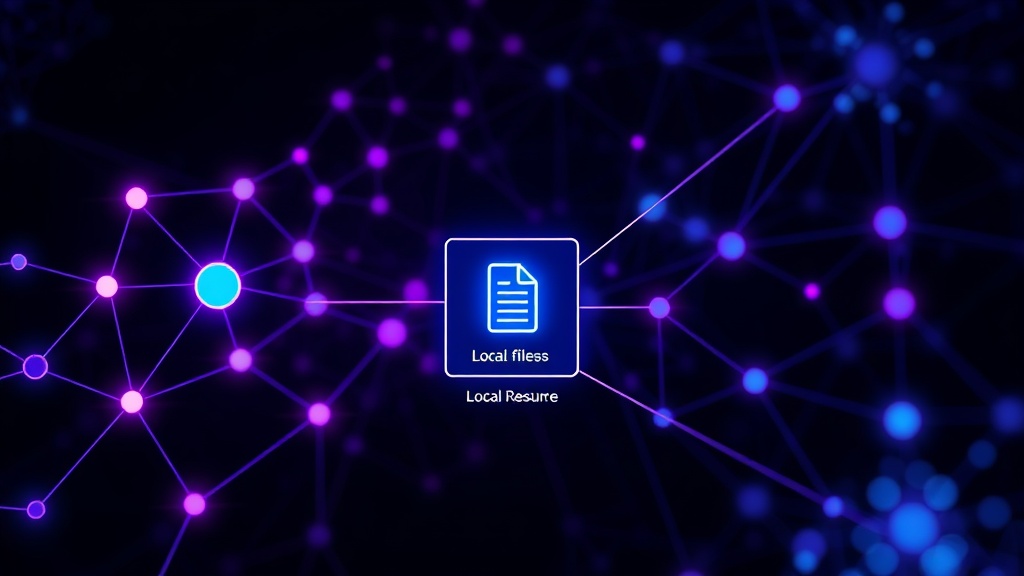
2. The Local Resource Server
This pattern is used when the MCP server needs to manage and expose local resources that are not readily available via external APIs. This could include local files, specific hardware components, or data stored locally on the server. The MCP server is responsible for accessing, managing, and potentially transforming this local data before exposing it. It acts as a gatekeeper to these resources.
Use Case: Providing an AI agent access to a local filesystem, controlling a connected hardware device, or exposing data from a local data store.
3. The Orchestration Layer
This pattern is employed for complex workflows or long-running jobs that require coordination. The MCP server doesn't just expose a single model or data point; it orchestrates a series of steps, potentially involving multiple internal services, external APIs, and human intervention. It manages the state of these jobs, handles retries, and provides progress updates to the AI client. This is significantly more complex than the previous patterns.
Use Case: Managing a multi-step data processing pipeline, coordinating a complex simulation, or facilitating a human-in-the-loop approval process.
4. The Data Aggregator
When an AI application needs access to information from multiple disparate sources, the Data Aggregator pattern becomes essential. The MCP server connects to various databases, APIs, and data streams, fetches relevant information, and then synthesizes it into a coherent response for the AI client. This pattern often involves significant data transformation, normalization, and caching to provide a unified view.
Use Case: Providing a unified customer profile by aggregating data from CRM, order history, and support tickets; consolidating market data from various financial feeds.
5. The Agentic Orchestrator
This pattern takes orchestration a step further by enabling the MCP server to act as a more autonomous agent itself, or to coordinate other agents. It might break down a complex request into sub-tasks, assign them to different AI models or tools (potentially also exposed via MCP), and then reassemble the results. This pattern is foundational for building more sophisticated AI agents that can delegate and manage complex problem-solving.
Use Case: Building a research assistant that can search multiple sources, summarize findings, and draft a report; creating a customer support bot that can understand intent, query knowledge bases, and escalate to human agents when necessary.
6. The Hybrid Model
In many real-world scenarios, a single MCP server will need to combine elements from multiple patterns. A complex system might require orchestrating long-running jobs (Orchestration Layer) that also need to aggregate data from various sources (Data Aggregator) and then expose the final results via a simple interface (Thin Wrapper). The Hybrid model acknowledges this reality, allowing for flexible combinations of the other patterns to meet intricate requirements. Designing these hybrids requires careful consideration of modularity and separation of concerns.
Use Case: An e-commerce AI that aggregates product data, manages inventory updates (orchestration), and provides a unified search interface.
Choosing the Right Architecture
The selection of an MCP server architecture should be driven by the specific problem being solved. Factors to consider include:
- Complexity of the task: Simple API exposure versus multi-step workflow.
- Data sources: Local files, databases, external APIs, real-time streams.
- Latency requirements: Real-time interactions versus batch processing.
- State management: Stateless operations versus long-running, stateful jobs.
- Existing infrastructure: Leveraging current APIs versus building from scratch.
By understanding these six patterns, developers can move beyond simply implementing the MCP protocol to architecting robust and efficient systems that truly unlock the potential of AI integration. The question is no longer just how to connect AI tools, but how best to structure the connections for optimal performance and scalability.