The Imperative of Early DDR5 Signal Integrity Analysis
As memory speeds escalate with DDR5, the margin for error in signal integrity shrinks dramatically. Catching compliance failures on the physical hardware — the bench — is no longer a viable strategy. The complexity and sheer number of potential issues demand a shift towards simulation-first analysis. This proactive approach allows engineers to identify and rectify signal integrity problems during the design phase, saving significant time and resources compared to debugging on expensive, often scarce, hardware prototypes.
The core challenge lies in the increased data rates and tighter timing requirements of DDR5. Jitter, noise, reflections, and crosstalk, always present in high-speed digital designs, become amplified and more critical. Without robust simulation, these issues can manifest as intermittent, hard-to-diagnose failures that are costly to resolve post-layout. The goal is to achieve a design that passes compliance testing virtually, minimizing the need for extensive physical validation.
Key Areas of DDR5 Signal Integrity Simulation
A comprehensive DDR5 signal integrity analysis involves several critical domains, each requiring specialized simulation techniques and considerations.
Power Delivery Network (PDN) Analysis
The PDN is the backbone of system stability. For DDR5, maintaining clean and stable power rails across a wide range of frequencies is paramount. PDN impedance must be kept low across the operating frequency spectrum of the memory interface. This requires careful selection and placement of decoupling capacitors, effective power plane design, and consideration of voltage regulator module (VRM) characteristics. Simulation tools can model the PDN's frequency response, identifying resonances and areas of high impedance that could lead to voltage droops during high-speed switching events. The goal is to ensure that the power delivered to the DRAM chips remains within specified tolerances, even under peak demand.
Channel Simulation and Eye Diagrams
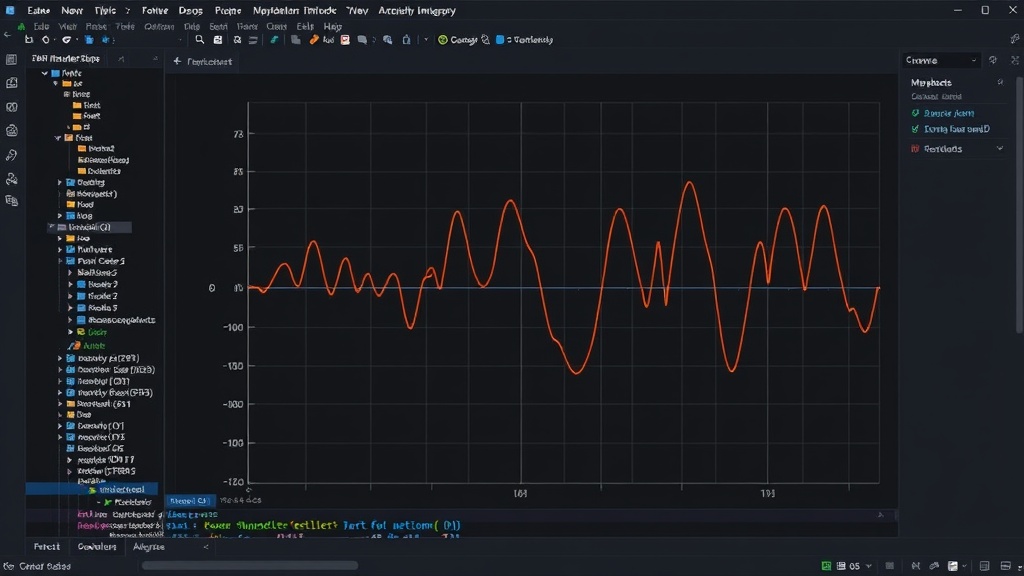
The memory channel, encompassing the traces on the PCB, connectors, and vias, is where signals travel from the memory controller to the DRAM. This channel is susceptible to various impairments. Channel simulation models the propagation of signals through this complex network, accounting for losses, reflections, and crosstalk. The ultimate output of these simulations is the eye diagram. A clear, open eye diagram indicates that the signal is well-defined, with sufficient timing margin and amplitude to be reliably sampled by the receiver. Conversely, a closed or jittery eye signals potential data corruption. Simulating various channel configurations and loading conditions helps optimize trace lengths, via transitions, and termination schemes.
Crosstalk Analysis
With multiple high-speed DDR5 interfaces often routed in close proximity, crosstalk becomes a significant concern. Aggressor signals can induce noise onto victim signals, distorting them and potentially leading to bit errors. Advanced simulation tools can model the electromagnetic coupling between adjacent traces and power/ground planes. This analysis helps determine appropriate trace spacing, routing strategies (e.g., layer stacking, preferred routing directions), and the effectiveness of shielding. Understanding crosstalk behavior is crucial for maintaining signal integrity, especially in dense PCB designs.
Simulating Compliance and Margin
The ultimate goal of DDR5 signal integrity analysis is to ensure compliance with the JEDEC standards. Simulation tools can be configured to emulate the test conditions and measurement points defined by JEDEC. This allows engineers to predict whether the design will pass compliance tests for parameters such as voltage levels, timing jitter, and signal slew rates. Beyond mere compliance, advanced analysis focuses on signal margin. This involves simulating the design under worst-case conditions (e.g., temperature variations, process variations, maximum loading) to quantify how much margin exists beyond the minimum requirements. A healthy margin provides confidence in the design's robustness and reliability in real-world operating environments.
Tools and Methodologies
Effective DDR5 signal integrity analysis relies on sophisticated simulation software. These tools typically employ methodologies such as:
- Full-wave electromagnetic (EM) solvers: For accurate modeling of signal propagation, reflections, and crosstalk in complex geometries like PCBs and connectors.
- Circuit simulators: To model the behavior of active components (e.g., memory controllers, DRAMs, termination networks) and their interaction with the passive channel.
- IBIS (I/O Buffer Information Specification) models: Standardized behavioral models for I/O buffers that provide a balance between accuracy and simulation speed.
- Statistical analysis: To account for manufacturing variations and their impact on signal integrity.
The process often begins with pre-layout analysis to define routing rules and constraints. Post-layout simulations are then performed on the actual PCB layout to verify the design. Iterative refinement based on simulation results is key. If a simulation reveals a potential issue, design adjustments are made, and the simulation is re-run until acceptable signal integrity is achieved.
The Future: Predictive Analysis and AI
The trend towards even higher memory speeds (e.g., DDR6 and beyond) will only intensify the need for advanced signal integrity analysis. Future methodologies will likely incorporate more sophisticated AI-driven techniques. These could include machine learning models trained on vast datasets of simulation results to predict potential issues with greater speed and accuracy, or to automate the optimization of routing and termination parameters. Predictive analytics could flag designs likely to fail compliance long before traditional simulations even begin, further streamlining the development process.
For engineers working with DDR5, embracing a simulation-driven workflow is not optional; it is a fundamental requirement for success. By leveraging advanced simulation tools and methodologies, designers can mitigate risks, accelerate time-to-market, and ensure the reliability of their high-speed memory systems.