
Automatic Chunking for Enhanced Vector Search
Manticore Search, a popular open-source full-text search engine, has introduced a significant new feature: automatic chunking for vector search. This development directly addresses a long-standing challenge in semantic search: how to effectively index and query large documents where relevant information might be embedded within extensive text blocks. Traditionally, vector search engines require documents to be broken down into smaller, semantically coherent chunks before embedding and indexing. This manual process is tedious, time-consuming, and often results in suboptimal chunking strategies that can degrade search accuracy.
The new auto-chunking functionality in Manticore Search automates this critical preprocessing step. Instead of developers needing to manually split their documents into manageable pieces, Manticore Search can now perform this task internally. This means that users can ingest long documents directly into the search index, and the engine will handle the division into appropriate segments for vectorization and subsequent similarity searches. This not only streamlines the ingestion process but also aims to improve the quality of search results by employing more intelligent chunking methods.
Think of it like trying to find a specific sentence in a very long novel. Without chunking, you're searching the entire book at once, which is inefficient. With manual chunking, you might chop the book into chapters, but what if the sentence you need spans two chapters? Manticore's auto-chunking is like having a smart editor who can identify the best places to break the text, perhaps at paragraph or sentence boundaries, ensuring that individual chunks are more likely to represent a complete thought or piece of information.
How Auto-Chunking Works
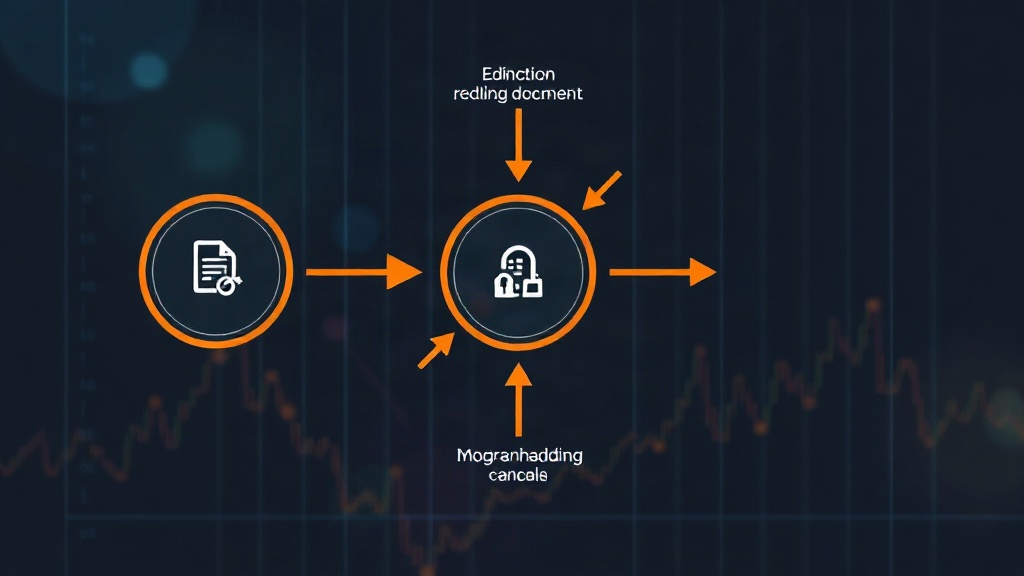
The core of Manticore's new capability lies in its ability to dynamically segment documents during the indexing process. When a document is submitted for indexing, Manticore analyzes its structure, looking for natural breaks such as paragraph endings, sentence terminators, or even specific semantic cues. It then creates these smaller segments, or chunks, which are then converted into vector embeddings. These embeddings are what Manticore uses for performing vector similarity searches, allowing it to find documents or passages that are semantically related to a given query, even if they don't share exact keywords.
This approach offers several advantages. Firstly, it significantly simplifies the developer workflow. The burden of deciding on optimal chunk size, overlap, and splitting strategy is lifted from the user and handled by the search engine itself. This is particularly beneficial for applications dealing with large volumes of unstructured text, such as legal documents, research papers, books, or lengthy articles. Secondly, by allowing the engine to manage chunking, Manticore can potentially employ more sophisticated strategies than a one-size-fits-all manual approach. These strategies might involve adaptive chunking based on document length, content type, or even preliminary analysis of the text's semantic density.
The system allows for configuration of chunking parameters, providing a degree of control for users who need to fine-tune the process. While the default settings are designed to work well for a wide range of documents, advanced users can specify preferences for chunk size, overlap between chunks, and potentially even the type of delimiters Manticore should prioritize. This balance between automation and configurability makes the feature accessible to beginners while still offering power to experienced users.
Implications for Vector Search and RAG
The introduction of auto-chunking is a crucial step forward for Manticore Search, particularly in the context of Retrieval Augmented Generation (RAG) systems. RAG architectures rely heavily on the ability of a retrieval system to fetch relevant context from a knowledge base to augment the input to a large language model (LLM). For RAG to be effective, the retrieved context must be accurate, concise, and semantically relevant. If documents are too long and not chunked properly, the LLM might receive too much irrelevant information, leading to poor response generation, increased latency, and higher costs.
Manticore's auto-chunking simplifies the integration of long documents into RAG pipelines. Developers can now feed entire documents into Manticore, confident that the engine will prepare them for effective retrieval. This means that applications can more easily leverage vast amounts of textual data for LLM augmentation, enabling more sophisticated chatbots, intelligent document analysis tools, and advanced search interfaces. The ability to handle long documents natively without complex external preprocessing pipelines significantly lowers the barrier to entry for building powerful RAG applications.
This feature also has broader implications for the vector search landscape. As more applications move towards leveraging semantic understanding, the need for efficient handling of diverse data types and lengths becomes paramount. Manticore's proactive approach to solving the long-document problem could set a precedent for other search engines. It signals a shift towards more intelligent, end-to-end solutions that abstract away complex data preparation steps, allowing users to focus on application logic rather than data engineering.
Performance and Future Directions
While the exact performance benchmarks for the auto-chunking feature were not detailed in the announcement, the integration within Manticore Search, known for its performance and scalability, suggests that the chunking process is designed to be efficient. The engine's architecture is built for speed, and introducing an automated preprocessing step that enhances search accuracy without sacrificing indexing or query speed would be a significant engineering feat.
The immediate benefit is a smoother developer experience and improved search quality for users working with lengthy texts. Looking ahead, one can anticipate further refinements to the auto-chunking algorithms. This could include more advanced natural language processing techniques to identify semantic boundaries more accurately, adaptive chunking based on the success rate of previous queries, or even support for multimodal documents where text is interspersed with images or tables.
What remains to be seen is how this auto-chunking feature will perform under extreme load with highly diverse and complex document structures. The true test will be in real-world applications where the quality of retrieval directly impacts user experience and LLM performance. However, the introduction of this feature is a strong indicator of Manticore Search's commitment to providing a robust and user-friendly platform for modern search and AI applications.