
The Challenge of Counterfactual Analysis in Time Series
Interrupted Time Series Analysis (ITSA) is a powerful statistical method used to evaluate the effect of an intervention or event on a time series. Unlike simpler before-and-after comparisons, ITSA accounts for pre-existing trends and seasonality, providing a more robust assessment of an intervention's impact. The core challenge lies in establishing a reliable counterfactual – what would have happened to the time series if the intervention had not occurred? This is where traditional statistical models often struggle, particularly with complex, noisy, or highly variable data.
Building a product around this capability requires more than just statistical accuracy; it demands a system that can automate the complex modeling process, interpret results, and present them in an actionable format. This involves turning a sophisticated analytical technique into a user-friendly AI product. The author set out to achieve this by developing a multi-agent system, a departure from conventional monolithic AI architectures.
Designing a Multi-Agent System for ITSA
The decision to use a multi-agent system was driven by the inherent complexity and multi-faceted nature of ITSA. Instead of a single, large model attempting to handle all aspects of the analysis, the author envisioned a team of specialized AI agents, each responsible for a specific task. This modular approach offers several advantages:
- Specialization: Each agent can be optimized for a particular sub-problem, such as data preprocessing, trend identification, seasonality modeling, intervention effect estimation, or counterfactual prediction.
- Flexibility: New agents can be added or existing ones modified without overhauling the entire system. This allows for easier iteration and improvement.
- Scalability: Different agents can be scaled independently based on their computational demands.
- Interpretability: By isolating tasks, it becomes easier to understand where potential issues lie and how different components contribute to the final result.
The system was conceptualized as a collaborative environment where agents communicate and coordinate to achieve the overarching goal of accurate ITSA. This is akin to assembling a team of experts, each with their own domain knowledge, to solve a complex problem, rather than relying on a single generalist.
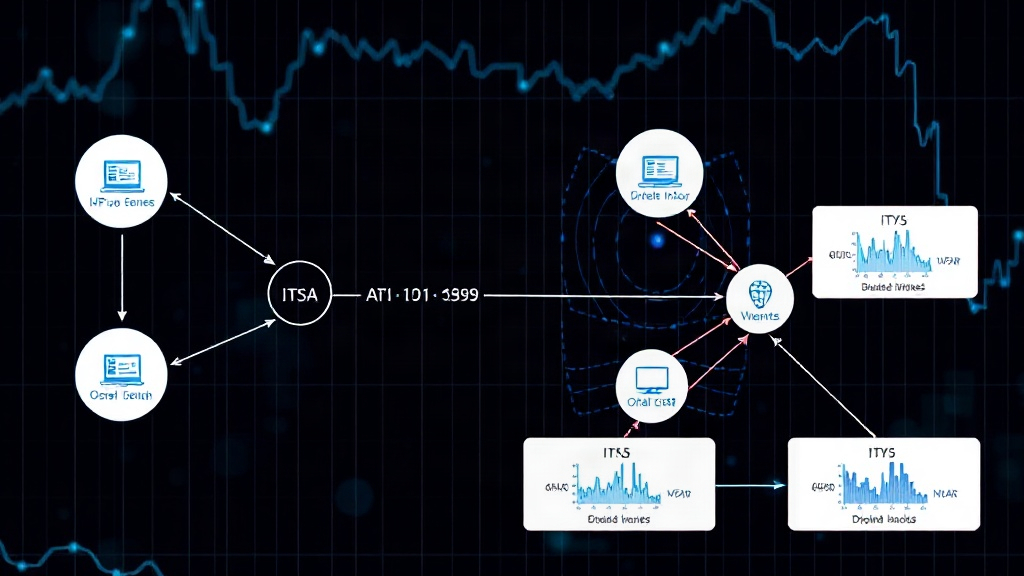
Key Components and Workflow
The development process involved several critical stages and agent roles:
1. Data Ingestion and Preprocessing Agent
This agent is responsible for handling raw time series data. It performs essential tasks like cleaning missing values, detecting and handling outliers, and standardizing data formats. For ITSA, this stage is crucial as the quality of the input data directly impacts the reliability of the intervention effect estimation. This agent ensures the data is in an optimal state for subsequent analysis.
2. Trend and Seasonality Modeling Agent
Before assessing the intervention's impact, the system must understand the underlying patterns in the time series. This agent identifies and models long-term trends (e.g., linear, exponential growth) and recurring seasonal patterns (e.g., daily, weekly, yearly cycles). Accurate modeling of these components is vital for establishing a robust baseline against which the intervention's effect can be measured. Without this, any observed change might be mistakenly attributed to the intervention when it's merely a reflection of normal cyclical behavior or existing trends.
3. Intervention Detection and Effect Estimation Agent
This is the core agent responsible for quantifying the impact of the intervention. It compares the actual time series after the intervention point with the predicted counterfactual generated by the modeling agent. The difference between the actual and the predicted counterfactual represents the estimated effect of the intervention. This agent must be sophisticated enough to handle sudden shifts (level changes) and gradual changes in slope, depending on the nature of the intervention.
4. Counterfactual Generation Agent
Working in tandem with the intervention effect agent, this agent's primary role is to predict what the time series would have looked like had the intervention never occurred. It uses the models of trend and seasonality established earlier, extending them beyond the intervention point as if no change had taken place. This predicted path forms the basis of the counterfactual analysis.
5. Reporting and Visualization Agent
To make the complex analysis accessible, this agent translates the statistical outputs into clear, understandable reports and visualizations. This might include graphs showing the original time series, the predicted counterfactual, and the estimated intervention effect, along with confidence intervals and statistical significance measures. This agent is key to turning raw analytical results into a product that business users can act upon.
The 'AI Product' Dimension
Turning a statistical technique into an AI product involves more than just implementing algorithms. The author's approach highlights the importance of user experience, automation, and actionable insights. The multi-agent system aims to abstract away the underlying statistical complexity, allowing users to input their data and receive interpretable results. This requires careful design of agent interactions and output formats. The system needs to be robust enough to handle a wide range of time series characteristics and intervention types, while also being flexible enough to adapt to new data and evolving analytical requirements.
The surprising detail here is not just the application of a multi-agent system, which is gaining traction in various AI fields, but its specific deployment for a relatively niche yet critical statistical problem like ITSA. Traditionally, ITSA is performed by statisticians using specialized software. Automating this process with a collaborative AI agent architecture suggests a broader trend towards democratizing complex analytical tools through AI productization.
Future Directions and Implications
The development of this multi-agent ITSA system opens up several avenues for future work. Enhancements could include more advanced agent collaboration protocols, the integration of external data sources (e.g., economic indicators, weather patterns) to enrich the counterfactual modeling, and the development of agents capable of automatically suggesting optimal intervention strategies. Furthermore, exploring different agent architectures, such as hierarchical or swarm-based systems, could lead to more efficient and powerful ITSA solutions.
The success of this approach implies that many other complex analytical tasks, currently requiring significant human expertise, could be productized using similar multi-agent paradigms. This could accelerate data-driven decision-making across industries by making sophisticated analytical capabilities more accessible and automated.