The Evolving Data Lake Landscape
The debate around how to manage data lakes is reaching a consensus. For years, data platform teams have grappled with the overhead of manually orchestrating data operations. This often involved writing complex Airflow DAGs for data pipelines, scheduling Spark jobs for data compaction, building custom monitoring dashboards, and staffing dedicated platform teams whose size grew in lockstep with the number of data tables. This approach, while functional, proved to be a significant bottleneck, demanding constant engineering effort and scaling challenges as data volumes and complexity increased.
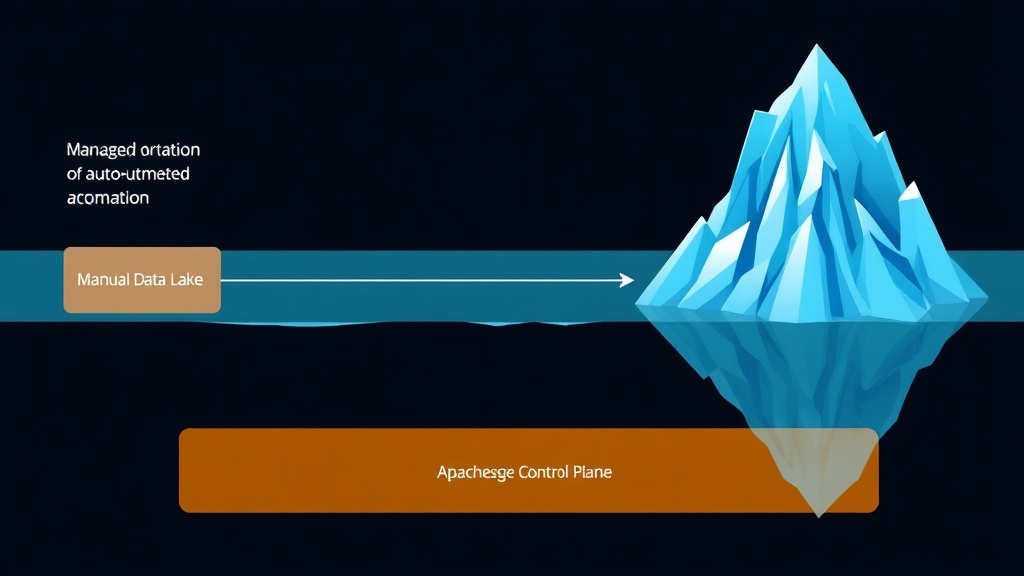
The industry is rapidly moving towards a more automated and efficient paradigm: the managed data lake. At its core, this shift is enabled by a control plane that intelligently observes and manages every table within the data lake. This control plane automates critical maintenance operations, classifies table health, optimizes data layouts based on actual query patterns, enforces policies at scale, and adapts to changing workloads. Crucially, this managed approach allows organizations to retain control over their data, keeping it within their own storage accounts while leveraging their preferred query engines.
Apache Iceberg: The Unifying Standard
The foundational technology driving this evolution is the data lake table format. The question of which format to use is largely settled: Apache Iceberg has emerged as the de facto standard for the modern lakehouse. Its adoption is near-universal among data platform teams building on open storage solutions. Major data engines, including Spark, Trino, Snowflake, Athena, DuckDB, Flink, and Databricks, now offer native read and write capabilities for Iceberg. This widespread support means that data processed and stored in Iceberg can be accessed by virtually any analytical engine, eliminating vendor lock-in and simplifying data architecture.
Iceberg's design addresses key limitations of earlier formats like Hive. It provides ACID transactions, schema evolution, time travel, and hidden partitioning, all critical for reliable and scalable data warehousing on object storage. Its metadata layer is robust, enabling efficient data discovery and management without requiring full table scans. This makes operations like schema changes, data versioning, and performance tuning significantly more manageable.
The Rise of the Control Plane
The true power of a managed data lake lies in its control plane. Unlike manual management, where engineers reactively address issues or proactively schedule maintenance, a control plane operates continuously and intelligently. It acts as an always-on guardian for the data lake, performing tasks that were previously time-consuming and error-prone:
- Health Classification: Continuously monitors table statistics, file sizes, and query performance to identify potential issues before they impact users.
- Maintenance Sequencing: Intelligently schedules and executes maintenance operations like compaction, small file optimization, and data expiration based on actual needs and resource availability, not just fixed schedules.
- Layout Optimization: Analyzes query patterns to optimize the physical layout of data on storage, improving read performance for frequently accessed data and reducing costs.
- Policy Enforcement: Applies data governance, security, and compliance policies across all tables at scale, ensuring consistency and reducing manual configuration errors.
- Adaptability: Dynamically adjusts its operations as data volumes, query workloads, and table schemas change, providing a resilient and self-tuning data platform.
This automated approach frees up engineering resources. Instead of spending time on routine maintenance and troubleshooting, teams can focus on higher-value activities like data modeling, feature engineering, and delivering insights. The linear scaling problem of staffing a platform team is effectively decoupled from the data volume.
Why Teams Migrate to Managed Data Lakes
The journey from manual to managed data lake management is a common one. Teams initially opt for manual control due to perceived simplicity or a desire for granular control. However, as their data footprint grows, the operational burden becomes unsustainable. The constant need for custom scripting, the complexity of managing distributed Spark jobs, and the challenge of providing robust monitoring for a sprawling lake lead to increased costs and slower iteration cycles.
The tipping point often comes when a critical incident occurs – a data corruption event, a prolonged outage due to unmanaged compaction, or a compliance failure. These incidents highlight the fragility of manual systems and the need for a more robust, automated solution. The availability of mature table formats like Iceberg, coupled with sophisticated control plane solutions, makes the migration path clear and compelling. Organizations can achieve greater reliability, better performance, and significantly reduced operational overhead by embracing a managed data lake strategy.
The Future of Data Lakes
By 2026, the managed data lake, underpinned by Apache Iceberg, will be the standard for most organizations building modern data platforms. The focus will shift from managing the infrastructure and maintenance of the lake to deriving value from the data itself. This allows businesses to be more agile, data-driven, and competitive in an increasingly data-intensive world. The ability to seamlessly integrate with a wide array of query engines and tools, thanks to Iceberg's open nature, ensures that investments in data infrastructure remain future-proof.