
Magic AI Secures £8M for US Market Entry
London-based fitness technology startup Magic AI has announced a significant funding round, securing £8 million to fuel its expansion into the United States. The investment, led by Octopus Ventures and joined by existing investors MMC Ventures, Forward Partners, and Ascension Ventures, signals strong confidence in Magic AI’s AI-powered fitness mirror technology and its potential to disrupt the US home fitness market.
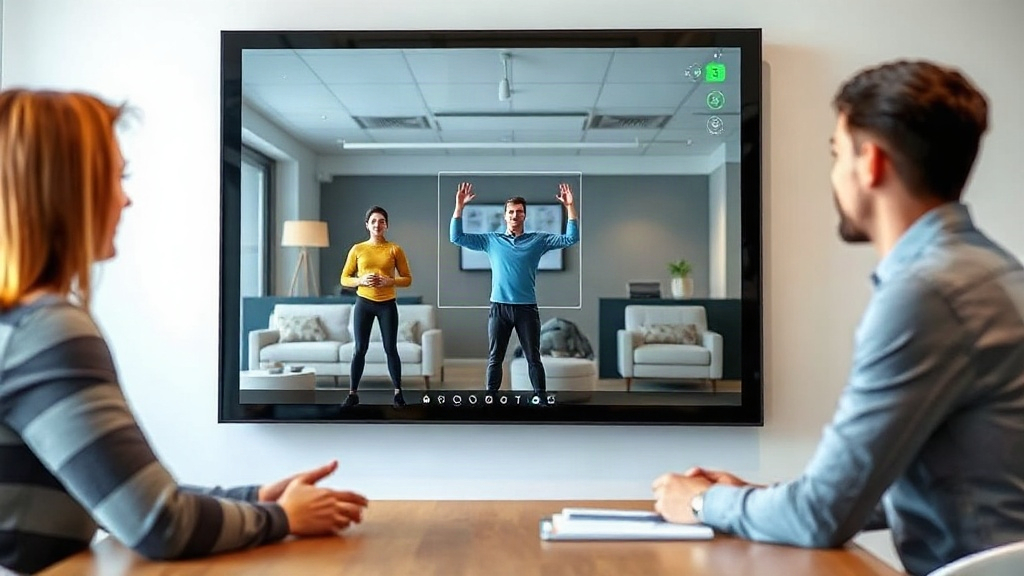
Magic AI’s core offering is an intelligent fitness mirror that uses AI to provide personalized workout feedback. Unlike traditional fitness mirrors that offer pre-recorded classes or basic tracking, Magic AI’s system analyzes user movements in real-time, offering corrections and guidance to improve form and maximize effectiveness. This focus on personalized, AI-driven coaching aims to bridge the gap between at-home convenience and the quality of instruction found in premium gyms or with personal trainers.
The company’s technology leverages computer vision and machine learning to track over 50 key body points, allowing for detailed analysis of exercise form. This data is then used to provide immediate, actionable feedback to the user, helping them to avoid injury and achieve better results. The system is designed to adapt to individual user progress, adjusting difficulty and suggesting new routines as the user’s fitness levels improve.
Strategic Expansion into the US Market
The £8 million in funding is earmarked for several key strategic initiatives, with the US market being the primary focus. Magic AI plans to establish a significant presence in the United States, building out its sales, marketing, and support infrastructure to cater to American consumers. This move is a natural progression for the company, given the size and receptiveness of the US market to connected fitness and AI-driven wellness solutions.
Historically, the connected fitness market in the US has seen substantial growth, with companies like Peloton carving out a significant niche. Magic AI aims to differentiate itself by offering a more intelligent and adaptive coaching experience. While Peloton offers live and on-demand classes, Magic AI’s proposition centers on real-time form correction and personalized training plans generated by AI, moving beyond a class-based model to a truly personalized coaching experience.
The company’s founder, Jack Rogers, has expressed enthusiasm about the funding round and the opportunities it presents. Rogers stated that the investment would enable Magic AI to scale its operations, further develop its AI capabilities, and bring its innovative product to a global audience, starting with the crucial US market. The company’s success in the UK and Europe has laid a strong foundation, and the US expansion is seen as the next logical step in its growth trajectory.
The Technology Behind the Mirror
At its core, Magic AI’s product is a sophisticated piece of hardware integrated with advanced AI software. The mirror itself functions as a high-definition display, seamlessly integrating a camera system capable of capturing the user’s movements. The AI engine, developed by Magic AI's engineering team, processes this visual data to provide an objective assessment of workout form. This is a complex technical challenge; accurately tracking and analyzing human movement in a dynamic environment requires robust algorithms and significant computational power.
The system’s ability to provide real-time feedback is a critical differentiator. Imagine a personal trainer standing next to you, offering constant, precise advice on your posture and movement. Magic AI’s technology aims to replicate this, but through an AI system that can analyze subtle nuances in form that even a human trainer might miss. This continuous feedback loop is designed to accelerate learning, prevent bad habits from forming, and ensure users are getting the most out of every exercise.
Beyond form correction, the AI is also being developed to offer more advanced features. This includes predictive analytics to identify potential injury risks based on movement patterns and personalized workout recommendations tailored to an individual’s goals, recovery status, and even daily energy levels. This level of personalization is what sets Magic AI apart from more static connected fitness solutions. The company is essentially building a continuously learning fitness coach within a sleek hardware package.
Market Context and Future Outlook
The £8 million funding round positions Magic AI to compete more aggressively in the global smart fitness market. While the specifics of the US launch timeline and product availability are yet to be fully detailed, the capital infusion suggests an accelerated rollout strategy. The company will need to navigate the competitive landscape, which includes established players and emerging startups, all vying for consumer attention and subscription revenue.
Magic AI’s success will hinge on its ability to deliver a superior user experience that justifies the investment in their technology and hardware. The AI’s accuracy, the personalization it offers, and the overall effectiveness of the workouts will be key metrics. Furthermore, building a strong community around the product and ensuring seamless integration into users’ daily routines will be crucial for long-term retention and growth. The company’s ability to translate its technological prowess into tangible user benefits and a compelling value proposition will determine its trajectory in the highly competitive US market.
The investment also highlights a broader trend in the venture capital world: a continued appetite for AI-driven consumer products that offer tangible improvements in health and wellness. As AI technology matures, we can expect to see more innovative applications emerge across various sectors, with fitness being a particularly fertile ground for growth.