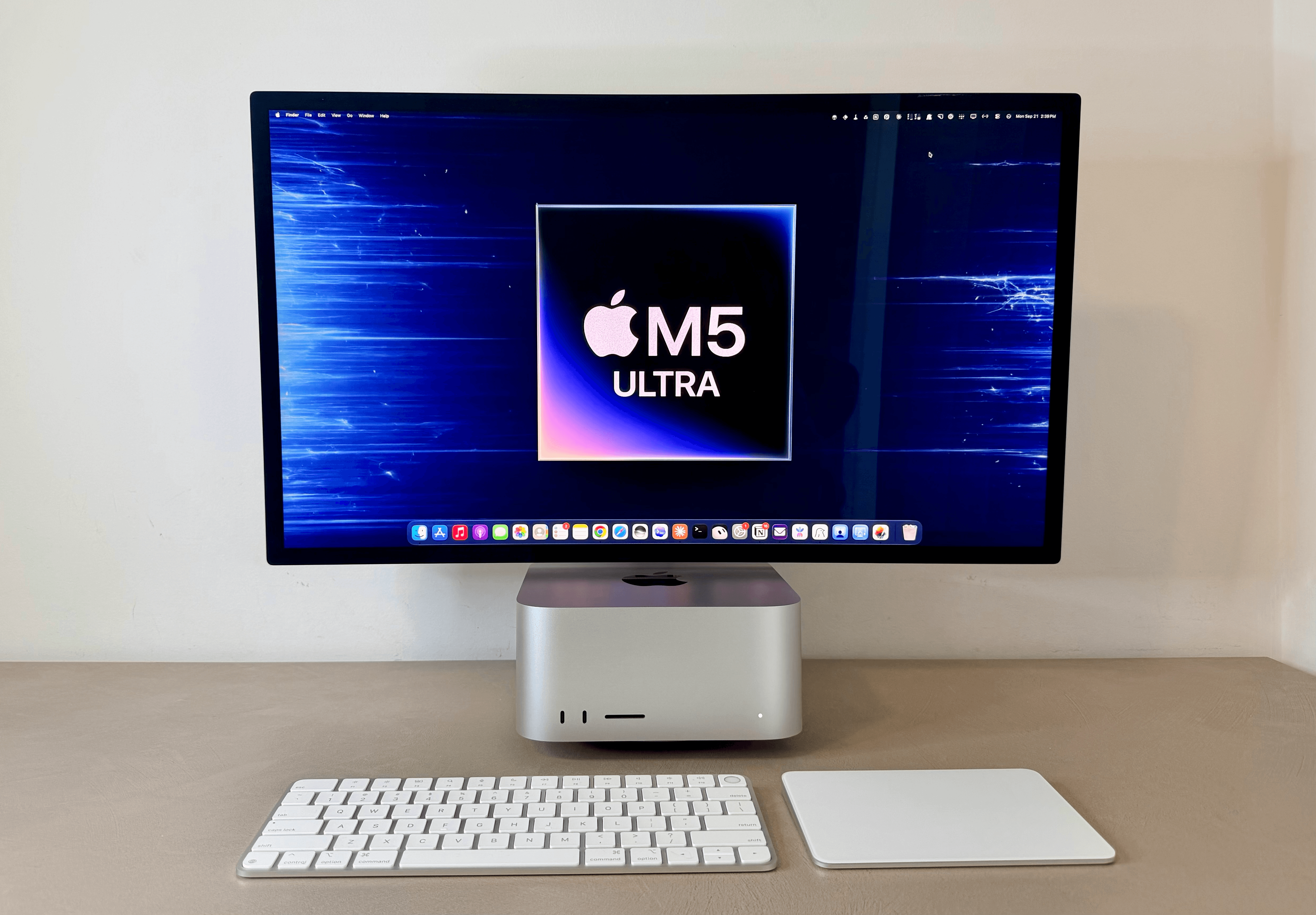
M5 Ultra Mac Studio: A New Era for Local AI

M5 Ultra Mac Studio represents a significant leap forward for developers and researchers focused on running AI models locally. This machine isn't just an incremental upgrade; it's a purpose-built powerhouse designed to tackle the most demanding AI workloads with remarkable speed and efficiency. For those who have felt the pinch of cloud-based AI development costs or the latency of remote model execution, the M5 Ultra Mac Studio offers a compelling, high-performance alternative. At its core, the M5 Ultra chip is the star of the show. Apple has engineered this silicon to excel in parallel processing, a critical requirement for the matrix multiplications and tensor operations that underpin modern neural networks. The sheer number of unified memory cores and the dedicated Neural Engine cores provide a raw computational advantage that previous generations of Macs, and indeed many Windows-based machines, struggled to match for AI tasks. This translates directly into faster model training, quicker inference times, and the ability to experiment with larger, more complex models that were previously out of reach for local hardware. One of the most striking aspects of the M5 Ultra is its unified memory architecture. Unlike traditional systems where the CPU and GPU have separate memory pools, the M5 Ultra allows both to access the same high-bandwidth memory. This eliminates the costly data transfers between CPU RAM and GPU VRAM, which can be a significant bottleneck in AI workloads. For developers, this means a smoother, more responsive experience when loading large datasets and models directly into memory, reducing development friction and accelerating iteration cycles. It's akin to having a massive, instantly accessible workbench for all your AI components, rather than constantly moving tools between different rooms.
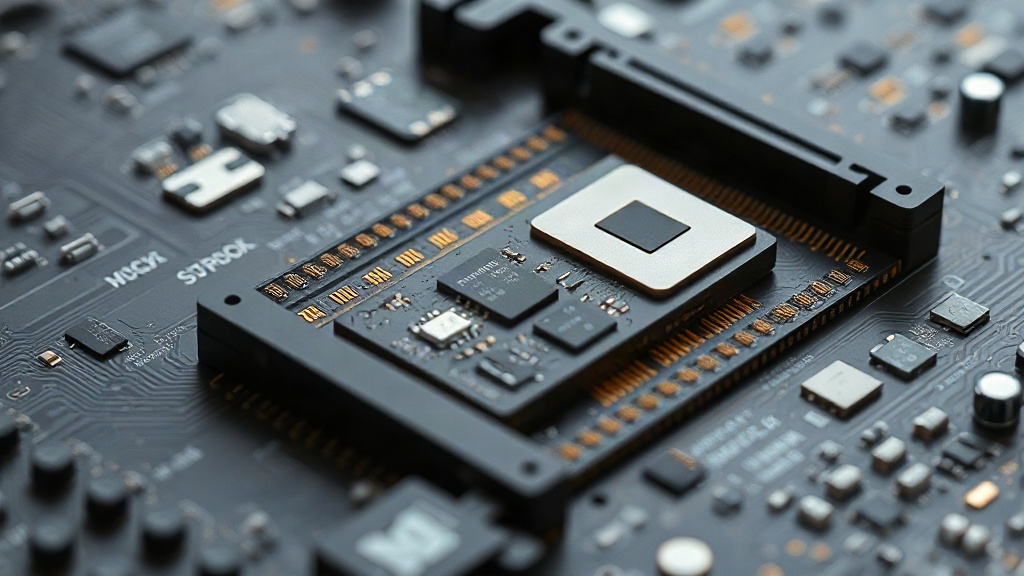
M5 Ultra chip architecture diagram highlighting unified memory and Neural Engine cores

Performance Benchmarks and Real-World Implications

Early benchmarks and anecdotal evidence from developers suggest that the M5 Ultra Mac Studio can outperform even high-end discrete GPU-equipped PCs for certain AI tasks. While specific performance figures vary depending on the model and framework used, the consistent theme is one of exceptional throughput for inference and surprisingly competitive performance for training smaller to medium-sized models. This capability is particularly important for applications requiring real-time AI processing, such as on-device natural language processing, computer vision for robotics, or interactive creative tools. The Mac Studio form factor itself is also a significant advantage. It offers a compact, quiet, and energy-efficient desktop solution. This contrasts sharply with the power-hungry, noisy, and often bulky setups required for comparable performance on traditional x86 architectures with discrete GPUs. For developers working in shared office spaces or home environments, the M5 Ultra Mac Studio provides a powerful AI workstation that doesn't disrupt the surrounding workspace. The unified cooling system is also highly effective, allowing the M5 Ultra chip to sustain peak performance for extended periods without thermal throttling, a common issue with other high-performance machines. The software ecosystem on macOS is also maturing rapidly to support these powerful new chips. Frameworks like TensorFlow and PyTorch have been optimized for Apple Silicon, and libraries like MLX, developed by Apple itself, offer a Python-friendly interface for GPU-accelerated machine learning. This growing support means developers can leverage the M5 Ultra's hardware capabilities without being forced into proprietary or less-flexible software stacks. It democratizes access to high-performance local AI development, making it feasible for a wider range of individuals and smaller teams.

The Dream Machine for Local AI Agents

The concept of 'local AI agents' – autonomous or semi-autonomous AI systems running entirely on a user's device – is a burgeoning field. These agents promise enhanced privacy, reduced reliance on cloud infrastructure, and more responsive interactions. However, they have historically been hampered by the computational limitations of typical end-user hardware. The M5 Ultra Mac Studio directly addresses this challenge. It provides the necessary processing power, memory bandwidth, and efficiency to run sophisticated AI models locally, making the vision of powerful, private, on-device AI agents a tangible reality. Consider an AI assistant that can understand complex, multi-turn conversations without sending sensitive data to the cloud. Or a creative tool that can generate images or text based on local context and user preferences in near real-time. These applications, once the domain of cloud-based services, are now within reach for local execution thanks to machines like the M5 Ultra Mac Studio. The ability to iterate rapidly on agent design and behavior without incurring cloud inference costs is a game-changer for innovation in this space. The implications extend beyond just individual agents. For researchers, the M5 Ultra Mac Studio offers a powerful, reproducible environment for experimentation. The consistency of Apple Silicon across its product line means that results obtained on a Mac Studio are likely to be replicable on other M-series Macs, simplifying collaboration and deployment. This standardization is a significant benefit in a field that often struggles with hardware and software variability.

What’s Next?

While the M5 Ultra Mac Studio is undoubtedly a remarkable piece of hardware for AI development, questions remain about its long-term scalability for the most extreme training tasks. For cutting-edge research requiring colossal datasets and models that push the boundaries of what's currently possible, dedicated clusters of high-end discrete GPUs will likely remain the benchmark. However, for the vast majority of AI development, including the burgeoning field of local AI agents, the M5 Ultra Mac Studio sets a new standard. It offers a potent combination of performance, efficiency, and developer-friendly integration that is difficult to match. The dream of a powerful, personal AI workstation is no longer a distant aspiration; it's here.