The Shared Drum Machine Experience
loopclub emerges as a novel platform for musicians, offering a shared, real-time drum machine experience. The core concept revolves around enabling users to jam with others, whether they are strangers found online or collaborators they already know. This approach addresses the growing desire for remote musical collaboration in an increasingly digital world.
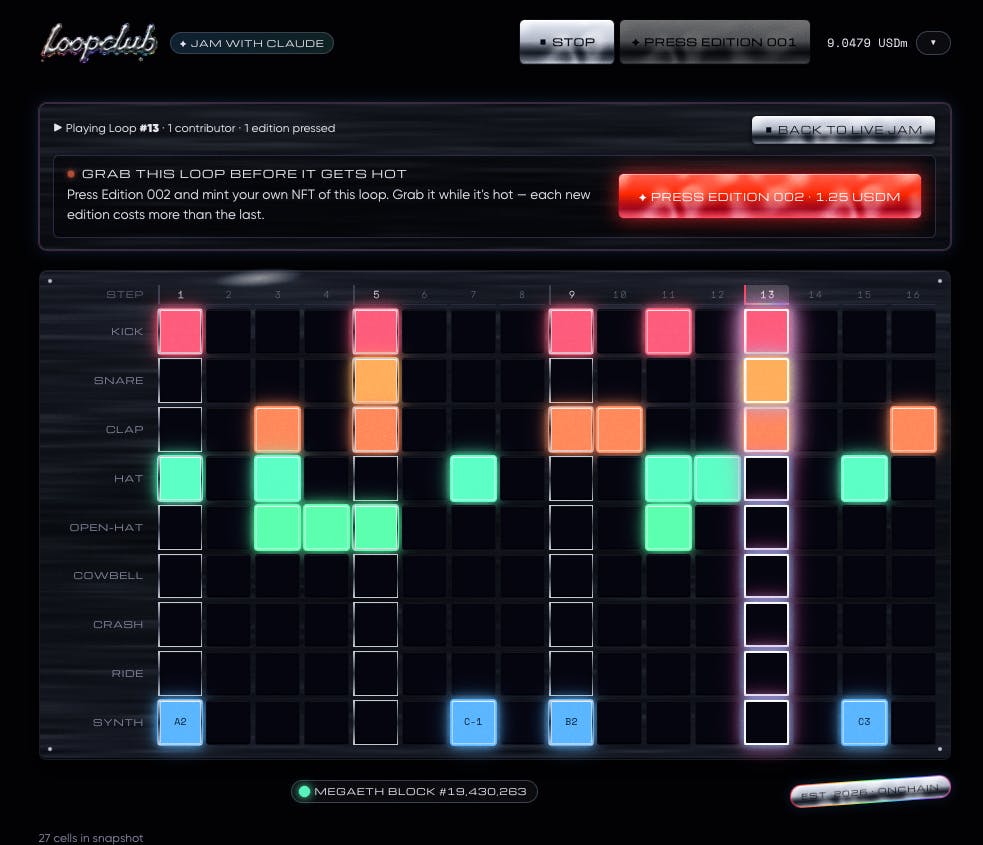
The platform's primary functionality is a shared drum machine interface. Users can interact with a digital drum kit, laying down beats and rhythms. What sets loopclub apart is its real-time, multi-user capability. Multiple individuals can connect to the same session, each contributing to the beat simultaneously. This creates a dynamic and improvisational environment, akin to an in-person jam session, but accessible from anywhere with an internet connection.
One of the intriguing aspects highlighted by loopclub is its integration with Claude. While the exact nature of this integration isn't fully detailed in the provided source, it suggests a potential for AI-assisted musical creation or analysis within the platform. This could manifest in various ways, such as AI generating drum patterns based on user input, providing feedback on rhythms, or even facilitating more complex musical arrangements by acting as a virtual bandmate.
The Product Hunt listing describes loopclub as a way to "jam with strangers or with Claude." This dual focus is significant. The ability to connect with unknown musicians opens up avenues for serendipitous creative encounters and the discovery of new musical styles. It democratizes the jam session, removing geographical barriers and the need to coordinate schedules with a fixed group of people. Anyone can hop into a session and start contributing.
The mention of Claude, an AI model, alongside the social jamming aspect, hints at a forward-thinking approach to music creation tools. It positions loopclub not just as a social platform but also as a potential AI-powered creative partner. This could be particularly appealing to solo musicians looking for inspiration or for those exploring new sonic territories with the assistance of artificial intelligence. The implications for music production workflows could be substantial, offering a novel way to generate ideas and build tracks.
Technical Underpinnings and Future Potential
While the technical architecture of loopclub is not deeply explored in the excerpt, a real-time collaborative platform of this nature typically relies on robust networking protocols and synchronization mechanisms. Technologies like WebSockets are often employed to ensure low latency communication between users, allowing for near-instantaneous updates on the shared drum machine state. The challenge lies in maintaining tight synchronization across all participants, ensuring that the beats dropped by one user are heard and registered by others without perceptible delay.
The integration with Claude suggests a sophisticated backend that can interface with large language models or AI music generation systems. This could involve sending musical data to Claude for processing, analysis, or generation, and then receiving the output back into the loopclub environment. The success of such an integration would depend on the AI's ability to understand musical context and provide relevant, creative contributions.
What remains to be seen is how loopclub handles user management, session creation, and discovery. Will there be public rooms for open jamming, private rooms for invited collaborators, or a combination of both? How will users discover existing sessions or invite others? The scalability of the platform will also be a key factor. As more users join, maintaining performance and a seamless collaborative experience will become increasingly critical. The platform's ability to manage concurrent sessions and large numbers of users will determine its long-term viability.
The concept of a shared, real-time drum machine is not entirely new, but the explicit integration with an AI like Claude adds a unique dimension. It moves beyond simple collaborative jamming to explore the intersection of human creativity and artificial intelligence in music. This could pave the way for new forms of musical expression and collaborative workflows that were previously unimaginable. For producers and beatmakers, loopclub represents a potential new tool for inspiration, collaboration, and even AI-assisted composition.
The immediate value proposition for musicians is clear: an accessible, real-time platform to create beats with others. The added layer of AI integration, however, suggests a broader ambition to redefine how music is made in the digital age. It positions loopclub as a potential hub for both human-to-human and human-to-AI musical collaboration.
The challenge for loopclub will be to deliver a polished, reliable, and intuitive user experience that lives up to its ambitious concept. The success of the platform will hinge on its ability to foster a vibrant community of users and to effectively leverage AI in a way that genuinely enhances the creative process, rather than feeling like a gimmick. If it can achieve this, loopclub could become an indispensable tool for a new generation of digitally native musicians.