
The Limits of Context Engineering
The prevailing narrative around loop engineering—a technique for improving AI agent performance by creating feedback loops—almost universally places a Large Language Model (LLM) at its core. This assumption, while intuitive given the current AI landscape, risks obscuring the fundamental architectural properties that enable effective loop operation. In an effort to dissect the mechanism itself, an experiment was conducted to isolate the impact of the control flow architecture from the reasoning capabilities of an LLM. The goal was to determine if a purely deterministic, goal-directed controller could achieve comparable or superior results in failure isolation compared to a traditional linear pipeline, specifically within the context of executing complex tasks.
The hypothesis was simple: a system designed to explicitly manage goal states and sub-goals, and dynamically adjust its execution path based on outcomes, could inherently contain and isolate failures more effectively than a sequential process. This is analogous to a seasoned project manager who, upon encountering an unexpected roadblock in one task, can immediately pivot resources or re-evaluate dependencies for other independent tasks, rather than halting the entire project. A linear pipeline, by contrast, is like a rigid assembly line; a single defect can stop all subsequent operations.
Designing a Deterministic Loop Controller
To test this, a Python benchmark was developed. This benchmark was intentionally designed to be zero-dependency and deterministic, meaning its behavior is predictable and reproducible, and it does not rely on external libraries that might introduce variability. The critical innovation was replacing the LLM with a simple, rule-based goal-directed controller. This controller's primary function was to manage the execution of a set of tasks, each with defined inputs, outputs, and dependencies, aiming towards a larger, overarching goal.
The architecture comprised several key components:
- Goal Manager: This module tracks the overall objective and the status of sub-goals.
- Task Executor: A deterministic engine that runs individual tasks based on defined rules. It can simulate task success or failure.
- Dependency Resolver: Manages the order of task execution, ensuring prerequisites are met.
- Failure Detector: Monitors task outcomes for deviations from expected results.
- Control Flow Logic: The core of the experiment. This logic dictates how the system responds to task outcomes, particularly failures. In this non-LLM setup, it uses predefined rules to decide whether to retry a task, mark it as failed and proceed to independent tasks, or halt execution.
The benchmark was designed to simulate scenarios where tasks could fail. The crucial difference from a standard linear execution was how the controller handled these failures. Instead of simply stopping, the controller would analyze the failure's impact on dependencies. If a failed task did not block other independent branches of execution, the controller would continue processing those branches. This is a form of failure isolation: containing the impact of a single failure to a specific part of the overall task graph.
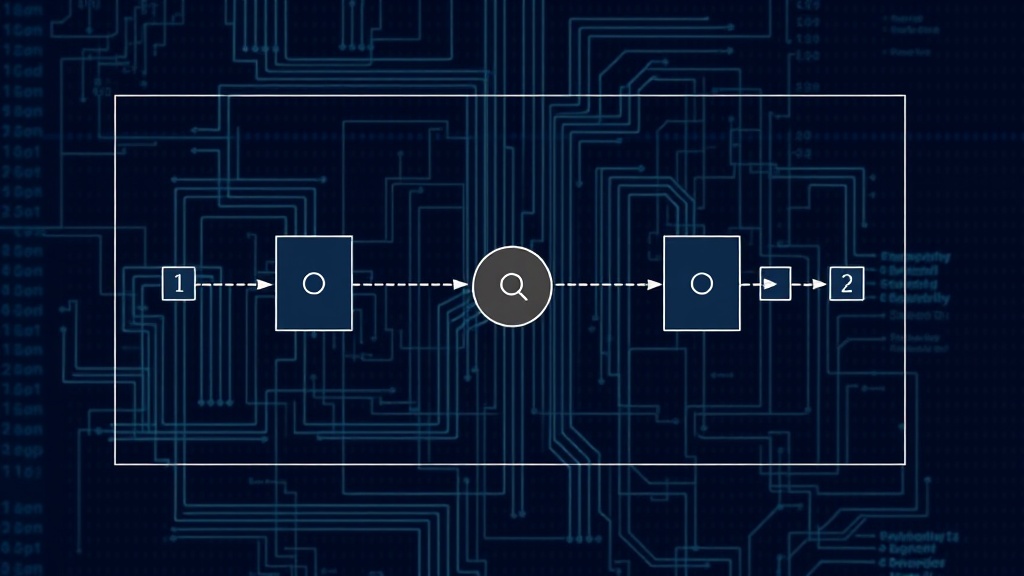
The Experiment and Its Findings
The benchmark was run across 300 random seeds. Each seed generated a unique task graph with varying dependencies and potential failure points. The experiment aimed to directly answer: can a goal-directed controller, devoid of LLM reasoning, isolate failures more effectively than a traditional linear pipeline? The results were compelling.
In every scenario where independent task branches existed, the goal-directed controller consistently completed these branches even when earlier, sequential tasks failed. A traditional linear executor, by design, would have halted execution at the first sign of failure, leaving these independent branches unattempted. This demonstrated that the control flow architecture itself, when designed for goal-direction and state management, possesses the capability for failure isolation.
A subtle but critical bug was discovered and fixed during the validation phase. Initially, the controller's failure handling logic was too aggressive, inadvertently causing it to halt prematurely in some cases, thus invalidating the early results. This debugging process itself highlighted the complexity of control flow logic and the importance of precise state management, even in deterministic systems. The fix involved refining the rules for determining which failures were truly blocking versus those that were isolated to specific execution paths.
Failure Isolation as a Measurable Property
The experiment provides strong evidence that failure isolation is not solely a byproduct of sophisticated reasoning (like that of an LLM) but is a measurable property of the control flow architecture. By replacing the LLM with deterministic rules, the experiment successfully decoupled the control mechanism from the intelligence engine. The controller acted as a specialized operating system for task execution, managing processes and their states, and isolating failures based on predefined logic.
This has significant implications for building more robust AI systems. While LLMs excel at understanding context and generating plans, their susceptibility to hallucinations or errors can cascade through a system. A well-designed control loop, even one using simpler logic, can act as a crucial safeguard. It ensures that progress can be made on non-affected parts of a task, improving overall system resilience and efficiency. This is particularly relevant in domains where reliability is paramount, such as autonomous systems, complex workflow automation, or critical decision support.
Implications Beyond LLMs
The success of this non-LLM loop engineering experiment suggests that the principles of effective loop design are applicable even in simpler computational contexts. It provides a foundational understanding of how to build more resilient systems by focusing on the architecture of control and state management. This is not to say LLMs are unnecessary; they are invaluable for complex planning and understanding. However, their integration into loops can be made more robust by pairing them with deterministic, goal-directed controllers that manage execution and isolate failures.
The findings open avenues for research into hybrid architectures that combine the planning power of LLMs with the resilience of rule-based controllers. It also suggests that traditional software engineering principles, like robust error handling and state management, remain critically important in the age of AI. For developers building complex AI agents or workflow systems, the takeaway is clear: the architecture of the loop matters as much as the intelligence within it.