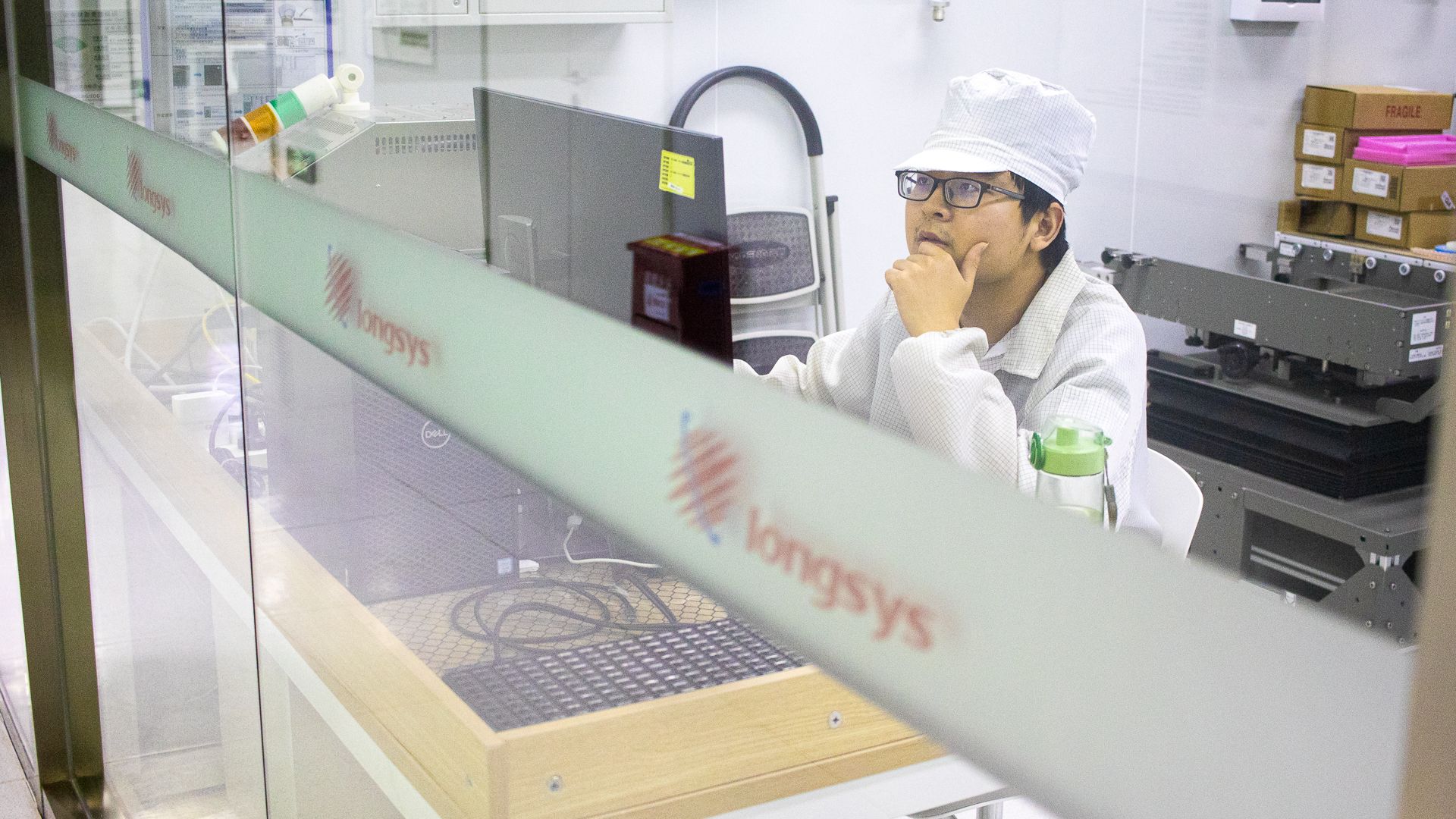
AI Boom Fuels Unprecedented Profit Growth for Longsys
Chinese memory and storage giant Longsys, the parent company of the Lexar brand, is poised for an extraordinary financial surge, forecasting a staggering profit of nearly $1.5 billion for the first half of fiscal year 2026. This projection represents an astonishing increase of over 60,000% compared to the $2.1 million profit reported in the same period last year. The dramatic upswing is directly attributed to the insatiable demand for high-performance memory and storage solutions, largely propelled by the burgeoning artificial intelligence sector.
The AI revolution, characterized by the development of increasingly powerful large language models (LLMs) and sophisticated AI applications, requires vast amounts of data to be processed, stored, and accessed rapidly. This dependency creates a critical bottleneck where advanced memory and storage technologies become indispensable. Longsys, as a key player in this market, finds itself at the forefront of this demand wave. The company's forecast suggests that the market's appetite for its products, ranging from NAND flash memory to solid-state drives (SSDs) and DRAM, has far outstripped supply, driving up prices and profitability.
This forecast is not merely an optimistic outlook; it reflects a fundamental shift in the semiconductor landscape. The computational demands of AI training and inference necessitate specialized hardware, with memory bandwidth and capacity being paramount. Researchers and engineers working on cutting-edge AI models are constantly pushing the boundaries of what existing storage can offer, leading to a scramble for higher-density, faster, and more efficient memory components. Longsys’s ability to capitalize on this trend, through its own manufacturing capabilities and its well-known Lexar brand, positions it as a significant beneficiary.
Market Dynamics and the AI Imperative
The semiconductor industry has long been cyclical, but the current AI-driven demand presents a unique and potentially sustained growth phase. Unlike previous cycles driven by consumer electronics or general computing, AI’s requirements are more specialized and demanding. Training massive AI models can require petabytes of data, necessitating storage solutions that are not only capacious but also offer extremely high read/write speeds to feed the powerful processors efficiently. Inference, the process of using trained models to make predictions, also benefits from low-latency memory access.
This has led to a global shortage of advanced memory chips, particularly those optimized for AI workloads. Companies like NVIDIA, AMD, and Intel, which are developing the AI accelerators and CPUs, rely heavily on a robust supply chain for memory components. Longsys’s forecast indicates that it has managed to secure significant orders or has strategically positioned itself to meet this surging demand. The company's integrated approach, from manufacturing to branding through Lexar, likely allows for greater control over its supply chain and product development, enabling it to respond more effectively to market needs.
The projected profit of nearly $1.5 billion is particularly striking when contrasted with the $2.1 million profit from the previous year. This magnitude of increase suggests that Longsys is not just experiencing incremental growth but is capturing a substantial portion of a rapidly expanding market. It also implies that the pricing power for these critical components has shifted significantly in favor of manufacturers. This scenario is akin to a gold rush, where those who control the supply of essential tools—in this case, memory chips—reap enormous rewards.
Longsys's Strategic Position and Future Outlook
Longsys's strategic positioning is a critical factor in its anticipated profit surge. As a Chinese manufacturer, it operates within a global ecosystem that is increasingly focused on the development and deployment of AI. The company's investment in research and development, coupled with its manufacturing capacity, allows it to produce a range of memory products, including DRAM and NAND flash, which are fundamental building blocks for AI infrastructure. The Lexar brand, known for its consumer-oriented storage products, also benefits from this underlying demand, potentially seeing increased sales and brand recognition as the overall market expands.
The substantial profit forecast also signals a potential shift in the competitive landscape. While established players like Samsung, SK Hynix, and Micron have long dominated the memory market, Longsys’s aggressive growth suggests it is carving out a more significant niche. The company’s ability to scale production and meet the stringent quality and performance requirements for AI applications will be crucial for sustaining this momentum. The sheer scale of the projected profit suggests that Longsys has either secured substantial long-term contracts or is benefiting from exceptionally favorable spot market conditions driven by the AI chip shortage.
What remains to be seen is the long-term sustainability of such explosive profit growth. While the AI boom is expected to continue for the foreseeable future, the semiconductor industry is prone to supply-demand imbalances. However, the fundamental shift in computational requirements driven by AI suggests a more enduring demand for advanced memory and storage than in previous technology cycles. Longsys’s success in this period could solidify its position as a major global supplier, influencing future market dynamics and investment strategies within the memory sector.
Referenced Sources
- verified