
Democratizing Biomedical Image Analysis
The world of biomedical research relies heavily on visual data. From microscopy images of cells to scans of tissues, understanding these visuals is critical for scientific discovery. However, the tools required for advanced image analysis are often prohibitively expensive, proprietary, and complex, creating a significant barrier for many labs, particularly those with limited budgets or less specialized technical staff. Loci emerges as a direct challenge to this status quo, offering a powerful, open-source platform designed to put sophisticated image analysis capabilities into the hands of every researcher.
At its core, Loci is built on the principle of accessibility. It aims to provide an alternative to costly commercial software that often locks users into specific ecosystems and limits customization. By embracing an open-source model, Loci fosters collaboration, transparency, and community-driven development. This approach not only reduces the financial burden on research institutions but also accelerates innovation by allowing a wider pool of developers and scientists to contribute to and benefit from the platform.
Key Features and Capabilities
Loci provides a suite of tools tailored for the unique demands of biomedical imaging. Its architecture is designed for flexibility, allowing it to handle a variety of image formats and analysis workflows. Researchers can leverage Loci for tasks such as:
- Image Preprocessing: Tools for noise reduction, contrast enhancement, and artifact removal to prepare images for accurate analysis.
- Segmentation: Algorithms to accurately delineate specific structures of interest within an image, such as cells, nuclei, or organelles.
- Feature Extraction: Quantitative measurement of visual characteristics, including size, shape, intensity, and texture, providing objective data points.
- Visualization: Advanced rendering capabilities to help researchers better understand complex 3D data and analysis results.
- Workflow Automation: The ability to string together multiple analysis steps into reproducible pipelines, ensuring consistency and efficiency.
The platform's open-source nature means that researchers are not limited by the predefined functionalities of commercial software. They can extend Loci's capabilities by developing custom plugins or integrating existing libraries. This adaptability is crucial in a field where research questions are constantly evolving and new imaging techniques are continuously emerging.
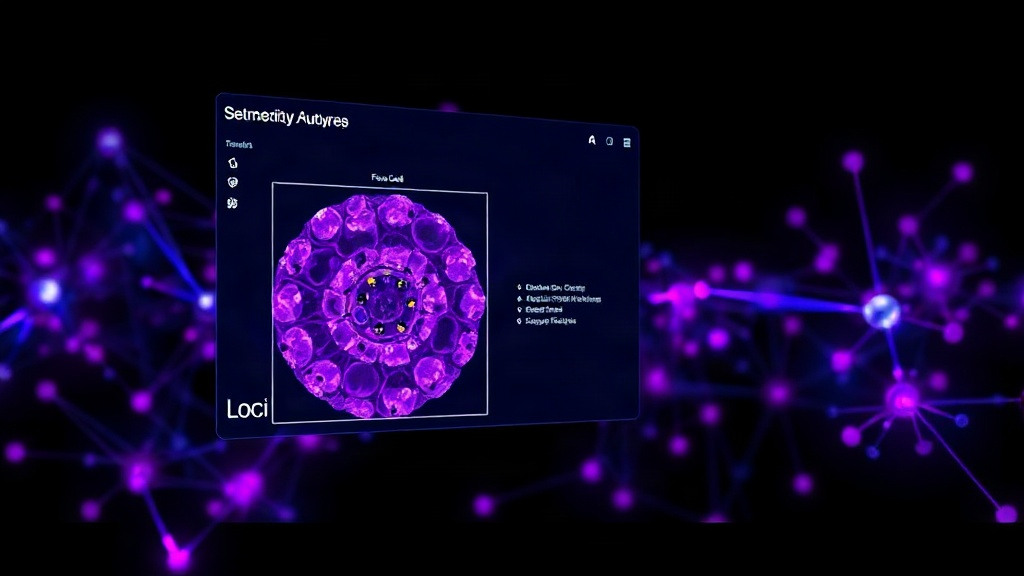
Addressing the Accessibility Gap
The cost of specialized biomedical image analysis software can easily run into tens of thousands of dollars per license, often requiring annual maintenance fees. This expense can be a significant hurdle for university labs, smaller research institutes, and labs in developing countries. Loci's open-source model bypasses these costs entirely, making advanced analysis accessible to a much broader segment of the scientific community. This democratization of tools has the potential to level the playing field, enabling more researchers to pursue cutting-edge investigations regardless of their institutional budget.
Beyond cost, proprietary software can also present challenges in terms of integration and customization. Researchers may find themselves constrained by the software's limitations, unable to tailor analyses to their specific experimental needs. Loci's open-source framework, however, encourages modification and extension. Developers can inspect the codebase, understand precisely how analyses are performed, and adapt the platform to novel applications. This level of transparency and control is invaluable for researchers pushing the boundaries of their fields.
The Open-Source Advantage
The open-source community model for software development has proven its power across many domains, from operating systems to web frameworks. Applied to biomedical image analysis, this model offers several distinct advantages. Firstly, it promotes rapid bug fixing and feature development, as a global community of users and developers can identify issues and propose solutions. Secondly, it ensures longevity; even if the original developers move on, the community can maintain and evolve the project. Thirdly, it fosters standardization, as open-source tools often become de facto community standards, promoting interoperability and reproducibility of research.
What remains to be seen is how quickly the biomedical research community will adopt Loci and contribute to its ecosystem. While the potential is immense, the transition from established proprietary tools to an open-source alternative requires effort, training, and a willingness to engage with a new platform. The success of Loci will depend not only on its technical merits but also on its ability to build a vibrant and supportive user community. If it achieves this, it could fundamentally change how biomedical image analysis is performed globally.