
The Privacy Problem with Online Developer Tools
Developers routinely use a variety of online tools for tasks like formatting JSON, decoding JWTs, encoding Base64 strings, generating hashes, and manipulating URLs. While convenient, these tools often require pasting sensitive data—API responses, configuration files, application logs, tokens, and even source code—into a third-party website. This practice raises a critical question: where does that data go? The potential for data leakage, misuse, or even accidental exposure is a growing concern in an era of heightened privacy awareness and increasing cybersecurity threats.
Ravi Kiran Reddy, a developer himself, recognized this vulnerability. Frustrated by the lack of privacy-focused alternatives, he decided to build his own solution. The result is LocalOnly.dev, a free, privacy-first developer toolkit designed to perform these essential operations entirely within the user's browser. No data is sent to any server, ensuring that sensitive information remains secure on the user's local machine.
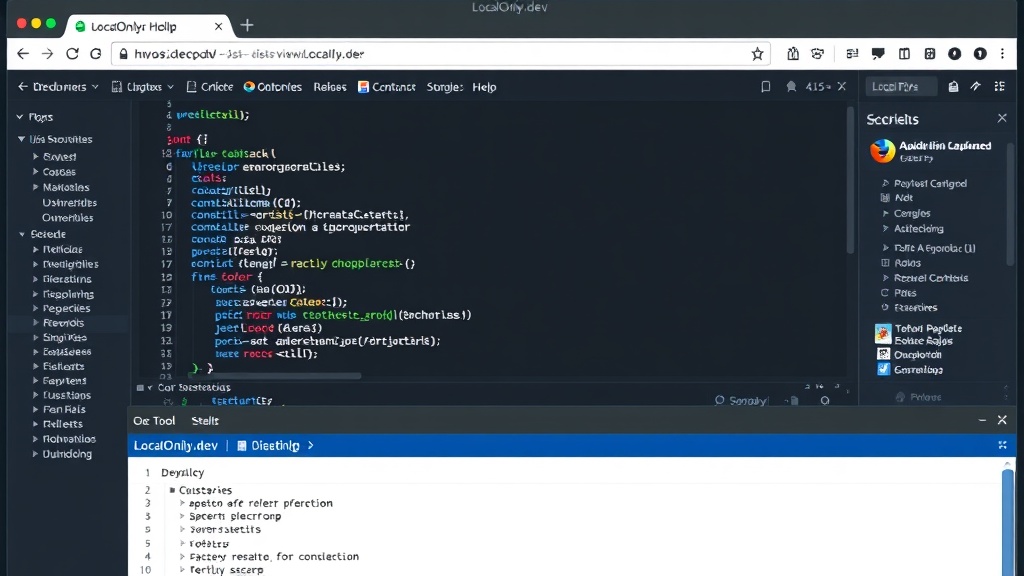
What LocalOnly.dev Offers
LocalOnly.dev provides a comprehensive suite of utilities commonly used by developers. The core principle is that all processing happens client-side, leveraging the browser's capabilities. This means users can confidently use the tools without worrying about their data being logged, stored, or transmitted elsewhere. The toolkit is free to use and requires no account creation or installation, making it immediately accessible.
The current offerings include:
- JSON Formatter/Beautifier: Pretty-print JSON data for easier readability.
- JWT Decoder: Decode JSON Web Tokens to inspect their payload and header.
- Base64 Encoder/Decoder: Encode and decode strings using Base64.
- Hash Generators: Create MD5, SHA1, SHA256, and SHA512 hashes.
- URL Encoder/Decoder: Properly encode or decode URL components.
- Diff Tool: Compare two text inputs to see differences.
- Timestamp Converter: Convert between Unix timestamps and human-readable dates.
- Regex Tester: Test regular expressions against input strings.
- Color Picker: A simple tool for selecting colors.
- UUID Generator: Generate Universally Unique Identifiers.
Each tool operates independently, and the interface is designed for simplicity and speed. Users paste their input directly into a text area within the tool, and the output is generated instantly in another area, all without a single byte leaving the browser.
The Technology Behind LocalOnly.dev
The toolkit is built using standard web technologies: HTML, CSS, and JavaScript. By performing all computations client-side, LocalOnly.dev bypasses the need for a backend server to process user data. This approach is not new for simple utility functions, but its application to a comprehensive suite of developer tools, with a clear emphasis on privacy, addresses a significant gap. The code is open-source, allowing developers to inspect it for themselves, further building trust. This transparency is key for a tool that handles potentially sensitive information.
The choice to keep the project free and open-source aligns with the privacy-first ethos. It removes any incentive for data monetization. For developers, this means a reliable tool that respects their data privacy, without the usual trade-offs of free online services. The project is hosted on GitHub, inviting community contributions and further development.
Why This Matters for Developers
The implications of LocalOnly.dev are significant for any developer who handles sensitive data. In corporate environments, using unvetted online tools can lead to policy violations or security breaches. Developers working on projects with strict data handling requirements can now use these utilities without compromising compliance. Think of it less like a public library where your borrowing habits are tracked, and more like a private notepad you use at your desk – the information is for your eyes only.
The constant need for quick data manipulation tasks is a universal developer experience. Previously, the convenience of online tools often outweighed the privacy risks. Now, LocalOnly.dev offers a viable alternative that removes that dilemma. It empowers developers to maintain control over their data, even when performing routine operations. This shift towards client-side processing for essential tools could set a new standard for how developers interact with online utilities.
The Future of Privacy-Conscious Tools
LocalOnly.dev’s success hinges on its commitment to its core principle: privacy. As more developers become aware of the risks associated with data handling, tools like this will likely see increased adoption. The open-source nature also fosters trust and allows for rapid iteration and improvement based on community feedback. Reddy has indicated plans to add more tools based on user requests, further expanding the utility of the platform while maintaining its privacy guarantees.
What nobody has addressed yet is the potential for similar privacy-first models to influence other categories of developer tools, such as IDE plugins or cloud-based services. If a simple browser-based toolkit can achieve this level of privacy, what prevents more complex, paid services from adopting similar client-side processing architectures? The trend is clear: developers are prioritizing data security and privacy, and solutions that meet this demand will gain traction.