
The Case for a Private AI Cognition Layer
In an era where our digital lives increasingly resemble a rented apartment rather than owned property, the concept of a "second brain" has taken on a new, critical dimension. For decades, the idea of augmenting human memory and cognition with external tools, first articulated by thinkers like Andy Clark and David Chalmers as the "extended mind," has evolved. What began with notebooks and personal files has migrated to cloud-based services. This shift, while offering convenience and accessibility, has also introduced a subtle but profound vulnerability: our extended minds are now hosted by third parties, subject to their terms of service, data retention policies, and, crucially, legal subpoenas.
This architecture means our most personal thoughts, our working memory, can be compelled out of these platforms. It's less about nostalgia for paper and more about retaining agency over our own cognition. The solution isn't to abandon digital tools, but to architect our interaction with them differently. The path forward lies in thinking locally, utilizing machines we directly control to process and store our information. This is the premise behind building a "second brain" that is not only private but also entirely offline, untethered from external dependencies and legal reach.
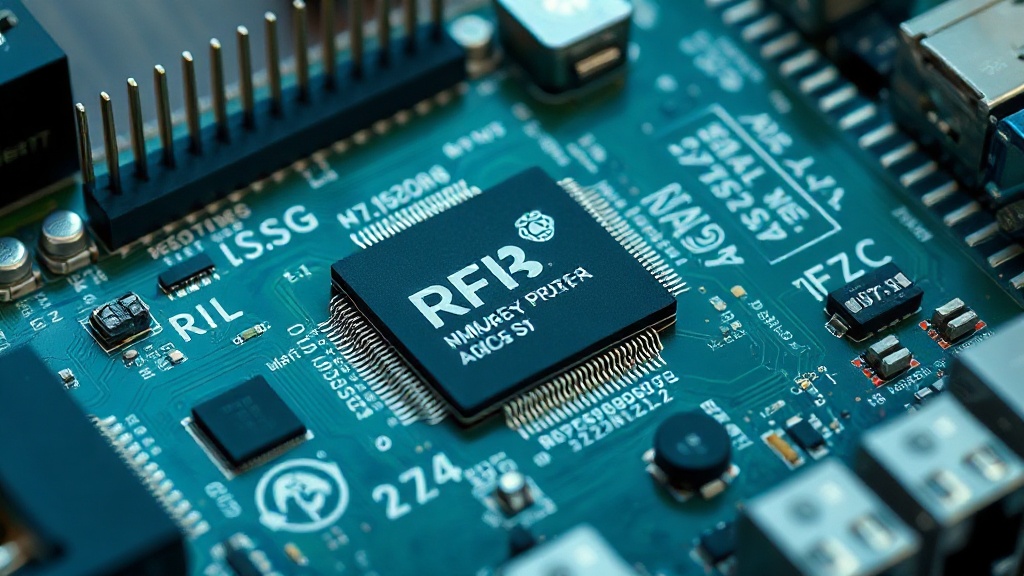
The project detailed here achieves this by leveraging a Raspberry Pi 5, equipped with an NVMe SSD for fast storage and a Hailo-8 AI accelerator. The core technology enabling this is Retrieval Augmented Generation (RAG), running entirely offline. This setup eliminates the need for API keys, prevents telemetry data from being sent externally, and ensures that no third party can be compelled to disclose your personal data.
Architecting the Offline Second Brain with RAG
Retrieval Augmented Generation (RAG) is a technique that enhances large language models (LLMs) by providing them with external knowledge retrieved from a specific data source. Instead of relying solely on the model's pre-trained knowledge, RAG systems first search a user-defined corpus for relevant information and then feed that information to the LLM as context when generating a response. This is akin to giving a student an open book during an exam, but with the book being a curated, personal knowledge base.
The "second brain" built here uses this principle but strips away the cloud dependency. The process begins with ingesting personal data—documents, notes, articles, any text-based information—and processing it into a format suitable for retrieval. This typically involves breaking down large documents into smaller chunks and then generating vector embeddings for each chunk. These embeddings are numerical representations that capture the semantic meaning of the text.
These embeddings are stored in a local vector database, running on the Raspberry Pi. When a user poses a query, the system first converts the query into a vector embedding. It then searches the local vector database for the embeddings most similar to the query embedding, identifying the most relevant text chunks from the personal knowledge base. These retrieved chunks are then passed to a local LLM, along with the original query, to generate a contextually relevant and informed answer.
The choice of hardware is critical for this offline RAG setup. The Raspberry Pi 5 offers a significant leap in processing power compared to its predecessors, making it capable of running more demanding local applications. The addition of an NVMe SSD provides high-speed storage, essential for quickly accessing the vector database and documents. The Hailo-8 AI accelerator is particularly important, as it is designed to efficiently run AI inference tasks, accelerating the embedding generation and LLM response times, which can be a bottleneck on general-purpose CPUs.
Implementation Details and Software Stack
The practical implementation of this offline RAG system involves several key software components. For the vector database, options like ChromaDB or LanceDB are suitable as they can be run locally and efficiently. These databases are designed to store and query high-dimensional vector embeddings.
For the LLM, a quantized version of a smaller, performant model is often used. Models like Llama 3 (in its smaller parameter variants), Mistral, or Phi-3 can be run on devices with limited resources, especially when quantized to reduce their memory footprint and computational requirements. Tools like Ollama or LM Studio provide user-friendly interfaces to download and run these local LLMs.
The orchestration layer ties these components together. This involves scripts or a dedicated application that handles:
- Ingesting and chunking user documents.
- Generating embeddings using a local embedding model (e.g., from Hugging Face's Sentence Transformers library).
- Storing embeddings in the local vector database.
- Receiving user queries.
- Generating query embeddings.
- Retrieving relevant documents from the vector database.
- Prompting the local LLM with retrieved context and the user query.
- Presenting the LLM's response to the user.
The Hailo-8 accelerator, while not directly running the LLM inference itself in many common setups (it's often used for specific neural network tasks), can accelerate certain pre-processing or embedding generation steps if compatible libraries or custom kernels are employed. Its primary benefit is offloading computationally intensive AI tasks, freeing up the Pi's CPU and GPU for other operations.
The Significance of Local, Subpoena-Proof Cognition
The implications of a truly private, offline AI knowledge system are profound. It addresses fundamental concerns about data privacy, intellectual property, and cognitive autonomy. By keeping all data and processing local, users ensure that their personal information, their thoughts, and their "extended mind" remain under their sole control. This is particularly relevant for professionals dealing with sensitive information, researchers working on proprietary projects, or individuals who simply value their privacy above all else.
This approach fundamentally redefines the relationship between humans and AI. Instead of being passive consumers of cloud-hosted AI services, users become active architects and owners of their AI-augmented cognitive tools. The "second brain" becomes a personal sanctuary for thought, immune to external data harvesting, policy changes, or legal demands. It's a powerful statement about the future of personal computing and AI interaction: one where control and privacy are paramount.
What remains an open question is the scalability and long-term maintenance of such systems. While a Pi 5 can handle a significant personal knowledge base, managing larger datasets, ensuring data integrity over time, and keeping the software stack updated without the convenience of managed cloud services will require ongoing effort and technical expertise from the user.