
The 'Privacy' Paradox of Local LLMs
An indie developer recently launched a tool that security teams have long dreaded: a large language model (LLM) with direct read/write access to sensitive user data across applications like iMessage, Microsoft Teams, and OneDrive. The developer's core pitch? Privacy, because the data processing happens entirely on the user's local machine. This approach, while seemingly secure on the surface, bypasses established security protocols and introduces significant risks, fundamentally misunderstanding what constitutes true privacy in the context of powerful AI agents.
The tool leverages the Model Context Protocol (MCP), a framework that allows LLMs to interact with various applications. While MCP has facilitated innovations like connecting AI assistants to calendars, its adoption has accelerated rapidly, moving from single-service integrations to the potential for comprehensive machine access. This local MCP implementation represents an extreme endpoint of that trend, offering access to 183 different tools without the standard security measures like OAuth or API keys. The convenience is undeniable, but the security implications are profound.
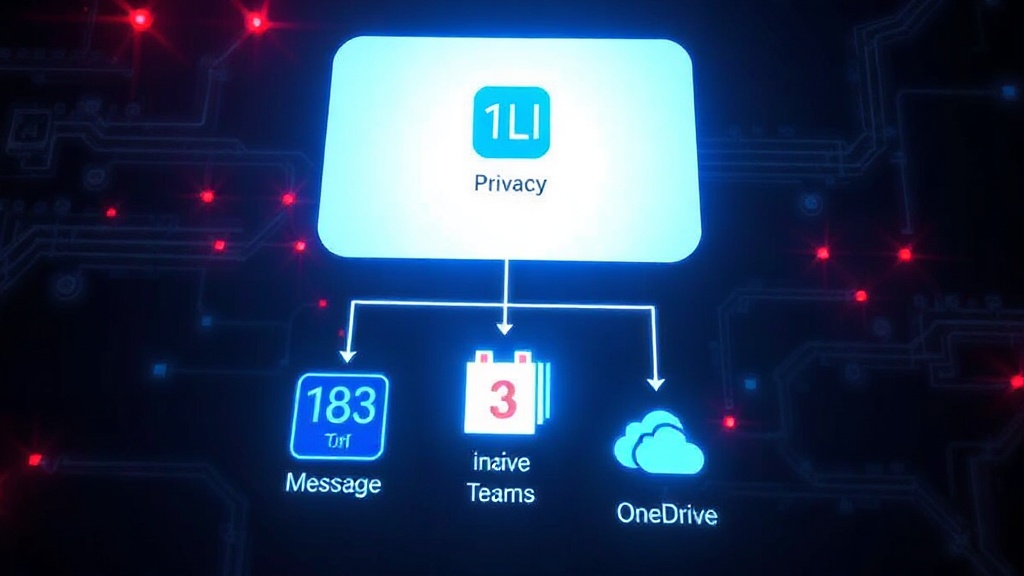
A Familiar Pattern, Amplified Scope
This scenario mirrors a recurring pattern in software development: convenience-driven integrations are released, often without adequate security vetting, gaining traction before potential vulnerabilities are addressed. The Show HN (Show Hacker News) post is a common launchpad for such tools. However, the scope of this particular tool is unprecedented. Instead of a single connector to a specific service, it offers a broad, deep integration across a vast array of personal and professional applications. This isn't just about an AI reading your emails; it's about an AI having the potential to modify them, send messages on your behalf, or access and alter cloud storage contents, all while claiming a privacy win due to local execution.
The inherent risk lies in the direct, unfiltered access granted to the LLM. Traditional integrations rely on APIs and OAuth, which provide granular permissions and auditable logs. A user might grant an application permission to read their calendar, but not to modify it or access their contacts. This local MCP approach bypasses these gatekeepers entirely. The LLM, running locally, has the same access as the user logged into those applications. If the LLM is compromised, or if its internal logic contains unforeseen flaws, the potential for data exfiltration or malicious modification is immense. The data might stay on the machine, but the actions taken by the AI agent are not inherently limited or monitored in a way that protects the user from unintended consequences or security breaches.
What 'Local' Privacy Really Means
The argument for local processing being synonymous with privacy is flawed. While it's true that data doesn't leave the user's device for processing by a third-party server, the security of the data and the AI's actions depend entirely on the security of the local environment and the LLM itself. Consider an analogy: leaving your house keys under the doormat. The keys are technically 'local' to your property, but they offer no real security against someone who knows where to look or how to pick the lock. Similarly, having an LLM with unrestricted read/write access on your machine, even if it's running locally, is like handing it a master key to your digital life without any audit trail or specific permissions management.
The 183 tools supported by this local MCP implementation represent a massive attack surface. Each integration point is a potential vector for misuse. If the LLM's training data or internal decision-making process leads it to, for example, delete files in OneDrive or send sensitive information from iMessage to an unintended recipient, the