The Quest for Local AI Autonomy
The allure of running a powerful AI assistant entirely on local hardware is strong. Privacy, offline functionality, and cost savings are compelling motivators. Many envision a future where personal agents, capable of managing complex tasks and interacting with a vast array of tools, operate without constant cloud dependency. This article explores the practical realities of such a setup by pitting local Large Language Models (LLMs) against a cloud-based benchmark, Claude, in the context of a sophisticated personal agent designed to handle 27 distinct production tasks.
The experiment involved replaying 27 real-world production tasks through two different local LLM configurations. These tasks represent a realistic workload for a personal AI assistant, ranging from data analysis and content generation to scheduling and tool orchestration. The goal was to determine if current local LLM technology, even with modest hardware upgrades, could adequately replace a capable cloud-based model like Claude in terms of performance, accuracy, and reliability.
Methodology and Hardware Considerations
The testing focused on a specific personal agent framework that leverages a 90-tool ecosystem. This framework requires an LLM capable of understanding complex instructions, reasoning through multi-step processes, and accurately selecting and invoking the appropriate tools from its extensive library. The core question was whether smaller, locally deployable LLMs could match the nuanced understanding and execution capabilities of a large, cloud-hosted model.
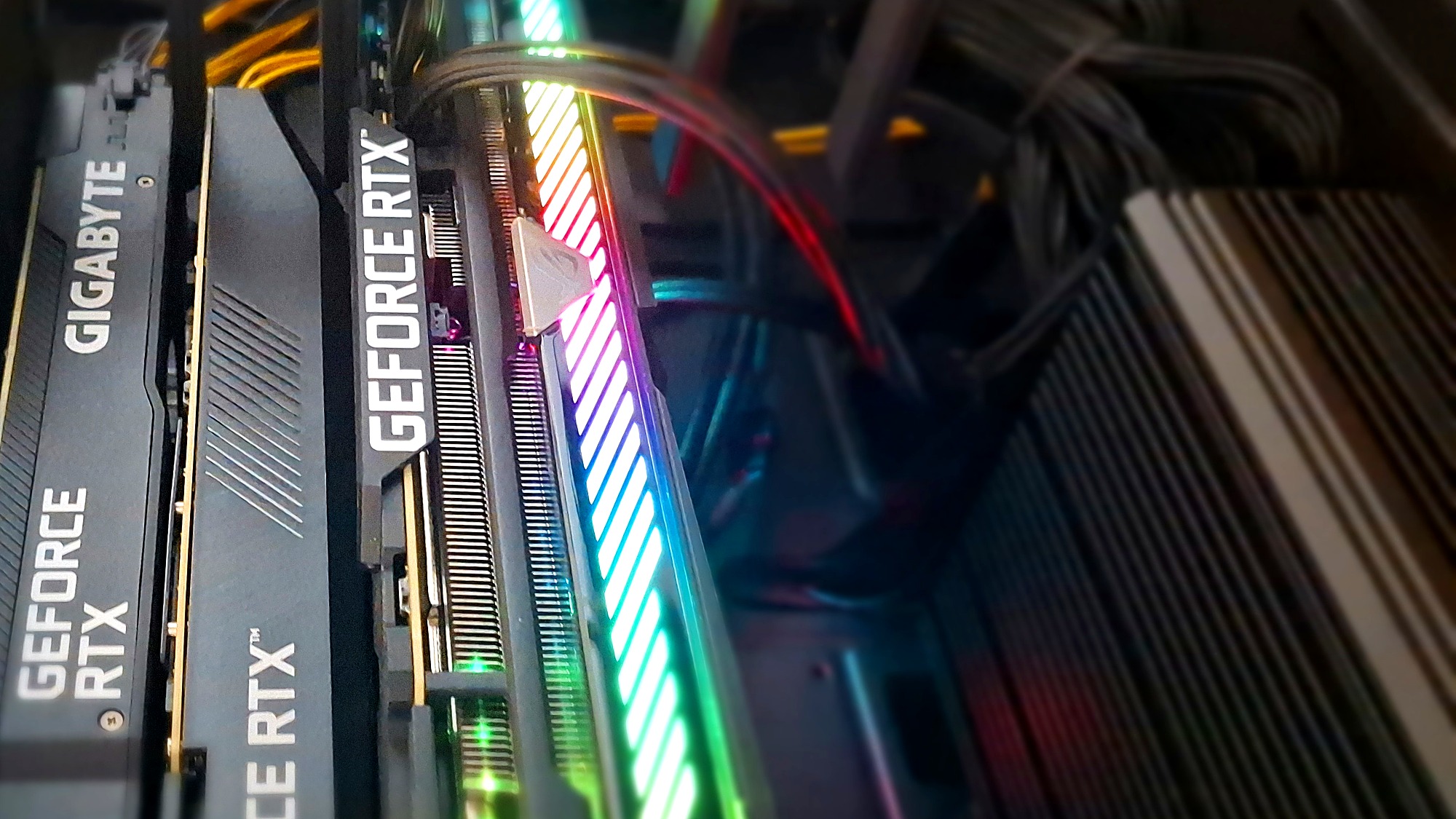
The first local model tested was a baseline configuration, aiming for accessibility and lower hardware requirements. The second configuration involved a hardware upgrade, specifically focusing on increased VRAM, which is critical for running larger and more capable LLMs. This upgrade was intended to simulate a common scenario for users looking to improve local AI performance: investing in better hardware. The tasks were designed to be representative of a personal agent's workload, involving natural language understanding, task decomposition, tool selection, and output generation.

Performance Gaps and Task Failures
The results painted a clear picture: local LLMs, even with hardware improvements, struggled to consistently match Claude's performance across the 27 production tasks. The baseline local model exhibited significant shortcomings, failing to complete a substantial portion of the tasks accurately. These failures ranged from misinterpreting instructions to incorrectly selecting tools or generating nonsensical outputs. This suggests that for complex, multi-turn interactions and nuanced decision-making, the smaller parameter counts and potentially less sophisticated training of readily available local models are insufficient.
The hardware upgrade provided a noticeable improvement, but it did not bridge the gap entirely. The more powerful local setup managed to complete more tasks successfully and with higher accuracy than the baseline. However, it still fell short of Claude's reliability. Specific areas of weakness for the local models included tasks requiring deep contextual understanding over long conversations, complex logical reasoning, and the accurate synthesis of information from multiple tools. For instance, tasks that involved summarising lengthy documents or generating creative content based on intricate prompts proved particularly challenging for the local setups.
The Cost of Local Autonomy: Hardware and Performance Trade-offs
The experiment underscores that running a truly capable AI assistant locally is not a trivial undertaking. The required hardware, especially for models that approach the performance of cloud-based giants, can be substantial. While the specific LLMs tested are not detailed, the need for a hardware upgrade to improve performance implies that users would likely need high-end GPUs with significant VRAM. This contrasts with the accessibility of cloud-based services, which can be accessed from virtually any device with an internet connection.
The trade-off is stark: achieving a level of performance comparable to cloud models necessitates a considerable upfront investment in hardware and ongoing effort in model management and optimization. For many users, the convenience and consistent performance of cloud-based AI assistants like Claude might still outweigh the benefits of local deployment, especially when considering the full spectrum of potential tasks an AI assistant might undertake. The ability to seamlessly integrate with a vast ecosystem of tools, as demonstrated by the 90-tool agent, requires a level of model intelligence that current local LLMs are still striving to achieve.
What This Means for the Future of Personal AI
While this specific experiment highlights current limitations, it does not signal the end of local LLMs for personal assistants. The rapid pace of LLM development means that models are constantly improving. Future iterations of local LLMs, perhaps with more efficient architectures or larger parameter counts that can be effectively quantized, may eventually close the performance gap. Furthermore, hybrid approaches, where sensitive tasks are handled locally and complex reasoning or resource-intensive operations are offloaded to the cloud, could offer a viable middle ground.
The surprising detail here is not that local LLMs aren't perfect, but the sheer breadth of tasks where even a moderately upgraded local setup falters against a well-established cloud model. It suggests that the 'brain' of a sophisticated AI assistant requires not just raw processing power, but also a deeply nuanced understanding of language and task logic that remains the domain of the largest, most resource-intensive models. For now, users seeking the full capabilities of a Claude-powered agent will likely need to remain connected to the cloud.