The Hidden Cost of Running Local LLMs: Electricity Consumption
The allure of running Large Language Models (LLMs) locally is strong: data privacy, offline access, and fine-tuning control. However, the practical costs, particularly electricity consumption, are often overlooked. A recent measurement on a single NVIDIA RTX 3090 GPU reveals that the cost per million tokens can vary significantly, and not always in predictable ways. The cheapest model wasn't necessarily the smallest, and the most expensive wasn't always the largest. This direct measurement offers a crucial data point for developers and hobbyists evaluating the economic feasibility of local LLM deployments.
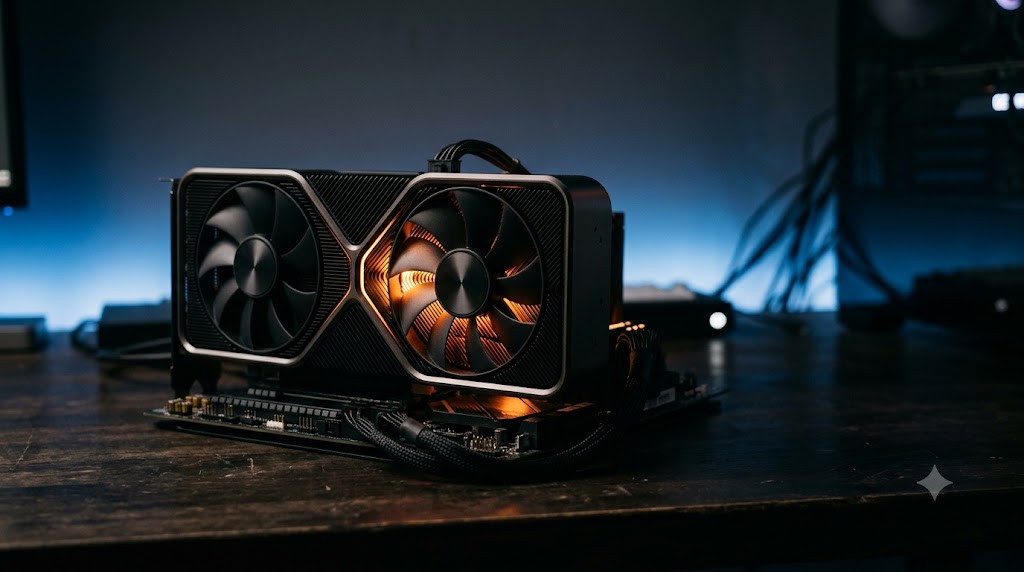
The experiment focused on measuring the direct GPU electricity draw while running inference on eight different local LLMs. The goal was to quantify the energy expenditure in Euros per million tokens processed, providing a tangible metric for comparison. This approach moves beyond theoretical power consumption figures and offers real-world performance data. The RTX 3090, a powerful consumer-grade GPU, was chosen for its widespread availability and substantial VRAM, making it a common choice for local LLM enthusiasts.
Methodology and Key Findings
The core of the study involved instrumenting an RTX 3090 to precisely measure its electricity consumption during LLM inference tasks. Each of the eight selected models was run through a benchmark that involved processing a set number of tokens, allowing for the calculation of power draw over time. This data was then converted into a cost per million tokens, using a standard European electricity rate. The surprising outcome was the non-linear relationship between model size (parameter count) and energy efficiency. Some smaller models consumed more power per token than larger, more capable ones, suggesting that architectural choices and optimization techniques play a critical role in energy efficiency, not just raw parameter count.
Specifically, the measurements indicated a wide range of costs. While the exact figures are proprietary to the study's detailed breakdown, the findings suggest that the most efficient models could be as low as a fraction of a Euro per million tokens, while less efficient ones could climb significantly higher. This variability underscores the importance of rigorous testing before committing to a specific model for a production or even experimental local deployment. It's not simply a matter of picking the smallest model to save on electricity; understanding the specific inference efficiency of each model is paramount.

Factors Influencing Cost Beyond Model Size
Several factors likely contribute to the observed discrepancies in electricity costs. Quantization, for instance, can drastically reduce the memory footprint and computational load of a model, leading to lower power consumption. Models that have undergone aggressive quantization might perform comparably to larger, unquantized models in terms of output quality for certain tasks, while consuming significantly less energy. The specific architecture of the LLM also plays a role; some architectures are inherently more computationally efficient than others, even with similar parameter counts. Inference optimization techniques, such as kernel fusion and efficient attention mechanisms, implemented in the inference engine (e.g., llama.cpp, vLLM), can also lead to substantial differences in performance and power draw.
Furthermore, the nature of the inference workload itself matters. Whether the model is performing simple text generation, complex reasoning, or code completion can affect its activation patterns and, consequently, its power draw. The batch size used during inference, though less relevant for typical single-user local deployments, can also influence efficiency. The study, by focusing on a consistent benchmark, attempts to normalize these variables, but real-world usage patterns might introduce further variations. The key takeaway is that a holistic view, considering quantization, architecture, and inference software, is necessary to accurately estimate operational costs.
Implications for Developers and Hobbyists
The findings have direct implications for anyone considering running LLMs on consumer hardware. For developers building applications that rely on local LLMs, these cost metrics are critical for budgeting and hardware selection. Deploying a highly efficient model can mean the difference between a sustainable operation and one that incurs prohibitive electricity bills, especially if scaled up. For hobbyists and researchers, understanding these costs can inform decisions about which models to experiment with, balancing performance, capability, and operational expenditure. It suggests that investing time in selecting and optimizing an LLM for energy efficiency can yield significant long-term savings.
The study challenges the common assumption that larger models are always more power-hungry per token. This counterintuitive finding suggests that developers should not shy away from larger models if they can be optimized effectively. Instead, they should prioritize models that offer the best performance-per-watt. This could involve exploring models that are specifically designed for efficiency, or models that have been extensively quantized and optimized for inference on specific hardware. The data provides a necessary empirical basis for these decisions, moving beyond guesswork.
The Road Ahead: Benchmarking and Optimization
As LLMs become more ubiquitous, the focus on their operational efficiency, particularly energy consumption, will only intensify. This study is a vital step in providing concrete, measured data for local deployments. Future research could expand on this by testing a wider range of GPUs, including professional-grade hardware, and exploring different electricity pricing models. Benchmarking across various inference engines and optimization libraries would also be invaluable. The drive towards more sustainable AI development necessitates a clear understanding of the energy costs associated with deploying these powerful models, even on personal machines.
The surprising detail here is not the specific Euro cost per million tokens, but the wide variance observed, directly contradicting a simple size-based cost model. It highlights that the 'cheapest' model isn't always the smallest, and the 'most expensive' isn't always the largest. This complexity demands a more nuanced approach to model selection for local deployments, prioritizing measured efficiency over theoretical parameter counts.