The Challenge of Local-First AI Context Retrieval
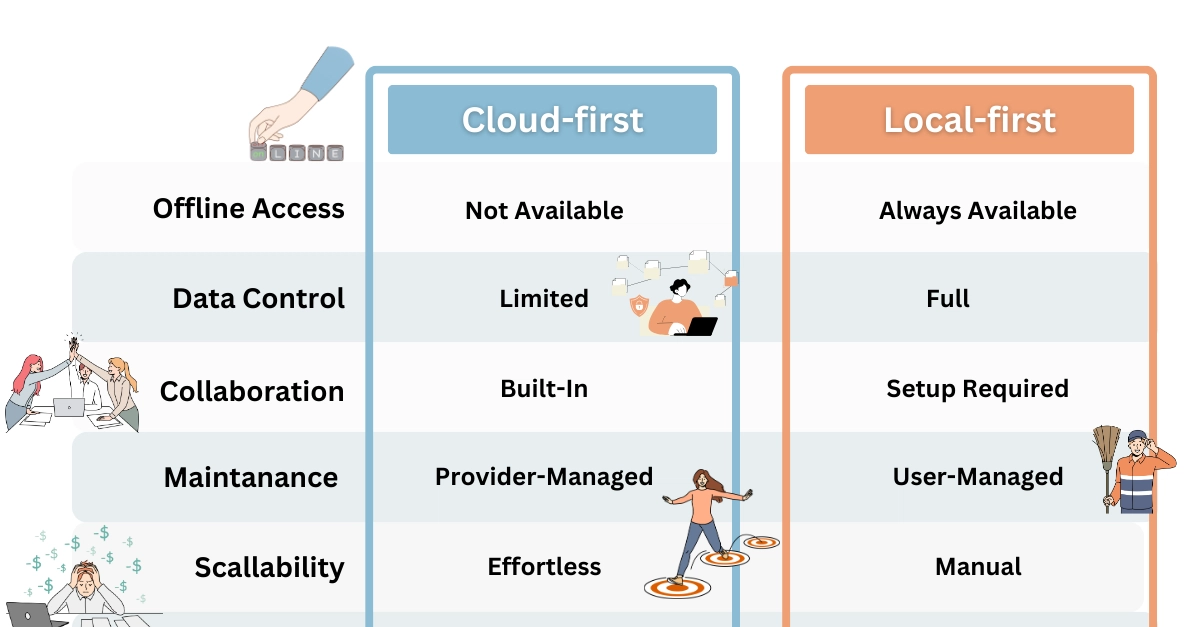
As artificial intelligence systems increasingly move towards local-first architectures, the ability to effectively manage and retrieve contextual information becomes paramount. This approach aims to keep data processing and storage on user devices, enhancing privacy, reducing latency, and enabling offline functionality. However, a significant hurdle is ensuring that the AI, particularly Large Language Models (LLMs), can access the precise information it needs from a local store of data when making inferences.
Imagine trying to answer a complex question using a massive, unorganized library. You know the information is there, but finding the exact books and pages relevant to your query would be an enormous task. This is the challenge faced by local-first AI systems: how to make their local memory accessible and useful for LLM inference. The retrieval layer acts as the crucial bridge, connecting the stored data to the LLM's prompt window, ensuring that the AI receives the most relevant context to reason effectively.
The core problem is moving from a state where data is merely captured and stored—akin to a messy 'Downloads' folder—to a system where the AI can find and utilize specific pieces of information on demand. This requires more than just keyword matching; it necessitates intelligent search and retrieval mechanisms that can understand the nuance and relevance of stored data in the context of a user's query.
Implementing Intelligent Search Functions
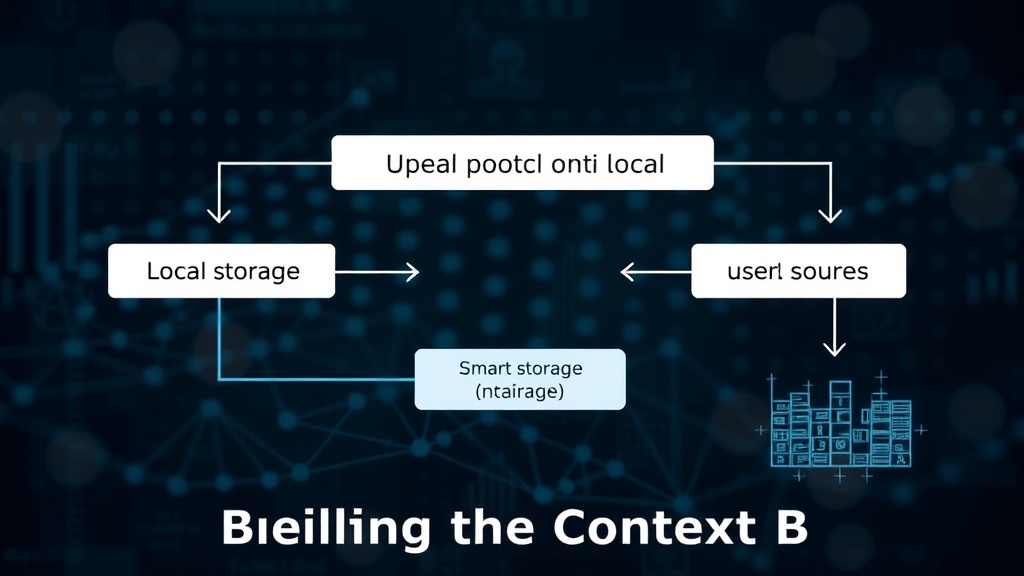
To address this, developers are implementing a suite of search functions designed to navigate local data stores efficiently. For systems utilizing SQLite databases, common methods involve leveraging SQL's capabilities. Functions like search_context_items and search_context_by_type are being developed. At their core, these functions often employ the LIKE operator within SQLite queries. This operator allows for pattern matching, enabling case-insensitive keyword searches across various fields, such as the title and content of stored data items.
Consider a user asking an AI assistant about a past project. If the AI has access to notes, meeting minutes, and project proposals stored locally, a simple keyword search might identify all documents containing terms like "Q3 project." However, a more sophisticated retrieval system would go further. It might prioritize documents based on recency, the specificity of the keywords, or even semantic similarity if more advanced indexing techniques are employed. The goal is to surface not just any document, but the *most relevant* ones that provide direct context for the AI's response.
The implementation of these search functions is critical for the performance and utility of local-first AI applications. Without them, LLMs would be forced to operate with limited or generic context, severely hindering their ability to provide personalized and accurate responses. The efficiency of these retrieval mechanisms directly impacts the speed at which the AI can process queries and the quality of the inferences it can make.
The Bridge to LLM Reasoning
Once relevant context is identified through these search functions, the next critical step is packaging this information for the LLM. This involves formatting the retrieved data—which might include text snippets, metadata, or summaries—into a structure that the LLM can readily understand and process as part of its input prompt. The objective is to provide the LLM with precisely the right amount of relevant information, without overwhelming it with extraneous data.
This process is analogous to a skilled researcher preparing a briefing document for an executive. The researcher doesn't just hand over a stack of papers; they synthesize the key findings, highlight critical data points, and present them in a concise and digestible format. Similarly, the retrieval layer in a local-first AI system must curate the most pertinent information from potentially vast local datasets and deliver it to the LLM in a way that maximizes its reasoning capabilities.
The effectiveness of this