The Problem: Subscription Bloat in AI Development
Serious AI-assisted development often involves a constellation of subscriptions. A coding assistant plan, a market data API, a backtesting service, and model inference credits all add up. While each component might seem reasonable individually, their cumulative cost can become a significant recurring bill, compounded by restrictive rate limits imposed by providers. This dependency locks developers into specific platforms and pricing structures, limiting flexibility and increasing operational overhead.
Recognizing this friction, the goal was to explore the limits of what could be achieved with AI automation without incurring any recurring costs. The outcome is a surprisingly capable stack, running entirely on free and local infrastructure, designed for reproducibility. This approach aims to democratize access to sophisticated AI workflows for both coding and quantitative research.
The Stack: Zero-Cost, Local AI Automation
The core of this stack is a combination of open-source tools and free services, meticulously configured to run locally. The entire system is scripted for easy rebuilding, ensuring consistency and eliminating the need for expensive managed services. This setup focuses on agentic capabilities, allowing AI agents to perform complex tasks autonomously.
Agentic Coding with Aider and Ollama
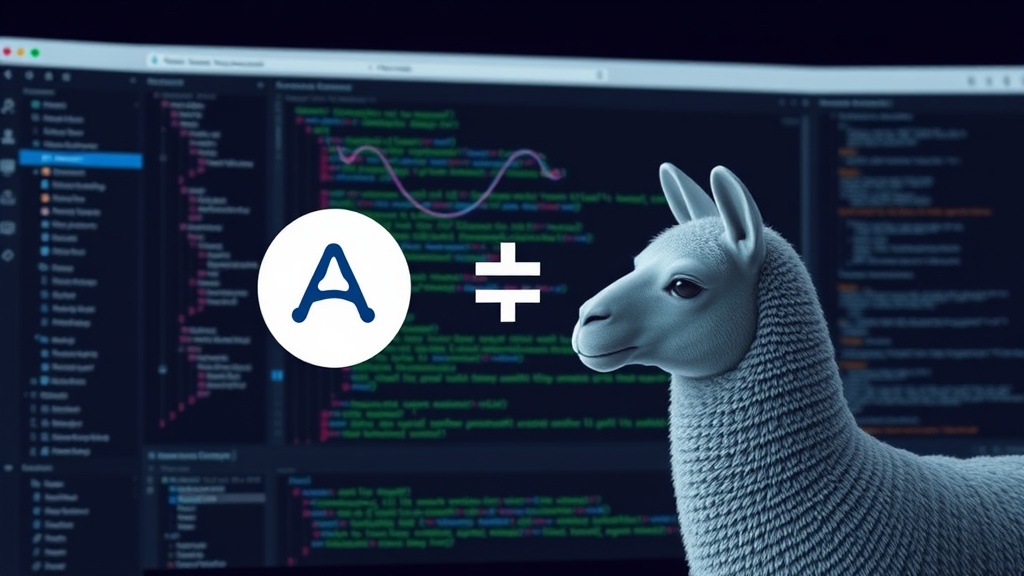
For agentic coding assistance, the stack leverages Aider. Aider is an AI pair programmer that can be configured to work with local language models. The integration with local models is handled by Ollama, a tool that simplifies running large language models (LLMs) on your own hardware. By using Ollama, the stack bypasses the need for cloud-based LLM APIs, which often come with per-token costs and latency issues. Aider, when coupled with a local Ollama-powered LLM, can assist in code generation, refactoring, and debugging directly within the developer's local environment.
Market Data Acquisition via MCP
The quantitative research aspect of the stack relies on accessing market data without paid APIs. The chosen method involves using the Marketclose Protocol (MCP). While the specifics of MCP are not detailed in the source, it's presented as a mechanism to obtain market data through a free or locally manageable channel. This is a critical component for any AI-driven trading or quantitative analysis, as reliable and cost-effective data is paramount. By avoiding paid data feeds, the stack significantly reduces its operational expenses.
Reproducibility and Automation
A key design principle of this stack is its reproducibility. The entire setup, from installing Ollama and downloading LLM weights to configuring Aider and setting up market data access, is scripted. This means the entire AI automation environment can be rebuilt from scratch on any compatible machine with minimal effort. This script-based approach ensures that the environment remains consistent, making it easier to debug, update, and deploy across different machines or for collaboration. It effectively creates a portable, zero-cost AI development and research platform.
The Implications: Democratizing AI Workflows
This $0 local AI automation stack demonstrates a viable path for developers and researchers to engage in sophisticated AI-driven tasks without the financial barrier of recurring subscriptions. It highlights the power of open-source tools and local compute resources. For individual developers, it offers a way to experiment with and deploy AI agents for coding and analysis without significant upfront or ongoing costs. For smaller teams or startups, it presents an opportunity to build powerful AI capabilities on a lean budget, allowing resources to be allocated to core product development rather than infrastructure subscriptions.
The success of this approach hinges on the availability of capable open-source LLMs that can be run efficiently on local hardware and the existence of free or easily accessible data sources like MCP. As LLMs continue to improve and hardware becomes more powerful, such local, cost-effective AI stacks are likely to become more prevalent. This shift could level the playing field, enabling a broader range of individuals and organizations to leverage advanced AI technologies.
The surprising detail here is not the $0 cost itself, but the breadth of functionality achieved. Agentic coding and quantitative research—two distinct and often expensive domains—are brought together in a single, reproducible, local environment. This challenges the notion that sophisticated AI workflows inherently require substantial ongoing investment in cloud services and proprietary APIs.
Future Considerations and Unanswered Questions
While this stack achieves impressive cost savings and local control, several questions remain. The performance and capabilities of local LLMs, while rapidly improving, may still lag behind the most advanced proprietary models for certain complex tasks. Scalability is another consideration; while reproducible, running intensive AI tasks locally is limited by the user's hardware. Furthermore, the long-term availability and stability of free data sources like MCP are not guaranteed. What happens when a crucial free data source changes its terms or is discontinued? The reliance on specific open-source tools also means the stack is susceptible to changes or deprecation within those projects.
What nobody has addressed yet is the potential for distributed local compute networks to scale these $0 stacks. If multiple users contribute their local hardware, could this model scale to handle tasks currently requiring cloud infrastructure, all while maintaining a $0 recurring cost for the end-user?