
The Rise of Local AI Agent Augmentation
The landscape of interacting with large language models (LLMs) is rapidly evolving beyond simple chat interfaces. A new category of tools is emerging, focused on integrating AI capabilities directly into your local desktop workflow. These tools aim to enhance the utility and efficiency of AI agents by leveraging local resources for persistent memory, intelligent token management, and more sophisticated agent behaviors. This shift is motivated by a desire for greater control, privacy, and a more seamless integration of AI into daily tasks.
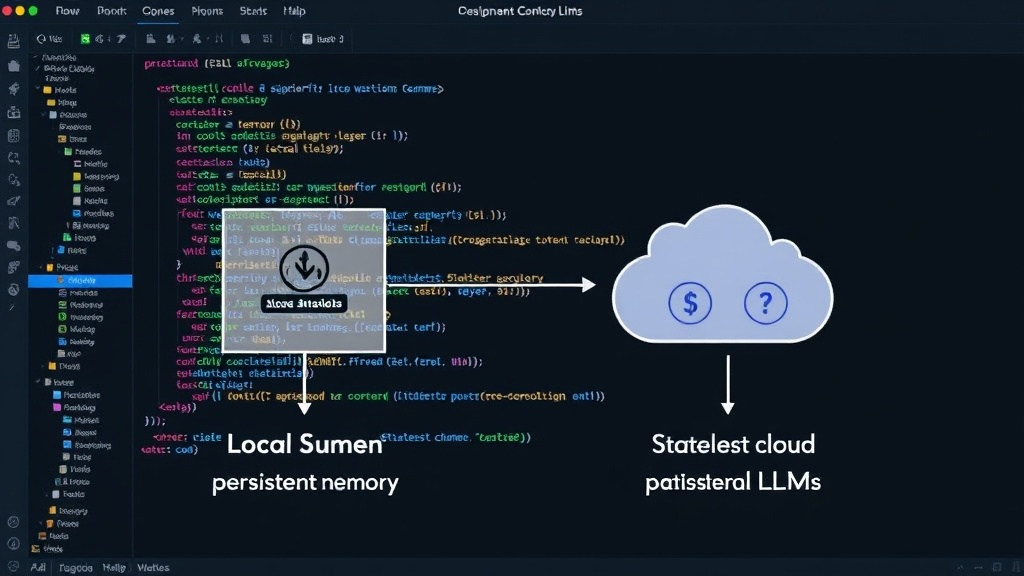
At its core, the concept revolves around giving AI agents a form of long-term memory and context that persists across interactions. Traditionally, LLM interactions are stateless; each new prompt is processed in isolation, with no inherent knowledge of previous conversations or user preferences. This requires users to constantly re-feed context, which is inefficient and limits the AI's ability to understand complex, evolving tasks. The solutions being developed address this by storing relevant information locally, making it accessible to the AI when needed.
Persistent Memory for AI Agents
Persistent memory is a key differentiator for these advanced local AI tools. Instead of relying solely on the limited context window of an LLM, these systems store data on your local machine. This data can range from past conversation logs, user-defined preferences, project-specific documents, to even structured knowledge bases. When you interact with the AI agent, it can query this local memory to retrieve relevant context. This allows the AI to maintain a consistent understanding of ongoing projects or complex discussions, much like a human colleague would remember past conversations.
Think of it less like a database and more like a highly organized digital assistant who remembers everything you’ve told them about a specific project. This local repository acts as an extended context, enabling the AI to perform more complex reasoning, recall specific details from weeks ago, and adapt its responses based on a deep, persistent understanding of your needs. This is particularly valuable for tasks that require iterative refinement or long-term project management.
Token Efficiency and Cost Savings
Another significant area of development is token efficiency. LLM APIs charge based on the number of tokens processed, both for input (prompts) and output (responses). For complex tasks that require large amounts of context or detailed instructions, token costs can escalate quickly. Local AI tools are exploring several strategies to mitigate this.
One method involves sophisticated context management. Instead of sending the entire history or all available documents to the LLM with every prompt, local systems can intelligently select only the most relevant snippets of information. This is achieved through techniques like semantic search, summarization, and knowledge graph integration, all performed locally before the data is sent to the LLM. By reducing the amount of data sent, token usage is minimized, leading to significant cost savings and faster response times.
Furthermore, some tools might employ techniques to compress or encode information before sending it, or even use smaller, specialized local models for initial processing or retrieval tasks, only escalating to larger, more expensive cloud models when absolutely necessary. This tiered approach to AI processing is becoming a crucial strategy for making advanced AI applications more economically viable for everyday use.
Enhanced Agent Capabilities and Workflows
Beyond memory and token saving, these local tools aim to imbue AI agents with more sophisticated capabilities and integrate them more deeply into existing workflows. This can include features that allow agents to autonomously perform multi-step tasks, interact with local files and applications, and even learn from user feedback in a more granular way.
For instance, an agent could be tasked with researching a topic. Instead of just providing a summary, it could be instructed to find specific types of data, extract key figures, format them into a table, and save it to a local document—all without explicit step-by-step prompting for each action. This level of autonomy requires robust local processing and integration capabilities.
The motivation behind these advancements is to move AI from being a reactive tool to a proactive assistant. By understanding the user’s ongoing tasks and having access to relevant local data, these agents can anticipate needs, suggest next steps, and automate tedious parts of the workflow. This fundamentally changes how developers, researchers, and creators can leverage AI, making it a more integral and less disruptive part of their digital environment.
The Future of Desktop AI Integration
The trend towards local AI augmentation signals a maturing of the AI tooling ecosystem. As LLMs become more powerful, the focus shifts from merely accessing raw model capabilities to building intelligent layers that make those capabilities practical and efficient for real-world applications. Persistent memory, token optimization, and enhanced agent autonomy are not just buzzwords; they represent tangible improvements that empower users to do more with AI, more privately, and more affordably.
What nobody has addressed yet is the potential fragmentation of these local AI workflows. As different tools emerge, each with its own approach to memory management and agent interaction, how will users ensure interoperability? Will we see emergent standards for local AI context sharing, or will users be locked into specific ecosystems?
For anyone looking to leverage AI more effectively on their desktop, exploring tools that offer persistent memory, intelligent context management, and token-saving features is the next logical step. These capabilities are transforming AI from a novelty into an indispensable part of the modern digital workspace.