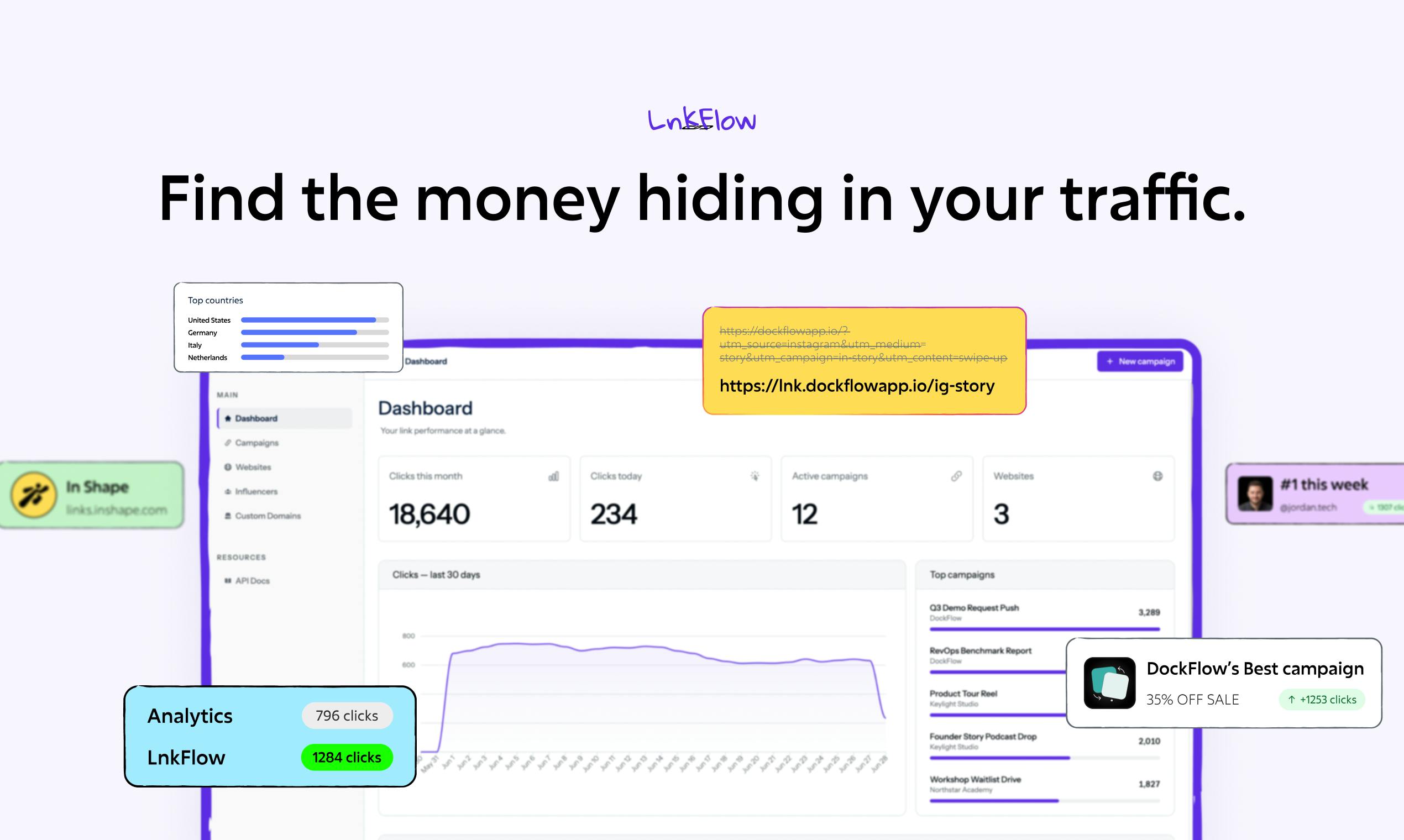
Introducing LnkFlow: Agentic Click Tracking
LnkFlow has launched, introducing a novel approach to link tracking by leveraging AI agents. The core promise is to move beyond simple click counts and provide actionable insights into what specific actions and links contribute to genuine business growth. This agentic approach means the system actively analyzes user journeys and link performance, aiming to surface high-impact drivers without requiring users to manually sift through data or configure complex analytics setups.
Traditional link tracking often provides raw data: how many clicks a link received, where it came from, and basic demographic information about the clicker. While useful, this data frequently requires significant human interpretation to uncover meaningful patterns or identify the precise touchpoints that lead to conversions or desired outcomes. LnkFlow aims to automate this interpretation layer. Its AI agents are designed to observe patterns, identify correlations, and present the findings in a way that directly informs business strategy. Think of it less like a spreadsheet of numbers and more like a dedicated analyst who proactively flags the specific social media post or email campaign that is most effectively converting prospects into customers.
The platform positions itself as a tool for understanding the 'why' behind the clicks. Instead of just knowing a link was clicked, users are intended to understand the context of that click and its subsequent impact on their business objectives. This could range from identifying which specific calls-to-action within an email newsletter are most effective, to pinpointing which influencer collaborations are driving the most qualified leads, or understanding which content formats resonate best with different audience segments. The agentic nature suggests a degree of autonomy in data analysis, where the system learns and adapts its tracking and reporting based on ongoing performance metrics.
Key Differentiators and Functionality
LnkFlow's primary differentiator lies in its use of what it terms 'agentic' tracking. This implies a system that doesn't just passively record data but actively processes it to derive intelligence. The agents are designed to identify patterns that correlate directly with business growth metrics, such as lead generation, sales, or user engagement. This moves beyond vanity metrics to focus on what truly moves the needle for a business.
The platform aims to simplify the analytics process for users. By automating the analysis and interpretation of link performance, LnkFlow intends to reduce the time and expertise required to gain valuable insights. This democratizes data analysis, making sophisticated performance marketing intelligence accessible to a broader range of businesses, including small and medium-sized enterprises that may not have dedicated analytics teams.
Specific functionalities are expected to include:
- Automated Insight Generation: AI agents identify and report on key growth drivers without manual configuration.
- Contextual Link Analysis: Understanding not just click volume, but the journey and impact of each link.
- Performance Correlation: Linking specific link activities to concrete business outcomes.
- Simplified Reporting: Presenting complex data in an easily digestible format.
The underlying technology likely involves machine learning models trained on vast datasets of user behavior and conversion paths. These models are then deployed as agents within the LnkFlow ecosystem to monitor and analyze incoming link data in real-time. The system is designed to distinguish between casual clicks and those that indicate genuine user intent, thereby providing a more accurate picture of marketing ROI.
Target Audience and Market Impact
LnkFlow is targeting businesses that rely on digital marketing and content distribution for growth. This includes marketers, entrepreneurs, sales teams, and content creators who use links across various platforms – social media, email, websites, and advertising campaigns – to engage their audience and drive conversions. The platform's promise of automated, actionable insights is particularly appealing to those who are time-constrained or lack deep analytical expertise.
The market for analytics and tracking tools is crowded, with established players offering comprehensive solutions. However, LnkFlow's focus on agentic, automated insight generation could carve out a niche. By abstracting away much of the complexity typically associated with performance analytics, LnkFlow aims to offer a more intuitive and direct path to understanding marketing effectiveness. This could challenge existing tools that require more hands-on configuration and data manipulation.
What is less clear is the depth of customization available for these AI agents. For highly specialized marketing strategies or unique business models, users might require granular control over how the agents learn and what metrics they prioritize. The success of LnkFlow may depend on finding the right balance between automated simplicity and the flexibility demanded by sophisticated marketing operations. If the agents can truly understand and adapt to diverse business needs, LnkFlow could become an indispensable tool for data-driven growth.
Ultimately, LnkFlow's proposition is to transform link tracking from a passive data collection exercise into an active, intelligent growth engine. By employing AI agents to uncover the direct impact of digital touchpoints, the platform aims to empower businesses to make more informed decisions and optimize their marketing efforts for maximum return.