The Multimodal Illusion in LLMs
The term "multimodal" has become a ubiquitous buzzword in the world of Large Language Models (LLMs), promising capabilities that extend beyond simple text processing. Yet, for many developers and content creators, the reality falls far short of the marketing. When handed a video file, common LLMs like ChatGPT might rely solely on the subtitle track, effectively narrating a video they haven't truly "watched." Others, like Claude, don't even accept video files as input. This gap between advertised multimodal capabilities and actual video comprehension leaves a significant void, particularly for those who work with video content daily.
This disconnect is precisely what Leo Huang, a content creator who unpacks viral videos for his own work, encountered. Frustrated by the inability of existing models to process video directly, he developed a pragmatic solution: claude-real-video. This tool is not a complex architectural overhaul of LLMs but a practical, minimal fix designed to bridge the gap by transforming video into formats LLMs can actually process: text and images.
claude-real-video: The Mechanism
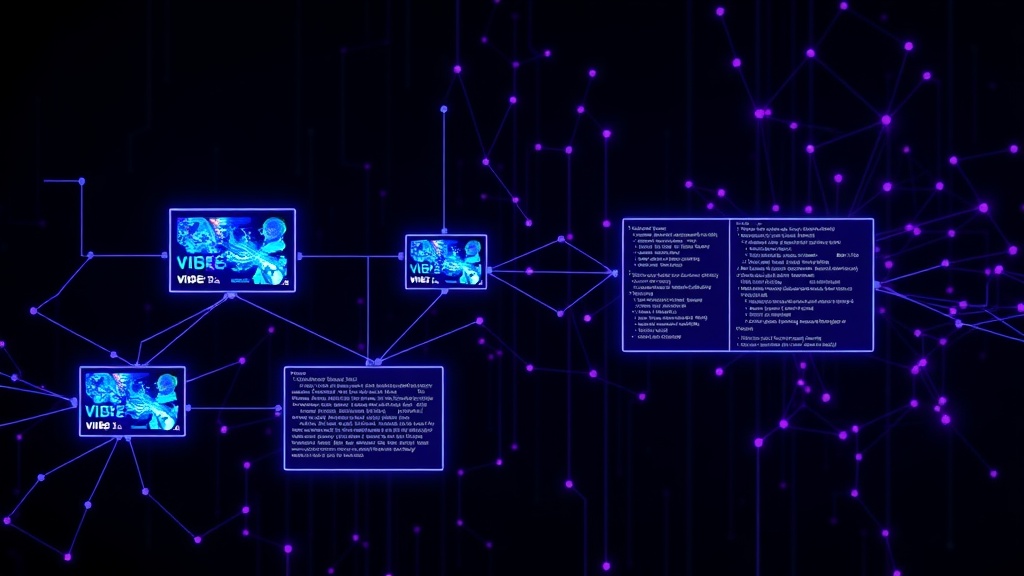
The core of claude-real-video lies in its ability to break down a video into discrete, understandable components for an LLM. It achieves this by generating three key outputs:
Scene-Aware Sampled Frames
Instead of simply sampling frames at fixed intervals (e.g., every 5 seconds), which can lead to missing crucial visual changes, claude-real-video employs scene detection. It uses ffmpeg's scene scoring capabilities to identify points where the visual content significantly changes. This ensures that the sampled frames represent distinct moments or shifts in the video's narrative. A critical addition is the --adaptive flag. This flag was developed in response to user feedback concerning slow deformations, such as squash-and-stretch effects, which could be missed by fixed threshold-based scene detection. The adaptive flag allows the tool to better capture subtle yet important visual transitions.
Timestamped Transcript
For the auditory component, the tool generates a timestamped transcript of the video's spoken content. By default, it utilizes OpenAI's Whisper model for speech-to-text conversion. For users prioritizing speed, claude-real-video integrates with faster-whisper. If installed, faster-whisper runs in-process, significantly accelerating the transcription process, often by several times, while also supporting automatic language detection.
Keyframe Extraction
Beyond just sampling frames, the tool extracts keyframes. These are the most representative frames within a scene, providing a condensed visual summary. The process involves identifying frames that are visually distinct from their immediate predecessors and successors, effectively capturing the essence of each scene change. This is particularly useful for LLMs that can process image inputs, allowing them to build a visual understanding of the video's progression.
Bridging the Visual Gap for LLMs
The fundamental limitation addressed by claude-real-video is that LLMs, in their current iteration, do not possess visual processing capabilities akin to human perception. They cannot "watch" a video in the way we do. When a model claims multimodal functionality, it often means it can process text descriptions of images, or perhaps extract metadata from a video file. True visual understanding—interpreting the content of frames, recognizing objects, understanding actions, and grasping the flow of visual information—remains largely out of reach for most general-purpose LLMs. This tool circumvents this by converting the video into a series of discrete, interpretable data points: text (transcripts) and images (sampled frames/keyframes).
Consider the analogy of teaching someone to understand a silent film. You wouldn't just give them the script; you'd also show them key stills from the movie. Similarly, claude-real-video provides the "stills" (frames) and the "dialogue" (transcripts) for the LLM. This allows the model to build a more comprehensive understanding of the video's content, moving beyond just the spoken words or static subtitles.
The effectiveness of this approach hinges on the quality of the frame sampling and transcription. By using adaptive scene detection and advanced speech-to-text models, Huang ensures that the generated data is as rich and accurate as possible, providing the LLM with the best possible input to infer the video's content. The timestamped nature of the transcript also allows for synchronization with the visual elements, enabling more nuanced analysis.
Implications and the Path Forward
The development of claude-real-video highlights a broader trend: the need for practical, lightweight tools to augment the capabilities of powerful but specialized AI models. While foundational models may not possess every desired capability out-of-the-box, the developer ecosystem can rapidly build solutions that bridge these gaps.
For developers working with video analysis, content moderation, or even creative applications, this tool offers a direct pathway to integrate video understanding into LLM-powered workflows. Instead of waiting for major model providers to fully enable direct video processing, developers can leverage this fix to achieve meaningful results today. The surprising detail here is not the technical complexity of the tool itself, but its profound impact on the usability of LLMs for video-related tasks, transforming a significant limitation into a manageable workflow.
What remains unaddressed, however, is the computational cost and latency introduced by this preprocessing step. While claude-real-video is designed to be efficient, converting long videos into frames and transcripts can still be resource-intensive. Future iterations might focus on optimizing this process further, perhaps through more intelligent frame selection or by exploring ways LLMs could directly process compressed video streams, a significantly more challenging problem.