
The Prompt's Journey Begins: Client-Side Preparation
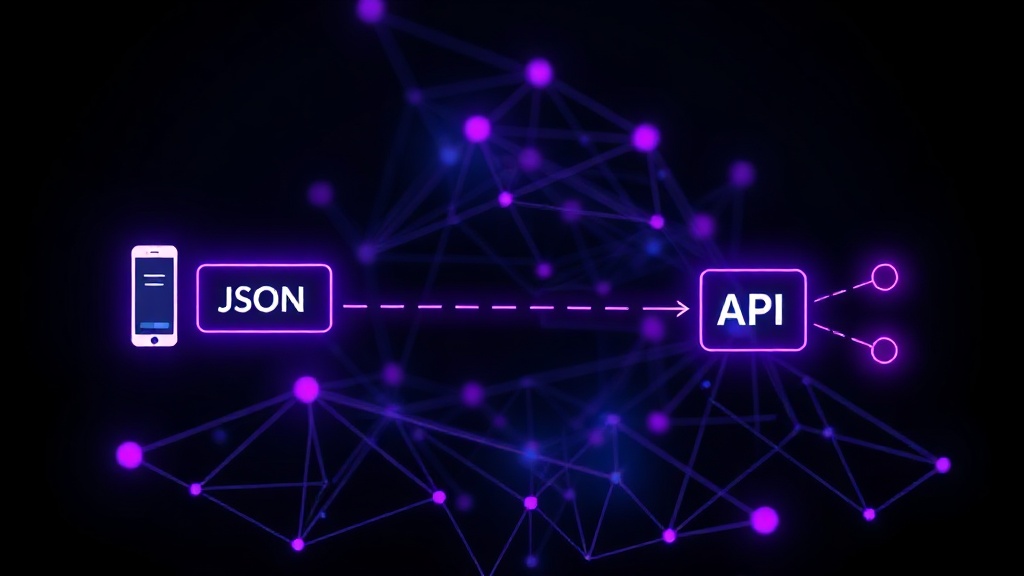
When you send a prompt to a large language model (LLM), the process doesn't start with the AI itself. It begins on the client application – your browser, a mobile app, or a backend service. This client app takes your natural language input and transforms it into a structured request, typically in JSON format. This structured request is crucial for the API to understand and process the input correctly. It includes not just the prompt text but often metadata like desired model parameters (temperature, max tokens, etc.) and user identifiers.
This JSON payload then passes through an API gateway. Think of the API gateway as the bouncer at the club. It's the first line of defense and control. It handles authentication, rate limiting, and routing the request to the appropriate LLM service. If your request is valid and authorized, it gets through. If not, it's rejected right here, saving resources and preventing abuse.
Tokenization and Context Window: Preparing the Input for the Model
Once the request clears the API gateway, the raw text of your prompt enters the LLM's processing pipeline. LLMs don't understand words directly; they understand numbers. The next critical step is tokenization. Your input text is broken down into smaller units called tokens. These tokens can be words, parts of words, or even individual characters, depending on the tokenizer used by the specific LLM (e.g., Byte Pair Encoding or WordPiece). Each unique token is mapped to a numerical ID.
These numerical IDs are then assembled into what's known as the model's context window. The context window is a fixed-size buffer that holds the input sequence the LLM can process at any given time. It's like the LLM's short-term memory. If your prompt is too long to fit within this window, it will either be truncated or require special handling (like summarization or chunking) before being fed to the model. The size of the context window is a key characteristic of an LLM, determining how much information it can consider simultaneously.
The Transformer's Forward Pass: Generating the Response Token by Token
With the input tokenized and loaded into the context window, the LLM's core engine, typically a transformer architecture, gets to work. The model performs a forward pass through its numerous layers. Each layer refines the representation of the input tokens, capturing complex relationships and patterns. This process is highly parallelized but ultimately aims to predict the most likely next token.
The generation process is autoregressive, meaning the model predicts one token at a time. After the initial forward pass with the prompt tokens, the model predicts the first output token. This predicted token is then appended to the input sequence, and the model performs another forward pass to predict the *next* token. This loop continues, with each newly generated token becoming part of the input for the subsequent prediction. This iterative process is why you often see LLM responses appearing word by word or token by token on your screen.
End-of-Sequence and Streaming Back: The Response Forms
The autoregressive loop doesn't go on forever. The model continues predicting tokens until it generates a special end-of-sequence (EOS) token. This token signals that the response is complete. The specific criteria for generating an EOS token can be influenced by parameters like `max_tokens`, ensuring the response doesn't exceed a predefined length, or by the model's internal confidence that it has finished generating a coherent answer.
As these output tokens are generated, they don't wait for the entire response to be finished. They are streamed back to the client application in real-time. This streaming capability is what provides the dynamic, typing-like experience users are accustomed to. The client application receives these token IDs and immediately converts them back into human-readable text, displaying them incrementally. This continuous flow of tokens from the model to the user interface makes the interaction feel more immediate and responsive, even though the full generation process might take several seconds.
Client-Side Assembly and Display: The Final Output
The final stage occurs back on the client. The incoming stream of tokens is received and decoded back into text. The client application is responsible for managing this stream, assembling the text chunks, and rendering them in the user interface. This might involve handling potential formatting, like Markdown, that the LLM might have embedded in its output.
The incremental nature of the response means the client must be prepared to update the display continuously. It's less like receiving a complete message and more like watching a message being written in real-time. This client-side rendering is crucial for user experience. It provides immediate feedback, making the system feel more interactive and less like a black box where you wait for a complete answer. The overall cycle, from the initial request to the final displayed word, is a sophisticated dance between client preparation, API processing, core LLM inference, and real-time data streaming.