The Escalating Cost of LLM Deployment
The promise of advanced AI agents, powered by massive language models like GPT-4, is rapidly colliding with the harsh realities of production costs. While initial deployments might showcase impressive capabilities, the escalating cloud bills and concerns over latency during peak demand are becoming a significant bottleneck for organizations. The dream of seamless AI integration often turns into a nightmare of unsustainable operational expenses. This isn't a future problem; it's a present challenge for every company leveraging LLMs in 2026.
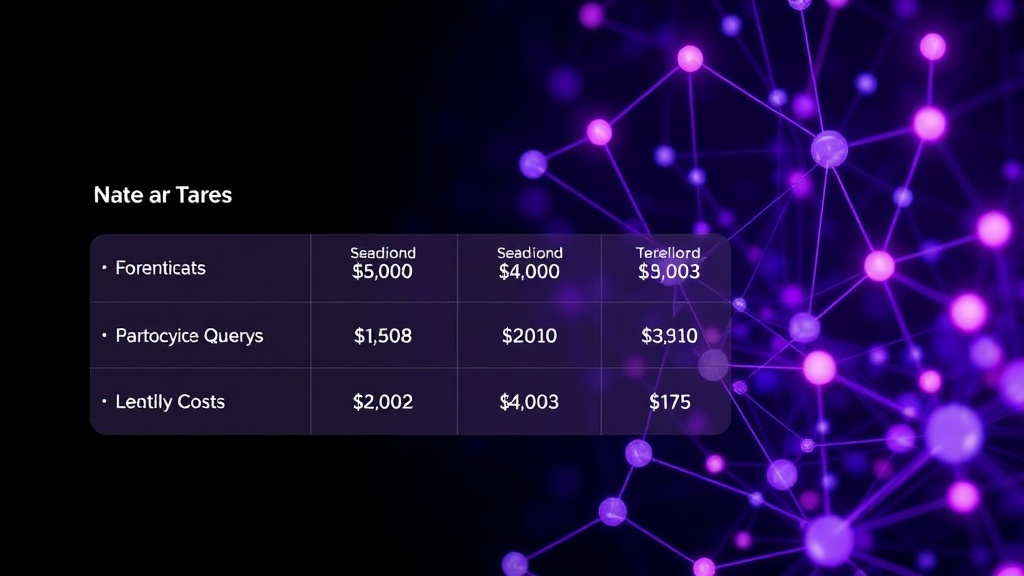
Consider the economics: running GPT-4 Turbo for every user request, even for seemingly simple tasks, quickly becomes prohibitive. A typical query averaging 500 input tokens and 300 output tokens, at current rates of approximately $0.01 per 1K input tokens and $0.03 per 1K output tokens, incurs about $0.014 per request. Scaling this to just one million requests per month translates to a staggering $14,000 monthly expenditure. For many applications, this level of spending is simply not viable, forcing a critical re-evaluation of LLM deployment strategies.
Strategy 1: Intelligent Model Tiering
The most effective immediate strategy is to implement model tiering. This involves assigning different LLMs to tasks based on their complexity and required sophistication. Not every query demands the unparalleled reasoning power of GPT-4. Many tasks can be adequately handled by smaller, faster, and significantly cheaper models. This approach creates a tiered system:
- Tier 1 - High Complexity (e.g., GPT-4): Reserved for tasks requiring advanced reasoning, intricate code generation, strategic planning, or nuanced creative writing. These are the high-stakes operations where precision and depth are paramount.
- Tier 2 - Medium Complexity (e.g., GPT-3.5 Turbo): Suitable for more common tasks like summarization, standard content generation, sentiment analysis, or moderately complex question answering. This tier offers a strong balance of capability and cost-effectiveness.
- Tier 3 - Low Complexity (e.g., Smaller Open-Source Models): Ideal for simple classification, data extraction, basic chatbots, or routine information retrieval. These models are significantly less expensive and offer near-instantaneous response times.
The key to successful model tiering lies in accurately assessing the cognitive load of each task. This requires careful analysis of user inputs and expected outputs. Implementing a routing layer that directs requests to the appropriate model tier based on predefined criteria or even a preliminary classification step is crucial. This system acts like a smart dispatcher, ensuring that the most powerful tools are used only when truly necessary, thereby dramatically reducing overall operational costs.
Strategy 2: Prompt Engineering and Context Optimization
Beyond model selection, the way you interact with LLMs—prompt engineering—offers substantial optimization potential. Crafting concise, clear, and effective prompts can significantly reduce the number of tokens required for both input and output, directly impacting cost and latency. Overly verbose prompts or those that require the model to infer too much context can lead to longer, more expensive responses.
Techniques include:
- Zero-shot and Few-shot Learning: Providing just enough examples within the prompt to guide the model without needing extensive fine-tuning.
- Instruction Tuning: Clearly defining the task, desired output format, and constraints.
- Context Window Management: Carefully selecting which information to include in the prompt's context window. Sending only relevant, recent, or critical information can reduce token counts and improve focus. Techniques like summarization of previous turns in a conversation before passing them to the LLM can be highly effective.
Furthermore, optimizing the output format can help. Requesting structured data (like JSON) instead of free-form text can make responses more predictable and easier to parse, potentially reducing the need for follow-up queries that consume more tokens. Think of it like asking a chef for a specific dish with clear ingredients, rather than just saying "make me food." The former is more efficient.
Strategy 3: Fine-Tuning and Parameter-Efficient Fine-Tuning (PEFT)
While using large, general-purpose models is common, fine-tuning smaller, specialized models can yield superior performance for specific tasks at a fraction of the cost. Fine-tuning involves training a pre-trained model on a custom dataset relevant to your application. This allows the model to develop expertise in a particular domain or task, often outperforming larger models that are trying to be jacks-of-all-trades.
Parameter-Efficient Fine-Tuning (PEFT) methods, such as LoRA (Low-Rank Adaptation), offer an even more compelling approach. Instead of retraining all model parameters, PEFT techniques introduce a small number of trainable parameters, significantly reducing computational requirements, memory usage, and storage needs. This makes fine-tuning more accessible and cost-effective, enabling organizations to create highly specialized models without the prohibitive expense of full fine-tuning or the constant reliance on expensive API calls.

Strategy 4: Caching and Retrieval-Augmented Generation (RAG)
For frequently asked questions or predictable query patterns, implementing a caching layer can drastically reduce redundant LLM calls. If a user asks a question that has been answered recently and successfully, the system can serve the cached response instead of invoking the LLM. This is particularly effective for customer support bots or FAQ systems.
Retrieval-Augmented Generation (RAG) offers a more sophisticated way to manage knowledge and reduce reliance on the LLM's internal, static knowledge base. RAG systems combine a retrieval mechanism (e.g., a vector database) with a generative LLM. When a query is received, the system first retrieves relevant information from a curated knowledge base. This retrieved context is then passed to the LLM along with the original query. This ensures that the LLM's response is grounded in accurate, up-to-date information and significantly reduces the need for the LLM to