The Problem of LLM Context Window Limitations
Large Language Models (LLMs) possess remarkable capabilities, but their ability to maintain context over long conversations is fundamentally limited by their context window. This fixed-size buffer dictates how much information the model can consider at any given moment. As conversations grow, older information is inevitably pushed out, leading to LLMs 'forgetting' previous interactions. This limitation hinders their utility in applications requiring persistent memory, such as chatbots, personal assistants, or long-term project collaborators.
Developers often grapple with this by implementing complex memory architectures. These typically involve sophisticated techniques like vector databases, embedding models, and intricate summarization algorithms to condense past interactions into a searchable and retrievable format. The goal is to effectively inject relevant past context into the LLM's current prompt without exceeding the context window limit.
However, Rajesh Kumar, a developer working on a local Retrieval-Augmented Generation (RAG) system, questioned the necessity of such elaborate setups for a simple proof of concept. He wondered if an LLM could retain conversational memory without the overhead of complex memory management, specifically avoiding sending the entire chat history back into the context window for every query.
The 'Stupid' Memory Extraction Method
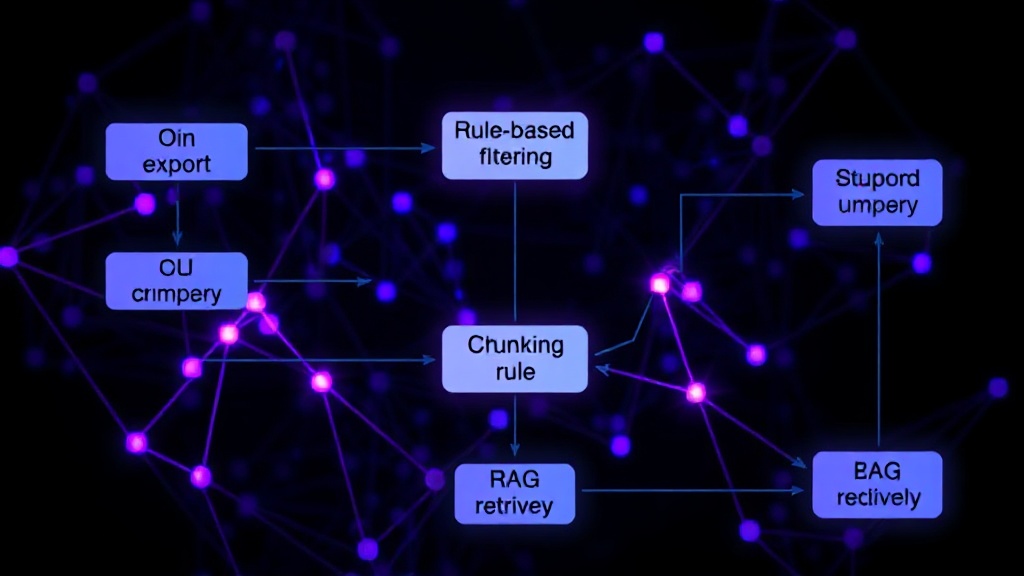
Kumar's experiment, born out of curiosity, took a decidedly low-tech approach. Instead of building a sophisticated memory system, he opted for a method so simple it could be considered 'ridiculous' by conventional standards. The core of his experiment involved exporting existing chat conversations, typically stored in JSON files, and processing them with a single, straightforward rule.
The rule was disarmingly basic: If a line of text in a conversation contained more than 10 words, it was retained. If it contained 10 words or fewer, it was discarded. That was it. There was no complex LLM-based summarization during the ingestion phase, no expensive dedicated memory models, and no elaborate classification system for categorizing past conversational snippets.
This minimal processing produced a pruned dataset of conversational history. The resulting text, stripped of short, potentially less informative lines, was then chunked into smaller segments. These segments were subsequently fed into Kumar's existing RAG system. Crucially, for each new question posed to the LLM, the RAG system was configured to retrieve only the top 8 relevant chunks of this processed historical data.
Surprising Efficacy and Implications
The truly remarkable aspect of Kumar's experiment was its effectiveness. Despite the extreme simplicity of the memory extraction process, the system performed surprisingly well. The core hypothesis was that longer sentences and conversational turns often carry more substantive information, context, or user intent. By filtering out shorter, potentially more ephemeral remarks, the system managed to preserve the essence of past interactions without the computational and developmental cost of advanced techniques.
This outcome challenges the prevailing assumption that sophisticated memory architectures are a prerequisite for effective LLM context management. It suggests that for certain applications, a well-tuned, rule-based filtering mechanism can be a viable and significantly more efficient alternative. The experiment demonstrates that even a rudimentary approach can yield surprisingly good results when the underlying principle—preserving substantive information—is sound.
The experiment was structured as follows:
- Data Source: Exported chat conversations (JSON files).
- Memory Extraction Rule: Retain lines with > 10 words; discard lines with <= 10 words.
- Processing: No LLM summarization during ingestion; no complex memory models.
- Ingestion into RAG: Chunked the filtered text.
- Retrieval: Limited RAG to retrieving only 8 chunks per query.
The surprising detail here is not the volume of data processed, but the minimal filtering criteria achieving meaningful results. It implies that the signal-to-noise ratio in raw conversational data might be higher than often assumed, and that simple heuristics can be surprisingly powerful signal extractors.
Broader Impact and Future Questions
Kumar's 'stupid' method offers a compelling argument for exploring simpler, more efficient solutions in LLM development. For developers building RAG systems or LLM-powered applications, this experiment provides a valuable data point: before investing heavily in complex memory solutions, consider the efficacy of basic filtering. It could significantly reduce development time, computational costs, and latency.
However, this success also opens up new avenues for inquiry. What is the optimal word count threshold for this filtering rule? Does it vary based on the type of conversation or the specific LLM being used? Furthermore, what happens to nuances or critical short exchanges that might be lost with this filter? The experiment worked, but its boundaries and generalizability remain underexplored. What nobody has addressed yet is how this simple filtering method scales to extremely long-term memory requirements or highly specialized domains where brevity might, paradoxically, convey critical information.
This approach could be particularly relevant for resource-constrained environments or applications where real-time performance is paramount. It encourages a pragmatic, results-oriented mindset in LLM development, prioritizing functional simplicity where it delivers on the core requirement: enabling LLMs to 'remember' effectively.