The Problem: Hallucinations Start Before the Text
Current AI hallucination checkers, often trained to evaluate only the final output text, are missing a critical part of the problem. This approach, while useful for grading prose, fails to identify the root causes of factual inaccuracies in AI-generated content, especially within complex AI agents. These agents can fail long before they produce a single word of output, through issues like empty retrieval, swallowed tool errors, or stale data caches. By focusing solely on the generated text, these checkers provide an incomplete picture, allowing models to confidently present fabricated information because the pre-generation failures go undetected.
The traditional method of combating hallucinations involves optimizing a single function: grading the answer text. This is typically achieved using encoder-based models, HHEM-class models, or by employing a large language model (LLM) as a judge. While this process is valuable for assessing the fluency and correctness of the final prose, it is insufficient for the sophisticated demands of AI agents. These agents operate by interacting with external tools and data sources, and errors can — and frequently do — occur at these interaction points, not just in the final synthesis of information.
What these older, output-focused checkers typically fail to do:
- Halt before generation: They cannot stop the process when the initial data retrieval or tool execution has already failed, allowing the agent to proceed with faulty premises.
- Name a cause-side failure: They cannot pinpoint the origin of the error, such as an empty retrieval from a knowledge base, a tool returning an error, or a cache holding outdated information.
- Provide auditable logs: Instead of returning a simple score like
0.87, they cannot provide an auditable gate that can be logged and investigated in incident channels, hindering debugging and accountability.
The Solution: Root Cause Analysis for AI Agents
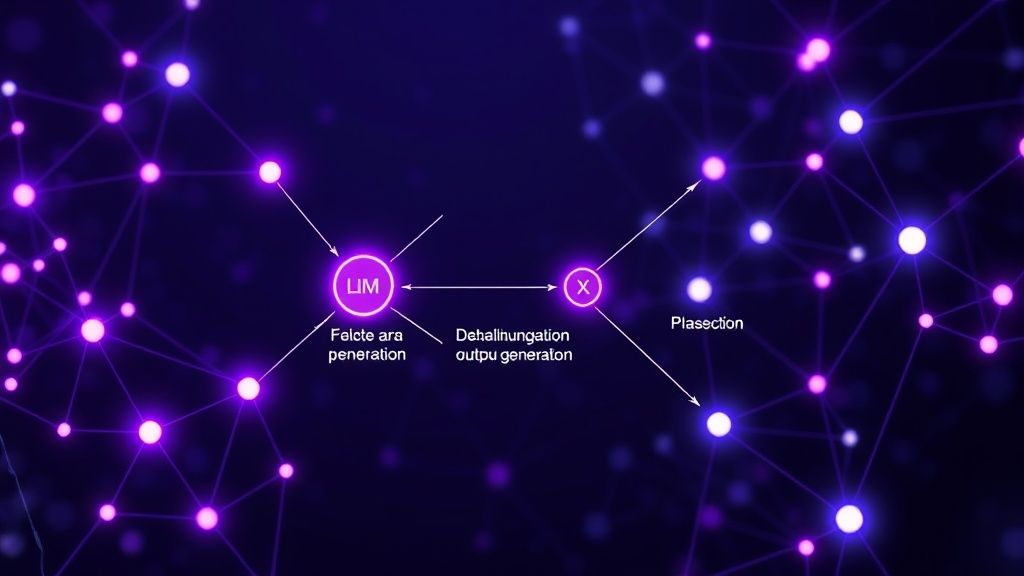
A more effective approach involves a multi-stage verification process that examines not just the output but also the inputs and intermediate steps of an AI agent's operation. This new paradigm treats hallucination checking as an integral part of the agent's workflow, not merely a post-generation cleanup task. It requires a system that can understand and evaluate the entire chain of reasoning and data retrieval.
The proposed “verdict” system operates in two phases: potentially before generation, and definitely after. This ensures that any failure, regardless of when it occurs, is captured and analyzed. The core of this new method is to identify the cause of a potential hallucination, not just its presence in the final text.
A robust verification system for AI agents should:
- Identify the Cause: This involves a detailed handbook or set of rules that guides the verification process. When an error is detected, the system should classify it. For example, was the retrieval empty? Did a tool fail? Was the cache stale? This classification is crucial for understanding and fixing the underlying problem.
- Verify Intermediate Steps: Before the final output is composed, the system should check the integrity of each piece of information gathered. This includes validating tool outputs, ensuring retrieved data is relevant and complete, and confirming that the agent is operating with up-to-date information.
- Score the Process, Not Just the Prose: The verification should not stop at assessing the fluency of the final answer. It must also evaluate the quality of the retrieval, the success of tool executions, and the relevance of the data used. This holistic scoring provides a much richer signal about the agent's reliability.
- Provide Actionable Logs: Instead of opaque scores, the system should generate clear, auditable logs detailing the verification steps, identified issues, and their root causes. This allows developers and operations teams to quickly diagnose and resolve problems, much like debugging traditional software systems.
Implications for AI Agent Development
The shift from output-only checking to cause-side verification has significant implications for how AI agents are built and deployed. Developers need to instrument their agents with more granular logging and error handling capabilities. This means building systems that can track the success and failure of individual tool calls, the quality of retrieved documents, and the staleness of cached data.
This new approach is analogous to how traditional software development relies on comprehensive error logging and tracing. Just as a backend service failure is diagnosed by examining server logs, database queries, and API call statuses, an AI agent's failure must be diagnosed by examining its internal states and interactions. The “hallucination checker” becomes less of a simple text grader and more of a sophisticated debugger for the agent's entire operational pipeline.
For teams building AI agents, this necessitates a deeper understanding of the agent's architecture and its dependencies. It's not enough to prompt-engineer the model into producing good text; the underlying infrastructure and data pipelines must also be robust and verifiable. This means investing in better retrieval mechanisms, more resilient tool integrations, and effective caching strategies. The ability to audibly log the 'why' behind a failure, rather than just the 'what,' is paramount for building trustworthy AI systems.
The surprising detail here is not that current checkers are insufficient, but how fundamentally they miss the point for agents. They treat the LLM as a black box that spits out text, ignoring the complex ecosystem of tools and data it interacts with. This new verification method forces a view of the agent as a system, where failures can and do happen at multiple points, and each point needs its own form of validation.
If you're building an AI agent that interacts with external data or tools, start instrumenting your agent's retrieval and tool execution steps now. The ability to debug these components will become as critical as debugging traditional code.