The Illusion of Model-Level Optimization
As Large Language Model (LLM) adoption accelerates, so does the associated cost. Many developers and product managers facing escalating bills resort to the most apparent solution: switching to a cheaper LLM model. While this can offer marginal savings, it often fails to address the root cause of runaway expenses. The fundamental problem lies in a lack of granular visibility into why token counts are rising. Standard provider dashboards typically aggregate usage by model, API key, project, or time period. This level of detail is sufficient for basic billing reconciliation but falls short when it comes to informed product development and cost optimization decisions. Without understanding which specific features are driving token consumption, efforts to control costs become akin to trying to manage a budget without knowing where the money is being spent.
Consider an application with multiple LLM-powered functionalities. If the total token count for the entire application increases, simply switching to a cheaper model might reduce the cost per token, but it won't necessarily reduce the overall token volume. The real issue could be a feature that is unexpectedly chatty, a background process that consumes more tokens than anticipated, or an agent that gets stuck in a retry loop. These are specific operational inefficiencies or feature usage patterns that a model-level aggregate view will obscure. The useful unit for cost management, therefore, is not 'tokens per model' but 'tokens per feature'. This shift in perspective is critical for moving beyond superficial cost-cutting measures to strategic optimization.
Deconstructing Usage: The Power of Feature-Level Metrics
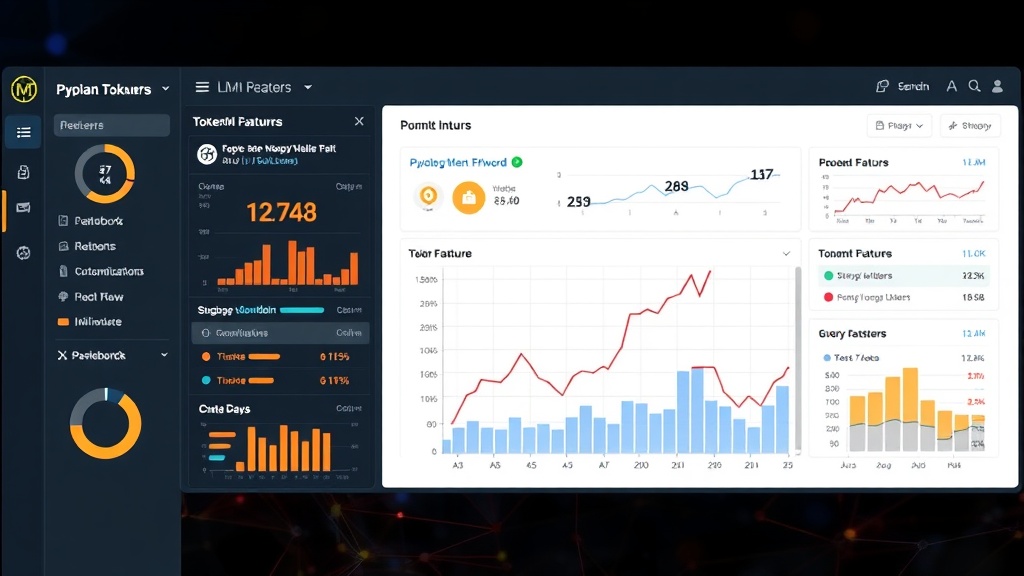
To effectively manage LLM expenses, developers must instrument their applications to track token usage at the feature level. This involves tagging or categorizing LLM calls based on the specific functionality they serve. For instance, if an application offers interactive chat, document summarization, and background classification, each of these should be a distinct category for token tracking. This granular data allows teams to pinpoint which features are the primary cost drivers. A feature like interactive chat might naturally consume more tokens due to its conversational nature, while document summarization might have a more predictable, albeit potentially high, cost per document. Background classification, depending on its implementation, could be a minor or significant contributor.
The real surprise often lies in identifying unexpected consumption patterns. An agent, designed to perform a specific task, might repeatedly call a tool, leading to a cascade of LLM interactions and token usage that far exceeds its intended scope. This kind of inefficiency would be completely masked by a model-level total. By measuring tokens per feature, teams can identify these outliers. For example, if document summarization suddenly shows a spike in token usage, it might indicate a change in the average document length being processed, an increase in the number of documents submitted, or perhaps a more complex summarization prompt being used than initially planned. Similarly, if an interactive chat feature's token count is disproportionately high, it could signal an issue with conversational flow management or excessive context window usage.
Actionable Insights and Optimization Strategies
Once token usage is broken down by feature, actionable optimization strategies become clear. For features with high token consumption, teams can explore several avenues:
- Prompt Engineering: Refine prompts to be more concise and efficient, reducing the number of tokens required to achieve the desired output. This could involve removing redundant instructions or providing more structured input.
- Model Selection: While switching models at the application level might be blunt, selecting specific, more cost-effective models for particular features can be highly effective. For instance, a less powerful but cheaper model might suffice for a simple classification task, while a more advanced model is reserved for complex reasoning or creative generation.
- Caching and Memoization: For features where the same or similar requests are made repeatedly, implementing caching mechanisms can prevent redundant LLM calls, saving both tokens and latency.
- Context Management: Optimize how context is managed, particularly in conversational agents. Avoid sending excessive historical data or irrelevant information in each turn.
- Algorithmic Improvements: For features involving agents or complex workflows, re-evaluating the underlying logic to reduce the number of LLM calls or tool interactions can yield significant savings. This might involve exploring alternative algorithms or heuristics that achieve similar results with fewer LLM inferences.
- Rate Limiting and Usage Caps: For features prone to unexpected spikes or abuse, implementing usage caps or rate limits per user or per session can help contain costs.
The surprising detail is not that optimization is possible, but how much optimization is often left on the table by relying on aggregated metrics. The difference between a growing LLM bill and a controlled, predictable one often hinges on this shift from a model-centric view to a feature-centric understanding of token consumption. This requires a deliberate effort in application design and instrumentation, treating token efficiency as a first-class metric alongside performance and accuracy.
The Future of LLM Cost Management
As LLM capabilities become more deeply embedded in applications, managing their associated costs will transition from an operational afterthought to a core product management and engineering discipline. The ability to track, analyze, and optimize token usage per feature will become a competitive differentiator. Companies that master this granular cost control will be better positioned to innovate rapidly, offer more affordable services, and maintain healthier profit margins. This approach moves beyond simply asking 'how much does this model cost?' to asking 'how much does this specific user action cost, and how can we make it more efficient?'
This granular tracking is not just about saving money; it's about understanding user behavior and feature efficacy. A feature that consumes an unexpectedly high number of tokens might be highly valued by users, justifying its cost. Conversely, a feature with low token usage might be underperforming or underutilized, prompting a re-evaluation of its value proposition. Ultimately, measuring tokens per feature transforms LLM cost management from a reactive expense-cutting exercise into a proactive strategy for product improvement and sustainable growth. If you run a team that is seeing its LLM bills climb, start instrumenting your features today. You might be surprised what you uncover.