The Context Window Illusion: Capacity vs. Usable Quality
When you look at the documentation for a large language model (LLM), you'll see a number for its context window – perhaps 32K, 128K, or even 200K tokens. This number represents the maximum number of tokens the model can theoretically process at once. However, this advertised capacity is not a promise of consistent quality across the entire window. Work on long-context behavior reveals a critical flaw: models pay disproportionately more attention to the beginning and the end of their input. Information buried deep in the middle of a lengthy prompt or document can be overlooked or misunderstood, even when the total token count is well within the stated limit.
This phenomenon, often referred to as the "lost in the middle" problem, stems from the fundamental mechanics of how attention mechanisms in transformer models operate. It's not a bug that can be fixed with clever prompting; it's an inherent characteristic of the architecture when handling extremely long sequences. This means that if you build production features assuming the model can perfectly recall and utilize information from any part of its context window, you are likely to ship bugs that manifest only when dealing with longer inputs.
Understanding the Attention Mechanism's Limitations
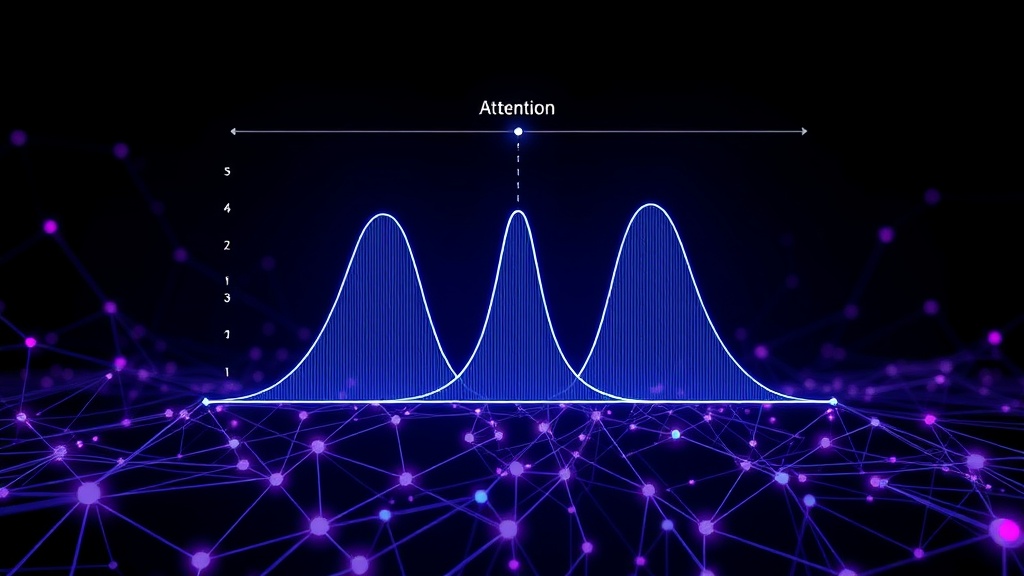
The attention mechanism allows LLMs to weigh the importance of different tokens in the input sequence when generating output. In theory, every token can be attended to. However, in practice, models develop biases. Research suggests that during training, the positional encodings and the way attention scores are calculated lead to a concentration of focus on the initial and final segments of the input. Think of it like trying to remember a long grocery list: you're much more likely to recall the first few items and the last few items you wrote down, while the items in the middle tend to fade from immediate recall.
This "recency and primacy" bias means that critical details, instructions, or data points that fall into the middle of a very long context can effectively be lost to the model. The model doesn't necessarily *forget* them in the traditional sense, but its ability to retrieve and act upon them diminishes significantly. This is particularly problematic for tasks that require precise recall of specific information embedded within a large corpus, such as summarizing lengthy documents, answering detailed questions about legal contracts, or maintaining coherence in extended conversations.
The Practical Implications for Developers
For developers building applications on top of LLMs, this "lying" context window has direct consequences. If an application relies on the model to accurately extract information from the middle of a long document, it will fail unpredictably. For instance, a legal AI assistant might miss a crucial clause buried in a 100-page contract, or a customer support bot could fail to recall a specific detail from a long user history, leading to incorrect or unhelpful responses. The problem is exacerbated because these failures are not constant; they only appear when the input reaches a certain length, making them difficult to debug during standard testing cycles.
The gap between advertised capacity and actual usable quality means that teams must be conservative in their assumptions. Simply stuffing more information into the prompt doesn't guarantee better results; it can actively degrade performance. This necessitates strategies for managing input length and prioritizing information. Techniques like retrieval-augmented generation (RAG), where relevant snippets are fetched and prioritized, become not just optimizations but essential components for ensuring reliable LLM behavior with long contexts.
Strategies for Mitigating the "Lost in the Middle" Problem
Addressing the lost in the middle problem requires a multi-pronged approach:
- Information Chunking and Prioritization: Break down large documents into smaller, manageable chunks. When querying the LLM, only include the most relevant chunks or summarize less critical sections. This ensures that the core information the model needs to focus on is placed at the beginning or end of the context window.
- Retrieval-Augmented Generation (RAG): Implement RAG systems that dynamically retrieve only the most pertinent information from a large knowledge base based on the user's query. This external retrieval process acts as a filter, ensuring that the LLM receives focused, relevant context rather than a massive, undifferentiated block of text.
- Prompt Engineering for Salience: While not a complete solution, careful prompt design can help. Explicitly instructing the model to pay attention to specific sections, or rephrasing questions to draw attention to information that might be in the middle, can sometimes improve performance. However, this is often a band-aid rather than a cure.
- Fine-tuning for Long Context: For specific applications, fine-tuning models on datasets designed to improve long-context recall can be effective. This involves training the model on examples where information is deliberately placed in the middle of long sequences and rewarding accurate retrieval.
- Alternative Architectures: Keep an eye on emerging LLM architectures and techniques that are specifically designed to overcome the limitations of standard transformers with long sequences, such as state-space models or novel attention variants.
The Future of Long Context
The discrepancy between advertised context window size and actual usable quality is a critical challenge for the widespread adoption of LLMs in complex, real-world applications. As models continue to grow in capacity, understanding and mitigating the "lost in the middle" problem will be paramount. Developers cannot afford to build systems that are brittle and prone to failure on longer inputs simply because the documentation uses a simplified metric. The true measure of a context window is not its raw token count, but the model's reliable ability to utilize information distributed throughout that window. Until this is addressed architecturally or through robust engineering practices, users and developers alike must treat advertised context window sizes with a healthy dose of skepticism.