
The Rise of LLM Judges and the Need for Confidence
Large Language Models (LLMs) are increasingly deployed as "judges" in AI workflows, tasked with complex reasoning and analysis to automate decision-making. This capability unlocks new paradigms for human-AI collaboration. One significant application is in active learning, where low-confidence decisions from LLMs are used to curate datasets for human expert review. This process, known as active learning enhanced prompt optimization, allows for more efficient learning of human expertise with reduced annotation effort. Furthermore, confidence scores are critical for safety classifiers in agents and chatbots, enabling them to reliably manage false negatives and ensure robust operation.
However, the reliability of these LLM judges hinges on their ability to accurately report their confidence. Uncertainty quantification for LLMs is a nascent field, characterized by an ongoing debate between whitebox and blackbox methodologies. Whitebox methods, rooted in mechanistic interpretability, aim to extract uncertainty signals directly from the model's internal workings, such as its residual stream and intermediate activations. Blackbox methods, in contrast, treat the LLM as a black box, inferring confidence from outputs without direct access to internal states. The effectiveness and applicability of these different approaches are critical for advancing LLM deployment in high-stakes environments.
Benchmarking Whitebox vs. Blackbox Confidence Estimation
A recent benchmarking effort has begun to shed light on the comparative performance of these competing methods. The core challenge lies in evaluating how well these techniques quantify uncertainty, especially in scenarios requiring nuanced understanding and complex inference. Whitebox methods, drawing inspiration from techniques used in understanding neural network internals, attempt to peer into the LLM's decision-making process. By analyzing signals within the model's layers, particularly the residual stream and interme
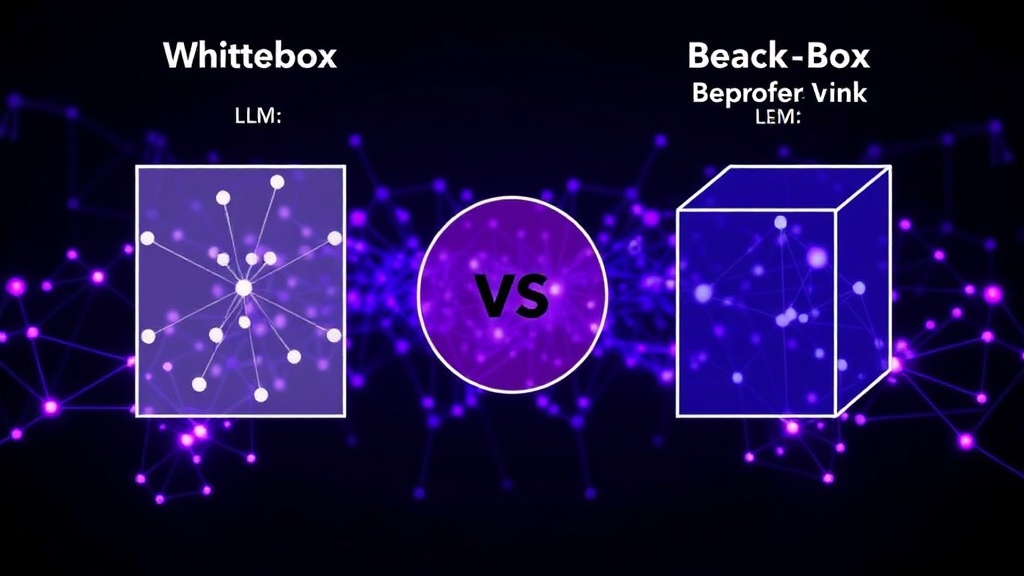
diate activations, these methods seek to derive a measure of confidence that is theoretically grounded in the model's architecture. This approach promises a deeper understanding of *why* a model is confident or uncertain, potentially leading to more interpretable and trustworthy systems.
Blackbox methods, on the other hand, operate under a different set of assumptions. They treat the LLM as an opaque system, probing its behavior through inputs and observing outputs. Techniques in this category might involve analyzing the variance of outputs generated from slightly perturbed inputs, or examining the probability distributions of token generations. The advantage of blackbox methods is their generality; they can be applied to any LLM without requiring access to its internal architecture or weights, making them more accessible for off-the-shelf LLM usage. However, they may lack the fine-grained insights that whitebox methods can provide, potentially offering a less direct or less interpretable measure of confidence.
Key Findings and Trade-offs
The benchmarking study highlights critical trade-offs between these two families of methods. While whitebox approaches offer the potential for deeper insights and perhaps more theoretically sound uncertainty quantification, they often come with significant computational overhead and require specialized knowledge of model interpretability. Implementing and adapting these methods can be complex, demanding access to model internals that may not always be available, especially when using proprietary LLMs via APIs. The reliance on specific architectural components, like the residual stream, also means these methods might be less portable across different LLM architectures.
Blackbox methods, while potentially less insightful into the model's internal reasoning, demonstrate competitive performance in practical applications. Their ease of implementation and broad applicability make them attractive for many use cases. For tasks like active learning, where the primary goal is to identify examples that would most benefit from human review, the precise *source* of uncertainty might be less important than its accurate detection. Similarly, for safety classifiers, a reliable signal of low confidence, regardless of its origin, can be sufficient to trigger fallback mechanisms or human intervention. The study suggests that the choice between whitebox and blackbox methods depends heavily on the specific application, the available resources, and the required level of interpretability.
Implications for Active Learning and Safety
The findings have direct implications for how AI teams can leverage LLMs more effectively. For active learning, calibrated confidence scores are paramount. If an LLM is overconfident in its incorrect predictions or underconfident in its correct ones, the active learning loop becomes inefficient, leading to wasted annotation effort and slower model improvement. The benchmarking suggests that while some blackbox methods may offer a simpler path to implementation, whitebox methods, if feasible, might offer a more robust foundation for truly understanding and mitigating model uncertainty, leading to more stable and predictable active learning pipelines.
In the realm of safety, particularly for agents and chatbots, the stakes are even higher. False negatives—cases where a harmful or incorrect response is generated with high confidence—can have severe consequences. Conversely, a system that is overly cautious and flags too many benign outputs as uncertain can lead to a poor user experience. The ability to accurately estimate confidence allows for more nuanced control. For instance, a system might be programmed to escalate queries where confidence falls below a certain threshold to human review, or to provide disclaimers to the user. The benchmarking study provides empirical data that can help developers select the most appropriate confidence estimation technique to enhance the safety and reliability of their LLM deployments.
The Future of LLM Uncertainty Quantification
The field of LLM uncertainty quantification is still evolving. Future research will likely focus on developing hybrid approaches that combine the strengths of both whitebox and blackbox methods. Creating methods that are both interpretable and broadly applicable, performant across diverse tasks, and computationally efficient remains a significant challenge. As LLMs become more integrated into critical systems, the demand for reliable confidence estimation will only grow, driving further innovation in this vital area of AI research. The ongoing work in understanding and quantifying LLM confidence is not just an academic pursuit; it is a crucial step towards building more trustworthy, efficient, and safer AI systems for widespread adoption.