The LiteLLM Credential Concentration Problem
A recent honeypot capture revealed a stark illustration of a critical security flaw in LiteLLM: an intrusion initiated by a GET request to the models endpoint, distinguished only by an Authorization header containing the single character 'x'. This seemingly innocuous detail succeeded because of an improper authentication vulnerability, CVE-2026-59822, within LiteLLM's MCP Streamable HTTP endpoint. The vulnerability stems from how the system handles OAuth2 headers. When a token fails validation, the code incorrectly returns an empty authentication object instead of outright rejecting the request. This empty object, lacking any explicit restrictions, satisfies the authentication check, allowing any bearer token, even a single character, to pass through.
The practical implication is that an unauthenticated attacker can gain unauthorized access to sensitive AI models and services. This is not merely a bug; it's a symptom of a larger, systemic issue: the concentration of critical AI access credentials within gateway systems. These gateways, designed to simplify access to various AI models, are rapidly becoming single points of failure and prime targets for attackers. The incident underscores the need for AI gateways to be treated with the same security rigor as identity providers, as they now hold the keys to immense computational power and proprietary AI models.
Understanding the Technical Exploit
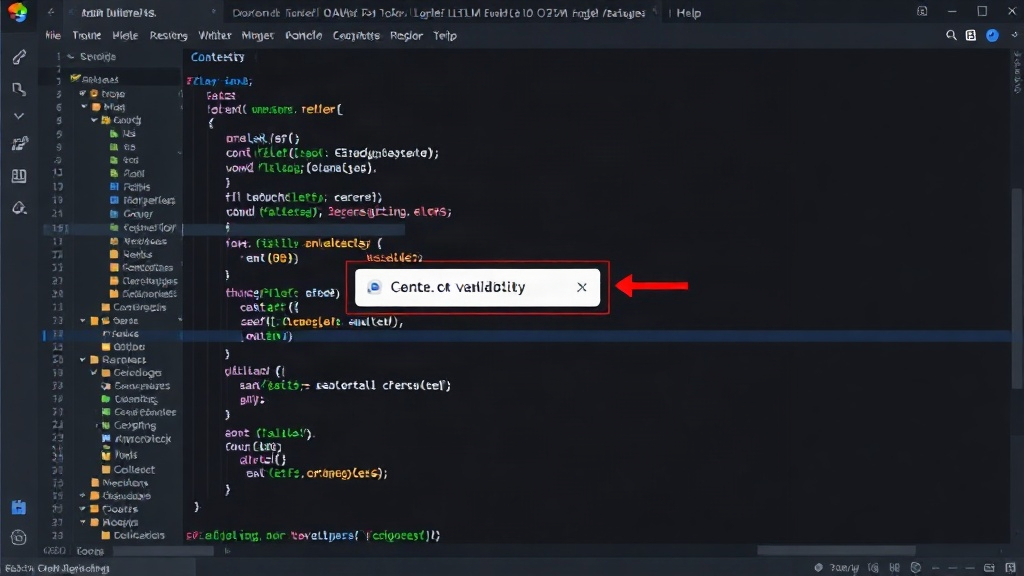
The core of the CVE-2026-59822 vulnerability lies in the faulty logic of the OAuth2 header processing. Standard OAuth2 flows require a valid bearer token to be present and verifiable. However, LiteLLM's implementation, when encountering an invalid or malformed token, defaults to an 'empty' authentication state that is erroneously accepted. This means that instead of a robust check that demands a valid, non-empty token, the system effectively says, 'If you don't have a *valid* token, that's fine, you're authenticated anyway.' This is akin to a security guard checking IDs and, upon finding a fake one, deciding to let the person in because they didn't find a *real* one.
The honeypot's success with a single character 'x' highlights the extreme leniency of this check. Attackers don't need to guess complex tokens or exploit intricate injection flaws; they simply need to send *any* token, or even a placeholder, to bypass authentication. This drastically lowers the barrier to entry for malicious actors seeking to access AI models for various nefarious purposes, including data exfiltration, denial-of-service attacks, or unauthorized use of expensive API resources.
Broader Implications for AI Gateways
The LiteLLM incident is a wake-up call for the entire AI infrastructure ecosystem. As more organizations adopt AI gateways to manage access to a multitude of models from providers like OpenAI, Anthropic, and Google, these gateways become central to their AI security posture. They are the digital front doors, and if those doors have faulty locks, the consequences can be severe.
The concentration of credentials—API keys, tokens, and secrets—within these gateways creates an attractive target. A single successful breach of an AI gateway could compromise access to dozens or even hundreds of different AI models and services across an organization. This contrasts sharply with traditional application security, where compromising one service might grant access to that service's data, but not necessarily to a broad spectrum of interconnected systems. AI gateways are different; they are designed to be the universal key.
This incident also raises questions about the maturity of security practices within the rapidly evolving AI tooling landscape. While developers are focused on enabling rapid experimentation and deployment of AI models, security considerations can sometimes lag. The ease with which this vulnerability was exploited suggests that standard security best practices for authentication and authorization may not have been rigorously applied or tested in all AI gateway solutions.
Mitigation and Future Security Measures
For users of LiteLLM, the immediate priority is to update to a version where this vulnerability is patched. Beyond patching, organizations must re-evaluate their security configurations for all AI gateways. This includes:
- Strict Token Validation: Ensure that gateways enforce strict validation of all incoming tokens, rejecting any that do not conform to expected formats and cryptographic standards.
- Principle of Least Privilege: Granting only the minimum necessary permissions to users and applications accessing AI models through the gateway.
- Credential Rotation: Regularly rotating API keys and tokens used to access underlying AI models.
- Auditing and Monitoring: Implementing robust logging and monitoring to detect suspicious access patterns, such as repeated failed login attempts or access from unusual locations.
- Network Segmentation: Isolating AI gateway infrastructure and restricting network access to only authorized internal or external services.
Looking ahead, the AI gateway market needs to mature rapidly in its security offerings. Developers of these tools must prioritize secure coding practices, comprehensive security testing, and robust authentication mechanisms. Users, in turn, must demand higher security standards from their chosen gateway providers and implement a defense-in-depth strategy that doesn't rely solely on the gateway's security features. The 'one-character token' exploit is a stark reminder that the security of AI development and deployment hinges on the integrity of the infrastructure that manages access to its most powerful components.