A Homebrew Triumph: Linux on the Sega 32X
The Sega 32X, a cartridge-based add-on for the Genesis and Mega Drive consoles released in 1994, is hardly remembered for its processing power. Featuring a dual-CPU setup running at a mere 23MHz and boasting a scant 256KB of RAM, it was a commercial disappointment. Yet, against all odds, a dedicated developer has achieved the seemingly impossible: porting a functional version of Linux to this vintage hardware. This feat, following a similar port to the Atari Jaguar, demonstrates the remarkable flexibility of open-source operating systems and the enduring ingenuity of the homebrew community.
The project, spearheaded by a developer known for his previous work on porting Linux to the Atari Jaguar, showcases a deep understanding of low-level hardware manipulation and embedded systems. The Sega 32X, with its unique architecture and severe resource constraints, presents a formidable challenge. Running a modern operating system like Linux, which typically requires significantly more computational power and memory, demands meticulous optimization and a stripped-down approach. The success here isn't just about making Linux *run*, but about making it run within the severe limitations of 1990s console hardware.
Technical Hurdles and Triumphs
The core of the challenge lies in the 32X's limited resources. The 23MHz clock speed is a fraction of what modern systems take for granted, and 256KB of RAM is minuscule by today's standards. For context, a typical smartphone today has thousands of times more RAM and processing power. To overcome this, the developer likely had to employ extreme kernel configuration, disabling all non-essential features and drivers. Every byte of memory and every CPU cycle must have been accounted for and optimized.
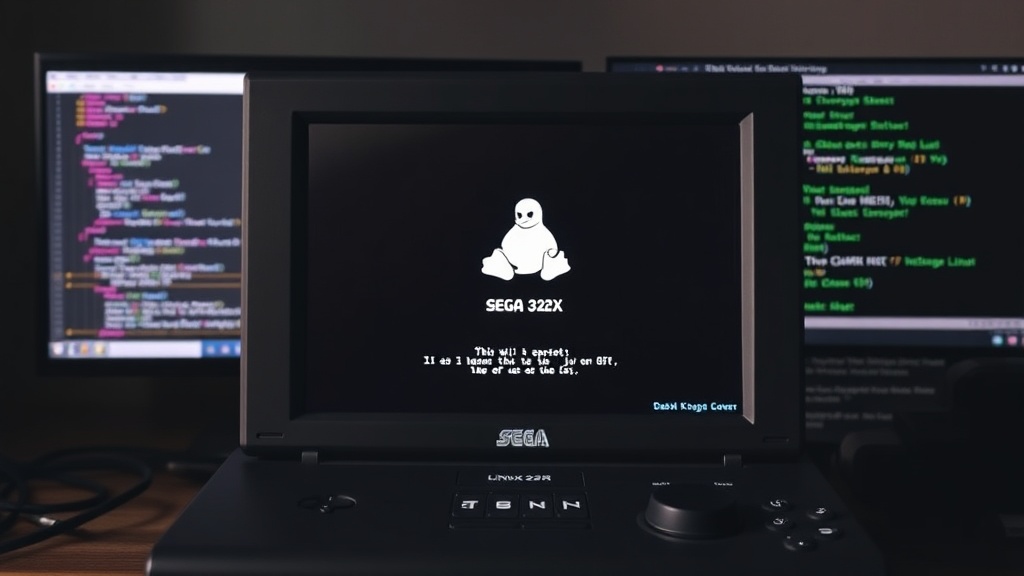
This port isn't about running a graphical desktop environment or complex applications. Instead, it focuses on the core Linux kernel and essential command-line utilities. The goal is to demonstrate that the operating system can boot and execute basic tasks, proving the viability of the port. This likely involved custom toolchains, cross-compilation environments, and a deep dive into the 32X's specific hardware registers and memory map. The process is akin to building a car engine from scratch with only a handful of basic tools and raw materials, rather than assembling a pre-fabricated kit.
The specific hardware components of the 32X include two Hitachi SH-2 32-bit RISC processors, which run at 23MHz. The system also features a VDP2 (Video Display Processor 2) for 2D graphics and a VDP1 (Video Display Processor 1) for sprite manipulation. The limited RAM is external to the main Genesis/Mega Drive's RAM, meaning the OS has to contend with the console's existing memory limitations as well as the 32X's own dedicated, albeit small, pool.
The developer would have had to write custom bootloaders and potentially memory management units (MMUs) or adapt existing ones to work within the 32X's constraints. The Linux kernel itself needs to be compiled with specific flags to target the SH-2 architecture and to minimize its memory footprint. This involves selecting only the necessary kernel modules, disabling features like advanced power management, extensive networking stacks, or complex file systems that are simply not feasible on such hardware.
Implications for the Homebrew Scene and Beyond
This achievement is more than just a technical curiosity. It fuels the passion of the retro-computing and homebrew communities, pushing the boundaries of what's considered possible on obsolete hardware. It serves as an inspiration, demonstrating that with enough dedication and expertise, even the most resource-constrained systems can be coaxed into running sophisticated software. For developers interested in embedded systems, this port offers a fascinating case study in extreme optimization and resource management.
The implications extend beyond just running Linux. It opens doors for further experimentation on the 32X. While complex applications are out of the question, the possibility of running custom, lightweight embedded applications or even retro-themed homebrew games that leverage the Linux kernel's stability and scheduling could emerge. It’s a testament to the power of community-driven development and the open-source ethos, where enthusiasts continually find new life in old technology.
What remains to be seen is the extent of the port's functionality. Can it support basic input/output operations beyond a simple boot sequence? Will there be any form of networking, however rudimentary, possible? The answers to these questions will determine the practical applications of this port. However, as a demonstration of capability and a challenge to conventional thinking about hardware limitations, it is already a resounding success.