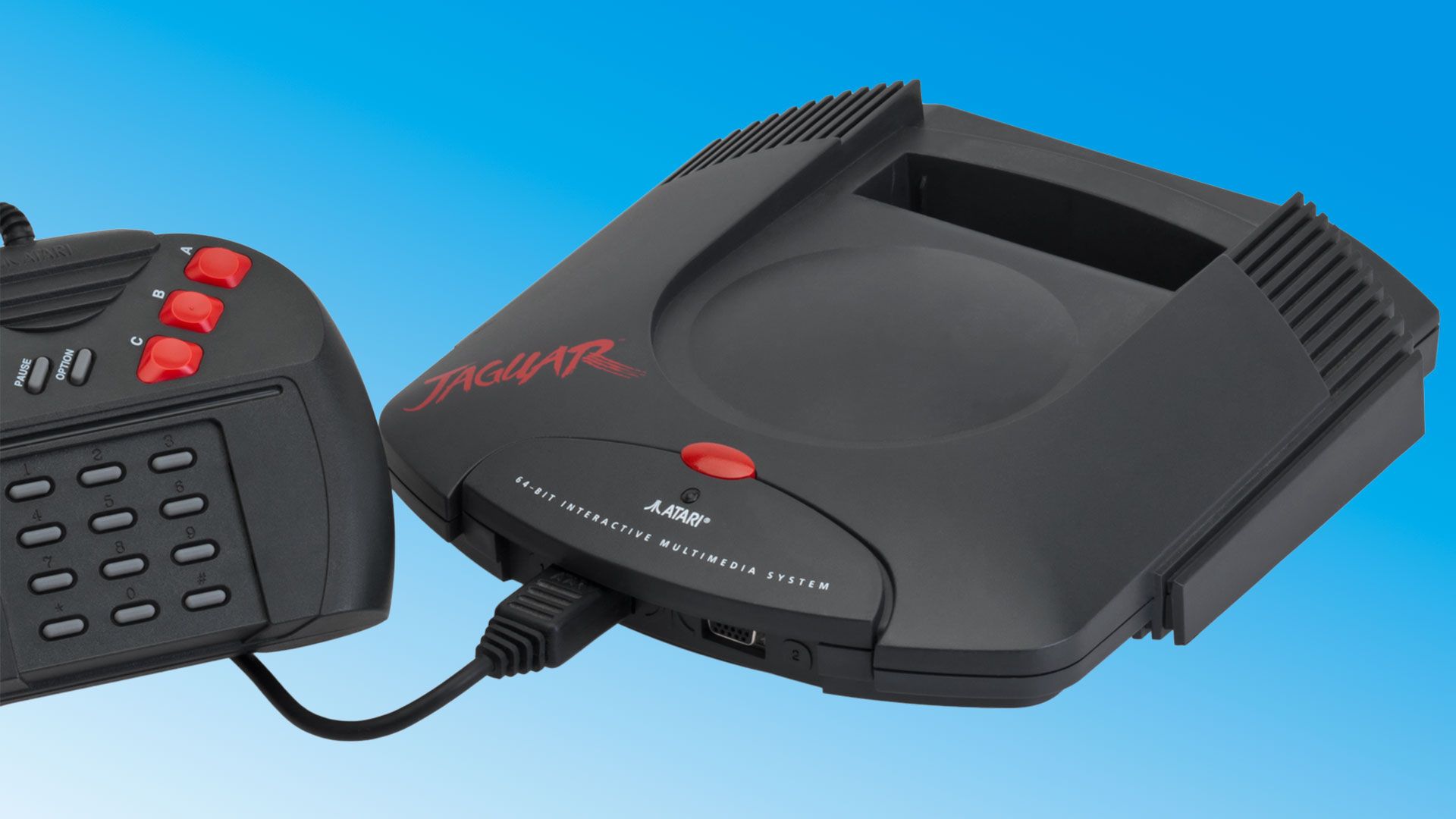
A Bold Undertaking: Bringing Linux to the Atari Jaguar
The Atari Jaguar, launched in 1993, was a bold, if ultimately unsuccessful, attempt to capture the nascent 64-bit gaming market. Featuring a complex multi-processor architecture and a notoriously difficult development environment, the Jaguar was a commercial flop. Yet, its unique hardware has now become the unlikely host for a port of the Linux operating system, a testament to the enduring spirit of retrocomputing and the sheer tenacity of its developer.
The individual behind this remarkable feat, known only by their handle 'jfloper', has managed to compile and run a functional Linux kernel on the Jaguar. This achievement is far from trivial. The Jaguar's hardware presents a formidable set of challenges. With only 2MB of RAM and a clock speed of 13.3 MHz, resource constraints are extreme. Furthermore, the console lacks a Memory Management Unit (MMU), a fundamental component for modern operating systems like Linux. The Jaguar's architecture also includes specialized co-processors, dubbed 'Tom' and 'Jerry', which handle graphics and sound respectively, adding layers of complexity to any low-level system programming.
The journey to this point involved meticulous reverse-engineering and a deep dive into the Jaguar's undocumented hardware behaviors. Developers attempting to work with the Jaguar in its heyday often cited its complexity as a major hurdle, leading to a limited software library and contributing to its market failure. For jfloper, this meant not only understanding the core CPU but also interfacing with these specialized chips and working around the absence of standard memory protection mechanisms. The success of the port suggests a creative interpretation of how Linux can function without a traditional MMU, likely relying on memory mapping techniques tailored to the Jaguar's specific capabilities.
Navigating the Jag's Technical Minefield
The Atari Jaguar's technical specifications, while advanced for 1993, are primitive by today's standards. Its 64-bit moniker referred primarily to its data path, not a true 64-bit CPU in the modern sense. The system housed a Motorola 68000 (16/32-bit) for overall control, a 32-bit RISC processor for graphics (codenamed Tom), and another 32-bit RISC processor for sound and I/O (codenamed Jerry). The system's total RAM was a meager 2MB of DRAM, shared between the processors, with an additional 512KB of SRAM for the GPU and 128KB of ROM for the system BIOS.
Porting an OS like Linux, which typically expects a certain level of hardware abstraction and memory management, to such a constrained and unconventional environment required significant adaptation. The absence of an MMU is perhaps the most critical obstacle. An MMU is essential for virtual memory, memory protection, and efficient process management. Without it, the system must rely on careful manual memory allocation and direct hardware access, making it susceptible to crashes if software misbehaves. Developers often resort to techniques like memory mapping the entire available address space or using clever workarounds to simulate some MMU functionalities.
The 'Tom' and 'Jerry' co-processors also presented unique integration challenges. While designed to offload specific tasks from the main CPU, their programming interfaces and interaction protocols needed to be understood and leveraged by the Linux kernel. This likely involved writing custom drivers or adapting existing ones to communicate with these specialized chips. The sheer difficulty of programming for the Jaguar was a well-documented issue during its commercial life, and this port underscores that the system's complexity persists even for modern software development.
Implications and the Future of Retro-OS Ports
This Linux port to the Atari Jaguar is more than just a novelty; it represents a significant technical achievement in embedded systems and retrocomputing. It demonstrates that even systems considered obsolete and difficult can be repurposed for modern software, albeit with substantial effort. Such projects push the boundaries of what is considered possible with limited hardware and inspire further exploration into revitalizing older platforms.
The success could pave the way for similar ports to other challenging retro consoles or embedded systems. As hardware becomes more powerful and software development tools mature, the ability to run contemporary operating systems on vintage hardware becomes increasingly feasible. This not only provides a new lease on life for these classic machines but also offers invaluable learning opportunities for developers interested in low-level systems programming, hardware architecture, and operating system design. The Atari Jaguar, once a symbol of a failed gaming venture, might now be remembered as a platform capable of running a full-fledged operating system, a surprising legacy indeed.
What remains to be seen is the extent to which this port can be practically utilized. While running Linux is impressive, the Jaguar's limited processing power and RAM will restrict its performance for anything beyond basic command-line operations or simple applications. However, the proof of concept itself is profound. It highlights that the barrier to entry for running modern OS on old hardware is often more about developer ingenuity and time investment than inherent hardware impossibility. For enthusiasts and developers alike, this achievement opens a new frontier in the exploration of classic computing hardware.