The Dual-Sided Business Card Problem
Business cards, particularly in Taiwan, frequently present information in two languages, with Chinese on one side and English on the other. This common design created a significant challenge for a LINE-based business card bot. Its initial functionality was rudimentary: accept an image, perform Optical Character Recognition (OCR) once, and store a single record. This approach failed when users submitted cards with information on both sides. The bot would only capture the data from the side it processed, leading to incomplete contact entries. If a user sent the front of a card, only the Chinese name would be recorded. If they later sent the English side, it would be treated as a separate, new contact, or worse, overwrite the existing entry depending on the exact logic, leading to data fragmentation and user frustration.
The core issue was the bot's inability to recognize that a single entity—a person's contact information—could be split across two distinct physical sides of a card, often presented sequentially. This limitation meant that users had to manually input or correct data, defeating the purpose of an automated bot. The evolution of this bot highlights a common problem in data capture: the need to understand context and relationships beyond a single input.
This problem is analogous to trying to understand a conversation by only listening to one person speak. You get part of the story, but the full context, the nuances, and the complete picture are lost. The business card bot, in its original form, was only 'listening' to one side of the card.
Leveraging GCP for Enhanced OCR and Data Management
To address this limitation, the development team turned to Google Cloud Platform (GCP) services. The initial step involved upgrading the OCR capabilities. Instead of a single OCR pass, the bot was enhanced to perform OCR on both the front and back of the business card image. This required a more sophisticated image handling process within the bot’s backend infrastructure, likely hosted on GCP.
Google Cloud Vision API is a powerful tool for image analysis, capable of detecting text within images with high accuracy. By utilizing this service, the bot could now extract text from both sides of the business card. The challenge then shifted to intelligently merging this extracted information. The bot needed to determine that the Chinese text from one side and the English text from the other belonged to the same individual.
This merging logic is crucial. Simply extracting text is only half the battle. The system must then reconcile the data. This could involve identifying common fields like names (even if in different languages), company affiliations, or phone numbers that appear on both sides, albeit in different formats. Advanced heuristics or machine learning models could be employed to match entities across the two extracted text blocks. For instance, if the Chinese name on one side closely matches a transliterated English name on the other, and both cards list the same company, the system can infer they are the same person.
Integrating Gemini for Smarter Data Merging
The significant leap in the bot’s evolution came with the integration of Google's Gemini models. Gemini, a multimodal AI model, is capable of understanding and processing various types of information, including text and images. This capability is precisely what was needed to move beyond simple OCR and into intelligent data interpretation and merging.
By feeding both sides of the business card image, or the text extracted from both sides, into a Gemini model, the bot can leverage its advanced natural language understanding and reasoning abilities. Gemini can analyze the content, identify key entities like names, titles, companies, and contact details, and crucially, understand the relationship between the information presented on both sides.
Think of Gemini as an incredibly meticulous assistant who not only reads both sides of your business card but also understands the cultural context of Taiwanese business cards. It doesn't just see two separate blocks of text; it infers that the Chinese name and the English name likely refer to the same person, especially when corroborated by shared company information. This allows the bot to create a single, comprehensive contact record, consolidating all relevant details from both sides without duplication or omission.
The Evolution and Future Implications
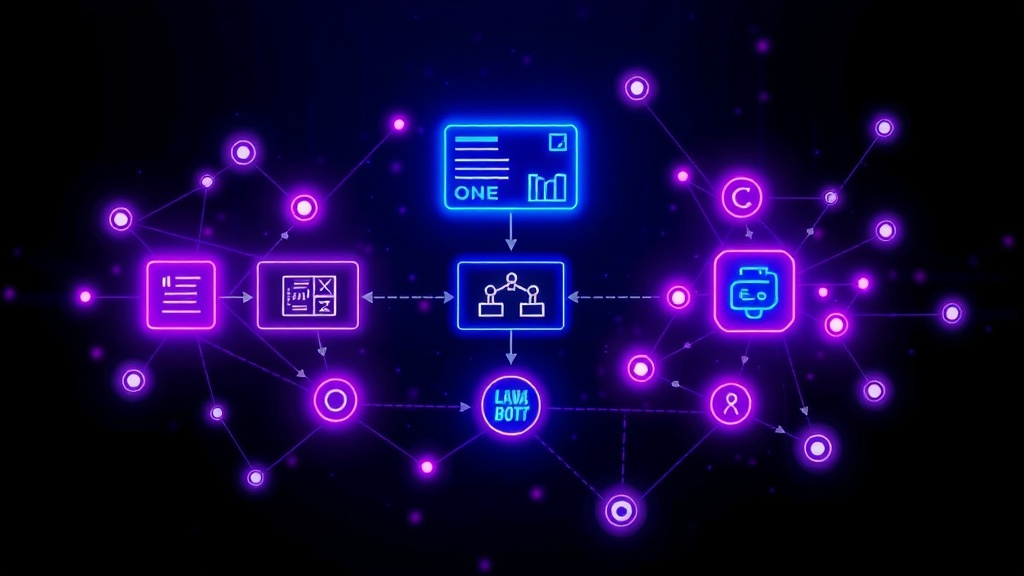
This evolution from a single-pass OCR bot to a Gemini-powered dual-side recognition system represents a significant advancement in practical AI application. It addresses a real-world pain point for users in a specific region, demonstrating how cloud services and advanced AI can be combined to solve nuanced problems.
The use of Gemini here points towards a future where AI assistants can handle more complex data interpretation tasks. For developers building similar bots or data capture systems, the lesson is clear: understanding the context and potential interdependencies of data sources is paramount. Integrating models like Gemini allows for a more holistic approach to data processing, moving beyond simple extraction to true comprehension.
What remains to be seen is how scalable this Gemini integration is for handling extremely complex or unusually formatted business cards. While effective for the common Taiwanese dual-sided design, its performance on cards with unique layouts or additional inserts will be a key area for future testing and refinement. Nevertheless, this iteration of the LINE business card bot showcases a powerful example of iterative development, leveraging cutting-edge AI to enhance user experience and data accuracy.