The Shifting Burden of Lighthouse CI
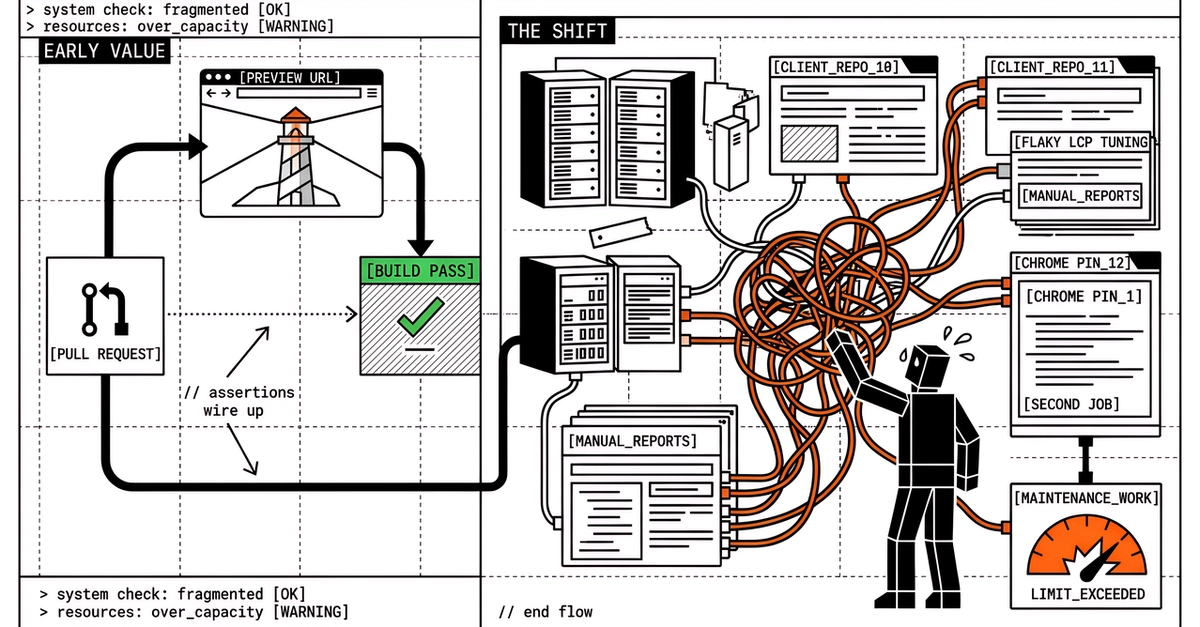
A seemingly innocuous Slack thread, starting with a triumphant green GitHub Actions run, quickly devolved. Within minutes, it was littered with Lighthouse JSON artifacts, Chrome release notes, and the dreaded question: "Which client repository still pins Lighthouse 10?" This wasn't just a technical hiccup; it marked the week Lighthouse CI transitioned from a feature-enabling merge gate to a full-blown maintenance burden, a "second job" for an unsuspecting developer.
The initial value proposition of Lighthouse CI is compelling. Integrating assertions on a preview URL to catch performance regressions like CLS (Cumulative Layout Shift) provides immediate trust. A red build signals a problem, and the team collectively acknowledges the issue. The upfront cost is configuration, a one-time investment that pays dividends by ensuring performance standards are met before code merges. This model works exceptionally well when the CI/CD pipeline is a tool for shipping features, not a project in itself.
However, success breeds complexity. When a single person inherits the responsibility for maintaining the lighthouserc configurations across numerous client repositories, the cost of that success shifts dramatically. The hours spent debugging version conflicts, updating configurations for new Chrome releases, or even just tracking down which repository uses which version, begin to eclipse the time spent developing new functionality.
This isn't about Lighthouse CI itself being flawed. The tool is powerful for its intended purpose. The issue arises when the ecosystem around it, particularly in organizations with many client projects, grows beyond the capacity of a typical CI/CD pipeline's maintenance overhead. Think of it less like a simple checklist and more like managing a fleet of aging, custom-built vehicles; each requires specific fuel, unique spare parts, and constant attention to keep running, diverting resources from the primary mission of transportation.
When Configuration Becomes a Chore
The tipping point is usually a confluence of factors. Often, it begins with a new Chrome release. Google's browser updates regularly, and Lighthouse, which relies heavily on Chrome's execution environment, needs to adapt. If a client repository pins an older version of Lighthouse, it might fail to run audits correctly against the latest Chrome, or worse, produce inaccurate results. This necessitates an update. Now, if you have dozens of repositories, each with its own configuration file, that means updating potentially dozens of these files. This isn't a trivial task; it involves understanding the changes in the new Lighthouse version, verifying the existing assertions, and ensuring compatibility.
Another common trigger is the introduction of new performance metrics or changes to existing ones. Lighthouse evolves. If a team decides to incorporate a new metric, like Core Web Vitals improvements beyond the initial set, or if Google adjusts the weighting of existing metrics, these changes must be reflected in the CI configuration. Again, scaling this across multiple projects becomes a significant undertaking. It requires not just technical execution but also a team-wide understanding and buy-in for the new performance targets.
The complexity is amplified by the nature of lighthouserc files. These JSON configuration files can become quite intricate. They specify the URL to audit, the Lighthouse categories to run, assertion thresholds (e.g., "CLS must be less than 0.1"), plugins to use, and options for running Lighthouse in specific environments. Managing these across a diverse set of client projects, each with potentially unique performance goals or technical constraints, creates a sprawling configuration landscape. A small change in one project might have unintended consequences in another, leading to a game of whack-a-mole.
The Cost of Scaled Maintenance
When Lighthouse CI maintenance becomes a second job, the primary impact is on developer productivity and feature velocity. Instead of focusing on delivering new user-facing features or improving existing ones, developers are pulled into the Sisyphean task of keeping the performance testing infrastructure operational. This can lead to:
- Delayed Feature Releases: Time spent debugging CI issues or updating configurations is time not spent coding new features.
- Developer Burnout: Being assigned the