From Mythos to Machine: The Genesis of Lexi-9-Omega
The ambition behind Lexi-9-Omega began not with a market analysis or a feature list, but with a provocative design question: What would an AI engineering assistant look like if its interface felt less like a chatbot and more like a living technical laboratory? This core inquiry set the stage for a project that deliberately embraced dramatic, almost science-fiction-inspired terminology. Concepts like mnemonic manifolds, coherent lattice looms, tensor engines, bio-electric rigs, and non-Euclidean architecture were not just flavor text; they were the initial scaffolding for an identity that aimed to be as unique as the envisioned functionality.
This dramatic language immediately created a strong brand identity. However, the true engineering challenge lay in translating this evocative mythology into tangible, runnable software systems. The journey from speculative design to functional product required a meticulous process of demystifying the sci-fi concepts and grounding them in practical, albeit advanced, AI engineering. The goal was to build an AI that not only understood complex engineering problems but also presented its capabilities and limitations in a way that mirrored a sophisticated, interactive research environment.

Core Components: Bridging Speculation and Execution
The development of Lexi-9-Omega involved several key technical pillars, each designed to embody a facet of the original speculative design. At its heart, the system relies on a robust Python AI backend. This choice reflects Python’s extensive ecosystem of AI and machine learning libraries, providing the necessary power and flexibility for complex computations and model management. This backend serves as the central processing unit, handling everything from natural language understanding to complex problem-solving.
Complementing the backend is an Android companion app. This mobile interface is crucial for fulfilling the 'living technical laboratory' ethos. It aims to provide on-the-go access to AI insights, diagnostics, and project status updates, making the AI feel like an ever-present, integrated tool rather than a disconnected service. The companion app is designed to offer contextual information and control, allowing engineers to interact with Lexi-9-Omega from their preferred devices.
Short-term memory support is another critical component. In the context of complex engineering projects, retaining context across multiple interactions is paramount. Lexi-9-Omega implements mechanisms to store and recall recent conversations, computations, and design parameters, ensuring that the AI can follow intricate lines of reasoning without requiring constant re-explanation. This feature is vital for simulating the continuous engagement expected from a human collaborator.
A structured prompt and model generator forms the intelligence layer. This system takes user input, whether direct commands or natural language queries, and translates them into structured prompts that can be effectively processed by the underlying AI models. It also plays a role in dynamically generating or selecting appropriate models for specific tasks, adapting the AI’s analytical approach based on the problem at hand. This is akin to an engineer selecting the right tool from a vast, specialized toolbox.
The inclusion of computational geometry tools addresses the spatial and structural aspects of engineering. Many design and analysis tasks require sophisticated geometric processing, from CAD model manipulation to stress simulations. Lexi-9-Omega integrates libraries and algorithms that can handle these complex geometric calculations, enabling the AI to assist with tasks involving physical design and spatial reasoning.
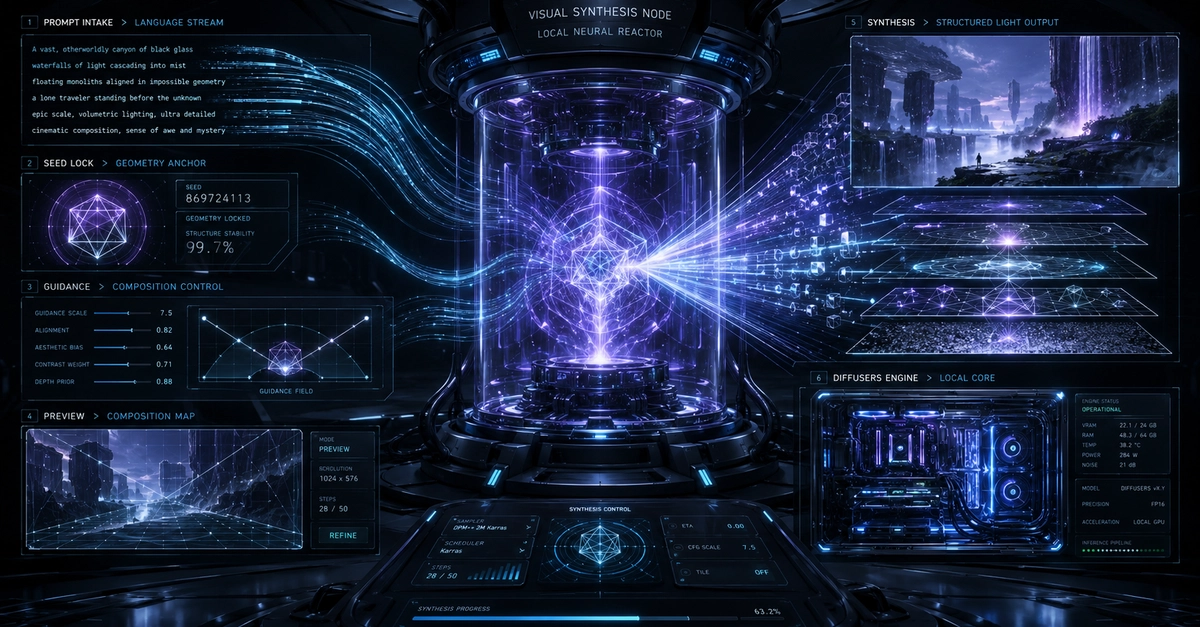
Furthermore, visual synthesis workflows are integrated to provide AI-driven assistance in generating and manipulating visual representations of designs, data, or simulations. This could range from creating concept art based on textual descriptions to generating complex simulation visualizations. This capability moves beyond purely textual or numerical AI assistance, offering a richer, more intuitive interaction model.
Defining the Boundaries: Proven Engineering vs. Speculative Design
Perhaps one of the most significant, yet often overlooked, engineering challenges in building an AI system inspired by speculative concepts is establishing clear boundaries. Lexi-9-Omega explicitly aims for a clear boundary between proven engineering and speculative design. This is not merely a documentation exercise; it is a fundamental aspect of the system’s architecture and user interaction model.
The AI must be capable of distinguishing between established engineering principles, validated data, and theoretical or hypothetical concepts. When an engineer asks a question, Lexi-9-Omega needs to provide answers that are clearly qualified. For instance, if a user proposes a novel material with theoretical properties, the AI should be able to analyze the proposal based on known physics and engineering constraints, clearly stating which aspects are grounded in current understanding and which are extrapolations or pure speculation. This is akin to a seasoned engineer providing a feasibility report that meticulously separates fact from educated guesswork.
This boundary is crucial for building trust and ensuring that the AI serves as a reliable assistant rather than a source of potentially misleading information. It requires sophisticated meta-reasoning capabilities within the AI, enabling it to evaluate the provenance and certainty of the information it processes and generates. The system’s internal architecture must reflect this distinction, potentially through separate modules for handling factual data versus theoretical exploration, or through explicit confidence scoring and provenance tracking for all outputs.
The success of Lexi-9-Omega hinges on its ability to maintain this delicate balance. It must inspire with its advanced capabilities and unique interface, yet remain a trustworthy and practical tool for real-world engineering tasks. By clearly delineating between what is known and what is hypothesized, the AI can effectively augment human creativity and problem-solving without introducing undue risk or confusion.