
Leo: A Byte-Native Learning Architecture Emerges
A novel AI architecture named Leo is under active research, aiming to fundamentally shift how artificial intelligence systems process information. Developed by a researcher under the moniker PSCLS, Leo deviates from the dominant Transformer architecture by prioritizing persistent neural states, sparse connectivity, recurrent processing, and memory. This approach eschews the reliance on attention mechanisms and large, dense parameter matrices that define current state-of-the-art models.
The core ambition behind Leo is to explore an alternative paradigm for building AI. Instead of optimizing existing Transformer designs, Leo's creator is asking a foundational question: what if AI architectures were built from the ground up around concepts like persistent state and sparse connections, rather than attention?
Leo is currently in its nascent stages and is not yet capable of functioning as a fluent language model. However, its architectural design has reached a point where its potential merits discussion within the AI community.
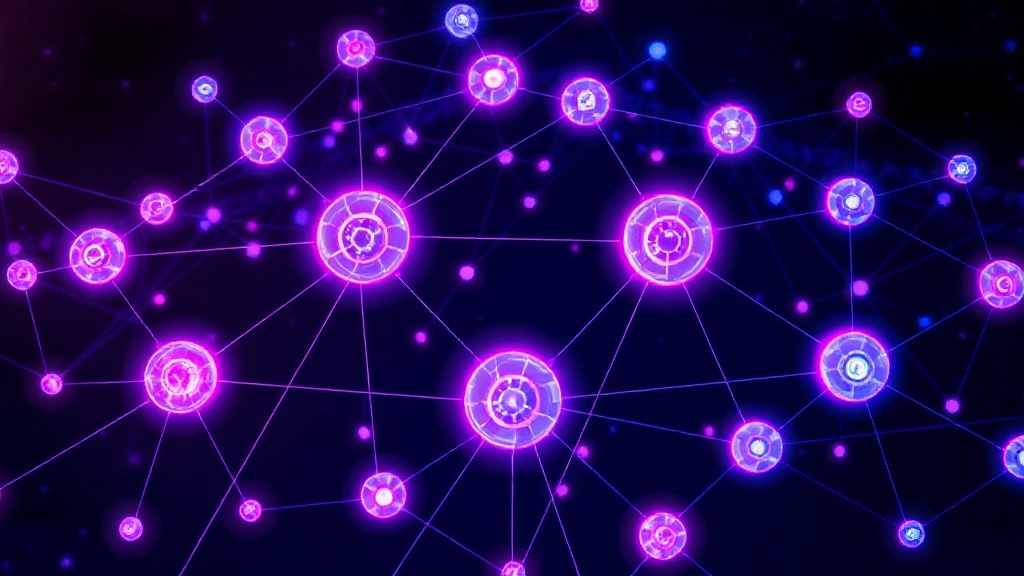
Byte-Native Representation
A key distinguishing feature of Leo is its fundamental representation of data: raw UTF-8 bytes. This byte-native approach eliminates several components common in Transformer models:
- No BPE Tokenizer: Unlike models that rely on Byte Pair Encoding or similar tokenization schemes to break down text into manageable units, Leo processes raw bytes directly. This bypasses the potential information loss or biases introduced by fixed vocabularies and tokenization algorithms.
- No Fixed Word Vocabulary: The absence of a fixed vocabulary means Leo is not constrained by a predefined set of words or sub-word units. This could allow for more flexible and nuanced understanding of language, especially in handling rare words, technical jargon, or novel linguistic constructs.
- No Token Embeddings as Fundamental Representation: Instead of relying on learned vector representations (embeddings) for tokens as the primary data format, Leo works with the bytes themselves. This suggests a more direct manipulation of the input data at a granular level.
- No Giant Dense Parameter Matrix as Core Representation: Transformer models are characterized by massive, dense matrices of parameters that encode learned relationships. Leo aims to move away from this, suggesting a different mechanism for storing and accessing learned knowledge.
The current iteration of the Leo model comprises approximately 32,768 neurons and 1,572,864 fixed sparse connections. This sparse connectivity is a deliberate design choice, contrasting sharply with the dense connectivity often found in neural networks, particularly Transformers. Sparse models can offer advantages in terms of computational efficiency and potentially better generalization by forcing the network to learn more efficient representations.
Architectural Pillars: State, Sparsity, Recurrence, and Memory
Leo's architecture is built upon several core principles that differentiate it from current mainstream AI models:
Persistent Neural State
The concept of a persistent neural state implies that the network maintains an internal state that evolves over time, carrying information from previous inputs to influence current processing. This is akin to how biological neural networks operate, where past activity influences future responses. In contrast, many Transformer architectures process inputs more independently, relying on attention to draw context from other parts of the input sequence.
Sparse Connectivity
As mentioned, Leo employs fixed sparse connectivity. This means that not every neuron is connected to every other neuron. This sparsity can lead to more efficient computation and potentially reduce the risk of overfitting, as the model has fewer parameters to adjust. It also forces the network to learn which connections are most important, promoting a more structured and interpretable representation.
Recurrent Processing
Recurrent processing involves feeding the output of a layer back into itself or a previous layer, creating feedback loops. This allows the network to process sequential data by maintaining an internal memory of past events. While Transformers use attention to capture long-range dependencies, recurrent mechanisms offer a different, often more computationally efficient, way to handle sequences, especially for tasks requiring a continuous understanding of temporal dynamics.
Memory
Integrating explicit memory mechanisms allows Leo to store and retrieve information beyond the immediate context of the current input. This is crucial for tasks that require recalling facts, maintaining dialogue history, or understanding complex narratives. The way Leo implements memory will be a critical factor in its ability to scale and perform complex reasoning tasks.
Moving Beyond Transformers
The Transformer architecture, with its self-attention mechanism, has been remarkably successful, powering models like GPT-3, BERT, and their successors. Its ability to capture long-range dependencies in text has made it the de facto standard for natural language processing. However, Transformers are computationally expensive, requiring significant resources for training and inference due to their quadratic complexity with respect to sequence length and their reliance on large, dense matrices.
Leo's research direction suggests a potential path to overcome these limitations. By focusing on byte-native processing, sparse connectivity, and recurrent mechanisms, Leo aims to achieve comparable or superior performance with greater efficiency and potentially a more biologically plausible architecture. The absence of tokenizers and embeddings also simplifies the input pipeline and could lead to a more direct mapping from raw data to learned representations.
Future Directions and Challenges
The development of Leo is still in its early stages. Significant challenges lie ahead, including scaling the architecture to handle complex tasks, demonstrating its performance against established Transformer models, and developing efficient training methodologies for sparse, recurrent networks. The research community will be watching closely to see if Leo can indeed offer a viable alternative to the Transformer paradigm. The success of Leo could signal a shift in AI architecture research, moving away from brute-force scaling of dense models towards more efficient and structured approaches.