
AeroBlade: The Fanless Future?
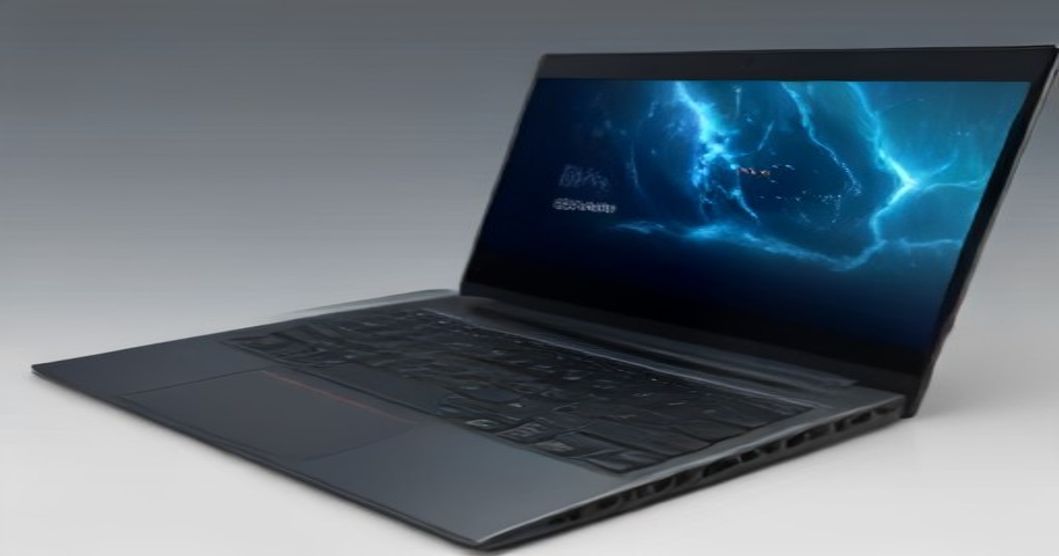
Lenovo is pushing the boundaries of laptop design with two ambitious concepts unveiled at IFA 2026. The star of the show for many will be the AeroBlade, a laptop concept that redefines thinness and silence by eliminating traditional cooling fans. This super-slim device, weighing just 1.83 pounds and measuring a mere 0.39 inches thick, achieves its compact form factor through the integration of Frore Systems’ AirJet solid-state cooling technology. This move away from mechanical fans signals a potential paradigm shift in how high-performance computing can be packaged into increasingly portable devices.
Traditional laptops rely on spinning fans to draw cool air in and expel hot air. While effective, these fans are often a source of noise, dust accumulation, and a limiting factor in how thin a device can be. Frore Systems' AirJet technology represents a departure from this established method. Instead of rotating blades, AirJet utilizes a series of tiny, high-speed membranes that oscillate to create a directed airflow. This solid-state approach promises not only whisper-quiet operation but also greater reliability due to the absence of moving parts. For a device as thin as the AeroBlade, this is not just an incremental improvement; it's a fundamental enabler of its design.
Project Swan: A 17-Inch Display in a 14-Inch Footprint
Alongside the AeroBlade, Lenovo also showcased Project Swan, a 14-inch notebook that hides a secret: a rollable screen. When unfurled, the display expands to a more expansive 17 inches, offering users a larger workspace on demand. This concept taps into the growing trend of flexible and adaptable displays, aiming to provide the portability of a smaller laptop with the screen real estate of a larger one. The mechanism for rolling and unrolling the display is a critical component, and Lenovo has integrated it seamlessly into the notebook’s chassis. This hybrid approach could appeal to users who frequently switch between on-the-go productivity and more immersive viewing or multitasking experiences.
The implications of a rollable display are significant. For creators, this could mean a larger canvas for design work without the bulk of a 17-inch laptop. For professionals, it offers more screen space for data analysis, presentations, or simply having multiple documents open side-by-side. The challenge with such technologies often lies in durability and the user experience of the unfolding mechanism. Lenovo’s implementation in Project Swan aims to address these concerns, offering a smooth transition between screen sizes. The exact nature of the display technology and the rolling mechanism are proprietary, but the concept itself highlights a future where device form factors are far more fluid than they are today.
Broader Implications for the Laptop Market
These two concepts from Lenovo, while still in the conceptual stage, offer a glimpse into potential future directions for the laptop industry. The AeroBlade, with its fanless solid-state cooling, challenges the conventional wisdom that high performance necessitates noisy, bulky cooling systems. If AirJet technology proves to be scalable and cost-effective, it could pave the way for an era of silent, ultra-thin performance laptops. This would directly benefit users who prioritize a quiet work environment, such as students in libraries, remote workers in shared spaces, or anyone sensitive to fan noise. The reduction in moving parts also suggests improved longevity and reduced maintenance needs, a significant advantage for the end-user.
Project Swan, on the other hand, addresses the perennial trade-off between screen size and portability. By integrating a rollable display, Lenovo is exploring a way to offer users more screen real estate when needed, without the permanent increase in device dimensions. This could be particularly impactful for mobile professionals, digital artists, and anyone who juggles multiple tasks. The success of such a concept hinges on the reliability of the rolling mechanism, the quality of the expanded display, and the overall user experience. If Lenovo can successfully bring this to market, it could set a new benchmark for adaptable computing devices.
The industry will be watching closely to see if these concepts move from prototypes to production. The technical hurdles for both fanless cooling in high-performance scenarios and reliable, large-scale rollable displays are substantial. However, Lenovo’s willingness to experiment with these advanced technologies at a major industry event like IFA signals a commitment to innovation. The potential benefits – thinner, quieter laptops and more versatile screen real estate – are compelling enough to warrant significant investment and development. It’s less about these specific products launching tomorrow, and more about the clear signal they send: the laptop of the future might look and sound very different from the one on your desk today.
What remains to be seen is the actual performance ceiling for the AeroBlade. While Frore Systems’ AirJet technology promises efficient cooling, achieving desktop-class performance in a 1.8-pound, fanless chassis will require careful engineering and potentially new architectural approaches from Intel or AMD. The thermal management is only one piece of the puzzle; sustained performance under heavy load without throttling is the ultimate test. Similarly, for Project Swan, the long-term durability of the rollable screen mechanism is a crucial question. Repeated rolling and unrolling can stress materials, and ensuring a consistent, pixel-perfect display across the entire 17-inch surface over years of use will be a significant engineering feat.