The Frustration of Legacy LangChain Chains
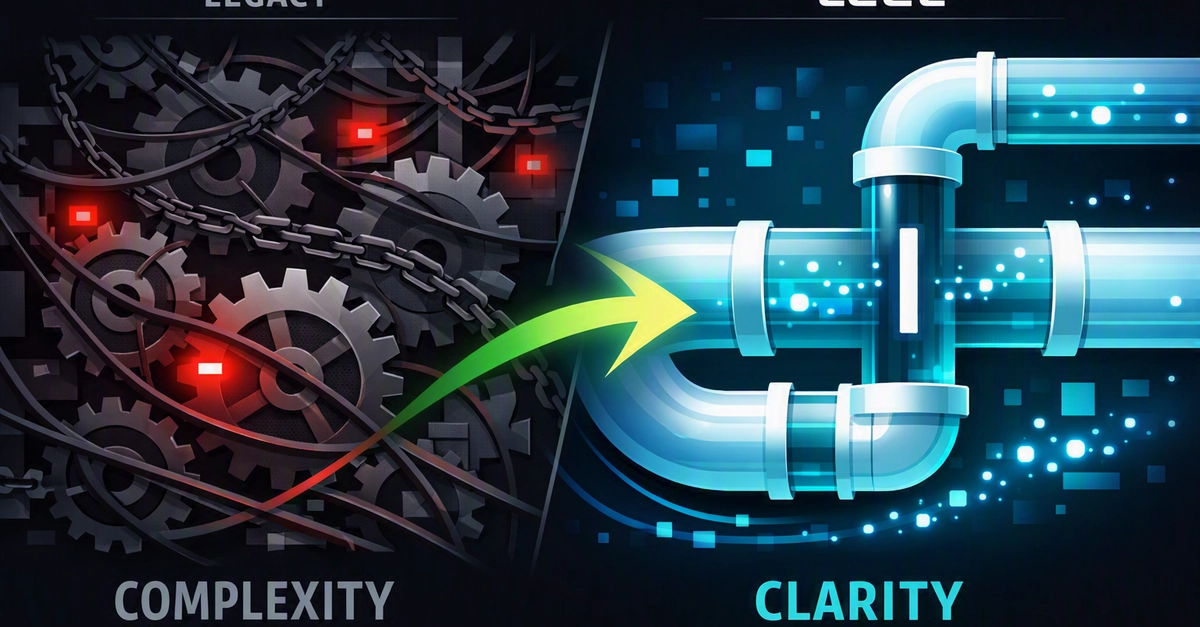
Building complex language model applications with early versions of LangChain often felt like navigating a labyrinth of poorly documented APIs and inconsistent naming conventions. Developers wrestled with what the article describes as a "recipe confusion" scenario. The legacy approach required memorizing specific, rigid class names like LLMChain and ConversationChain. More critically, developers had to meticulously ensure their input variable names perfectly matched what each chain expected – a common pain point being the ambiguity between input_documents, docs, and other context-related parameters. Debugging these chains was a manual, often painful process, typically involving printing variables at various stages to trace execution flow and pinpoint errors.
This old system was characterized by its class-heavy nature, making it feel brittle and difficult to extend or modify without introducing unexpected side effects. It was a system that demanded a deep understanding of LangChain's internal structure and a tolerance for arcane error messages. The lack of a standardized, visual, or modular way to construct these chains meant that each new application or even a significant modification could feel like starting from scratch, burdened by the same old frustrations.
Introducing LangChain Expression Language (LCEL)
LangChain Expression Language (LCEL) emerges as the modern solution to these long-standing issues. It represents a fundamental shift in how developers construct LLM applications, prioritizing clarity, modularity, and a more intuitive developer experience. LCEL is built on the principle of composability, allowing developers to define chains as a series of connected components, much like building with LEGO bricks. This approach moves away from the rigid, class-based inheritance of the past towards a more declarative and flexible pipeline.
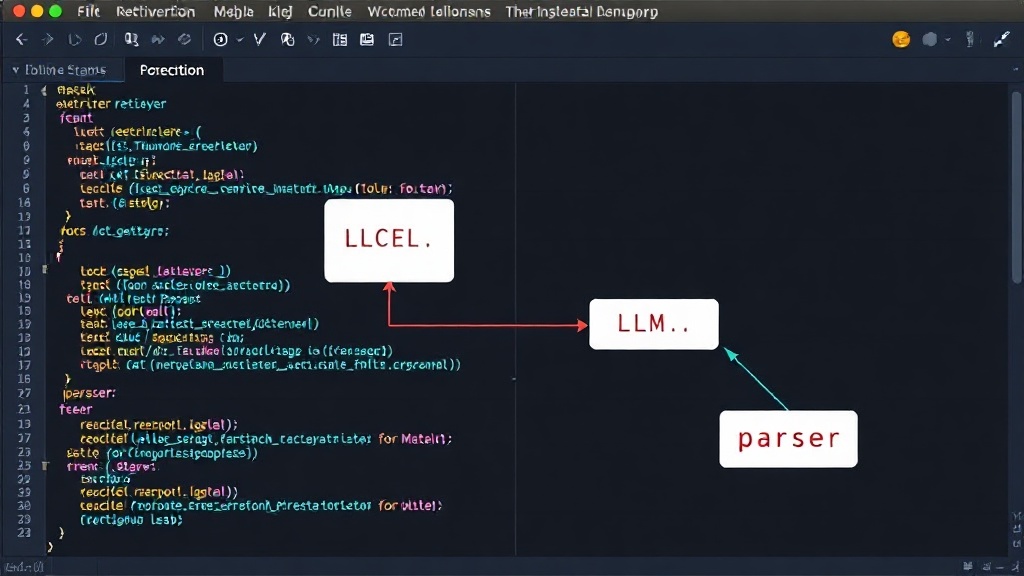
The core idea behind LCEL is to provide a standardized way to compose LLM primitives. Instead of instantiating discrete classes and manually connecting their inputs and outputs, developers can now define sequences using a simple pipe operator (|). This operator signifies the flow of data through a series of operations, whether that's an LLM call, a parser, a retriever, or a custom function. This visual and sequential nature dramatically improves readability and maintainability. For instance, a common pattern might look like: retriever | prompt | llm | output_parser. Each component in this pipeline is a distinct, self-contained unit that can be easily swapped, tested, or modified independently.
Key Advantages of LCEL
LCEL brings several critical advantages over the legacy chain system. Firstly, modularity is at its heart. Each component in an LCEL chain is designed to be a reusable building block. This means a prompt template can be used across multiple chains, or an output parser can be applied to outputs from different LLMs. This modularity significantly reduces code duplication and promotes a more organized project structure.
Secondly, LCEL offers enhanced observability. The streaming nature of LCEL enables developers to see intermediate results as they are produced, rather than waiting for the entire chain to complete. This is invaluable for debugging complex chains and for providing real-time feedback to users in interactive applications. Tools and integrations are being built around LCEL to capture these intermediate steps, offering a much clearer picture of what's happening within the application's execution flow.
Thirdly, LCEL provides a standardized interface. This consistency simplifies the developer experience. Developers no longer need to memorize dozens of class names and their specific input/output expectations. Instead, they work with a common set of primitives and a consistent composition pattern. This standardization also future-proofs applications, as new components and integrations are increasingly being built with LCEL in mind.
Finally, LCEL supports async operations natively. This is crucial for building responsive and scalable LLM applications that can handle concurrent requests efficiently. The asynchronous nature ensures that the application remains performant even when dealing with long-running LLM calls or external API integrations.
Comparing LCEL to Legacy Chains
The contrast between LCEL and legacy chains is stark. Legacy chains were often monolithic, class-based structures that were difficult to inspect and modify. They required developers to become intimately familiar with the internals of each specific chain class. Input variable management was a constant source of errors, and debugging often involved extensive manual inspection of intermediate states. This approach was rigid, leading to code that was hard to maintain and scale.
LCEL, on the other hand, is designed for flexibility and ease of use. It treats chains as sequences of operations rather than as rigid classes. The pipe operator provides a clear, readable syntax for defining data flow. This makes it easier to understand how data moves through the application, where transformations occur, and where potential issues might arise. Debugging is improved through better observability and the ability to isolate and test individual components. The modular design means that developers can compose complex applications from simpler, well-defined building blocks, significantly accelerating development time and reducing the likelihood of errors.
Think of legacy chains as trying to assemble a complex piece of furniture from a vague, multi-part manual with inconsistent terminology. LCEL is like using a standardized set of interlocking components with clear connection points, making assembly straightforward and predictable. The TL;DR is clear: for new projects, LCEL is the unequivocally superior choice.
The Future is LCEL
The shift towards LCEL signifies LangChain's commitment to improving the developer experience and building a more robust ecosystem for LLM applications. As the field of large language models rapidly evolves, the need for flexible, observable, and maintainable application architectures becomes paramount. LCEL directly addresses these needs, providing a powerful yet intuitive framework for developers to build the next generation of AI-powered applications.
For developers starting new projects, the decision is straightforward: embrace LCEL. It offers a clearer path from concept to deployment, reduces common frustrations, and positions projects for future growth and integration within the evolving LangChain ecosystem. The legacy approach, while historically important, is now a relic of an earlier, more challenging phase in LLM application development.